Bottom Line: Accomplist masterfully redefines productivity, offering a humane alternative to the often-punishing world of task management by prioritizing psychological well-being over relentless perfectionism. It's a vital antidote for those stifled by traditional to-do apps, proving that effectiveness doesn't demand aggression.
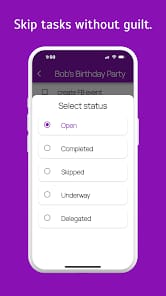
The genius of Accomplist isn't in its feature list—though those features are thoughtfully implemented—but in its reimagining of the psychological contract between user and productivity tool. Most task managers operate under an implicit assumption: strict adherence to deadlines, immediate completion, and an unyielding march towards perfection. Accomplist, by contrast, challenges this premise directly. Its nuanced task states—'Underway,' 'Delegated,' 'Skipped'—are not mere UI options; they represent a fundamental shift in perspective.
Consider the 'Underway' status. How many times have digital professionals initiated a complex task, spent significant hours on it, only to find it technically "incomplete" at day's end? Traditional apps offer only the stark reality of "not done," often leading to feelings of inadequacy. Accomplist validates this effort, providing a tangible acknowledgment of progress. Similarly, 'Delegated' recognizes the collaborative nature of modern work, removing the burden of an item from the individual's mental plate without deleting it from their oversight. And 'Skipped'? This is perhaps the most radical. It’s a formal permission to consciously de-prioritize without the accompanying mental friction or self-flagellation. This trio of statuses fosters a more honest and forgiving workflow, mirroring the chaotic, often interrupted rhythm of professional life.
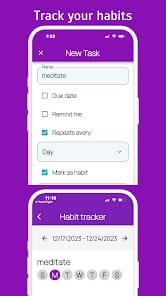
The integrated habit tracker further exemplifies Accomplist's holistic approach. In many apps, habit tracking feels like an afterthought, a separate module requiring conscious navigation. Here, recurring actions appear naturally alongside daily tasks, indistinguishable in their presentation. This subtle integration encourages consistent engagement, transforming potentially aspirational goals into routine components of one's daily grind. The user isn't juggling two systems; they're managing one cohesive flow of actionable items, fostering a stronger sense of routine and reducing the chance of critical habits slipping through the cracks.
However, the most impactful design choice, and arguably the app's defining characteristic, is its gentle handling of overdue tasks. This decision to forgo aggressive visual cues—the blaring red, the insistent notifications—is a bold, almost subversive move in the productivity space. Critics might argue that such leniency could breed complacency. Yet, Accomplist isn't designed for the hyper-organized, deadline-driven individual who thrives under pressure. Its target audience is precisely those who are overwhelmed by conventional task managers, those for whom aggressive reminders trigger anxiety, not action. For this demographic, the soft presentation of an overdue item doesn't invite procrastination; it invites thoughtful re-evaluation and a non-judgmental opportunity to integrate it back into the current day's plan. This approach significantly reduces cognitive load and decision fatigue, transforming a potentially stressful interaction into a calm moment of reflection.
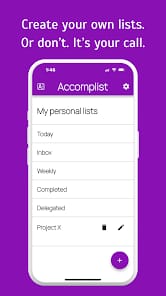
The user experience flow, described as "simple and effective," translates to an interface that is largely intuitive. Onboarding friction is minimal, suggesting a clean, uncluttered layout where task entry and status updates are straightforward. The emphasis is on functionality and psychological comfort, not on endless customization or complex project hierarchies. It's a tool built to disappear into the background of one's workflow, only surfacing when needed, and always doing so with a calming presence.