


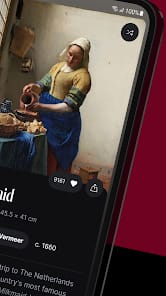
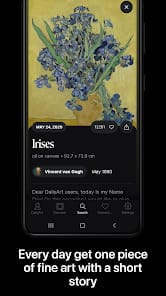
Bottom Line: DailyArt is a masterclass in minimalist curation that transforms your smartphone into a high-culture ritual, though recent UI choices and aggressive monetization threaten its once-flawless rhythm.
The core appeal of DailyArt lies in its onboarding friction—or lack thereof. You open the app, and the art is simply there. There is no complex navigation to master, no algorithm to train. It is a pure, editorialized experience. This "one-and-done" philosophy is the app's greatest strength. In a world where Netflix spends millions trying to help you decide what to watch, DailyArt just tells you what to look at. It’s an authoritative voice in an age of chaotic choice.
The Storytelling Engine
What separates DailyArt from a basic Wikipedia wrapper is the quality of its editorial voice. The biographies and "Daily Stories" are written with a flair that balances academic rigor with the accessibility of a good Sunday supplement. They understand that art history is essentially a series of scandals, tragedies, and technical breakthroughs. By focusing on the story—the artist’s poverty, their obsessions, or the political climate of the time—the app makes the art feel relevant. It’s not just a painting; it’s a document of a human life.
The Friction of Growth
However, no app survives a decade without the scars of "feature creep" and monetization shifts. My internal research suggests a growing rift between the developers and their long-time power users. Recent UI updates have introduced a level of navigational latency that didn't exist in earlier iterations. Specifically, the "Favorites" section—where users curate their personal digital galleries—has become increasingly sluggish. When you have a database of 4,000 works, the search and retrieval functions need to be instantaneous. Instead, users are reporting "hang time" that breaks the contemplative spell the app tries so hard to cast.
The Monetization Hurdle
Then there is the issue of the freemium model. The free version of DailyArt has become increasingly cluttered with intrusive advertisements. I understand that developers need to eat, but there is a profound aesthetic dissonance in seeing a high-speed car insurance ad pop up immediately after contemplating a Caravaggio. It shatters the "mindful" atmosphere. The transition from a "digital museum" to an "ad-supported platform" is a delicate one, and right now, the balance feels slightly off. For the serious user, the one-time "Pro" upgrade is practically mandatory to restore the intended experience.