

Bottom Line: Godot Engine is not just a free tool; it's a powerful, democratic force in game development. Its intuitive design and genuinely open-source model present a profound challenge to the expensive, royalty-based incumbents.
The Development Workflow
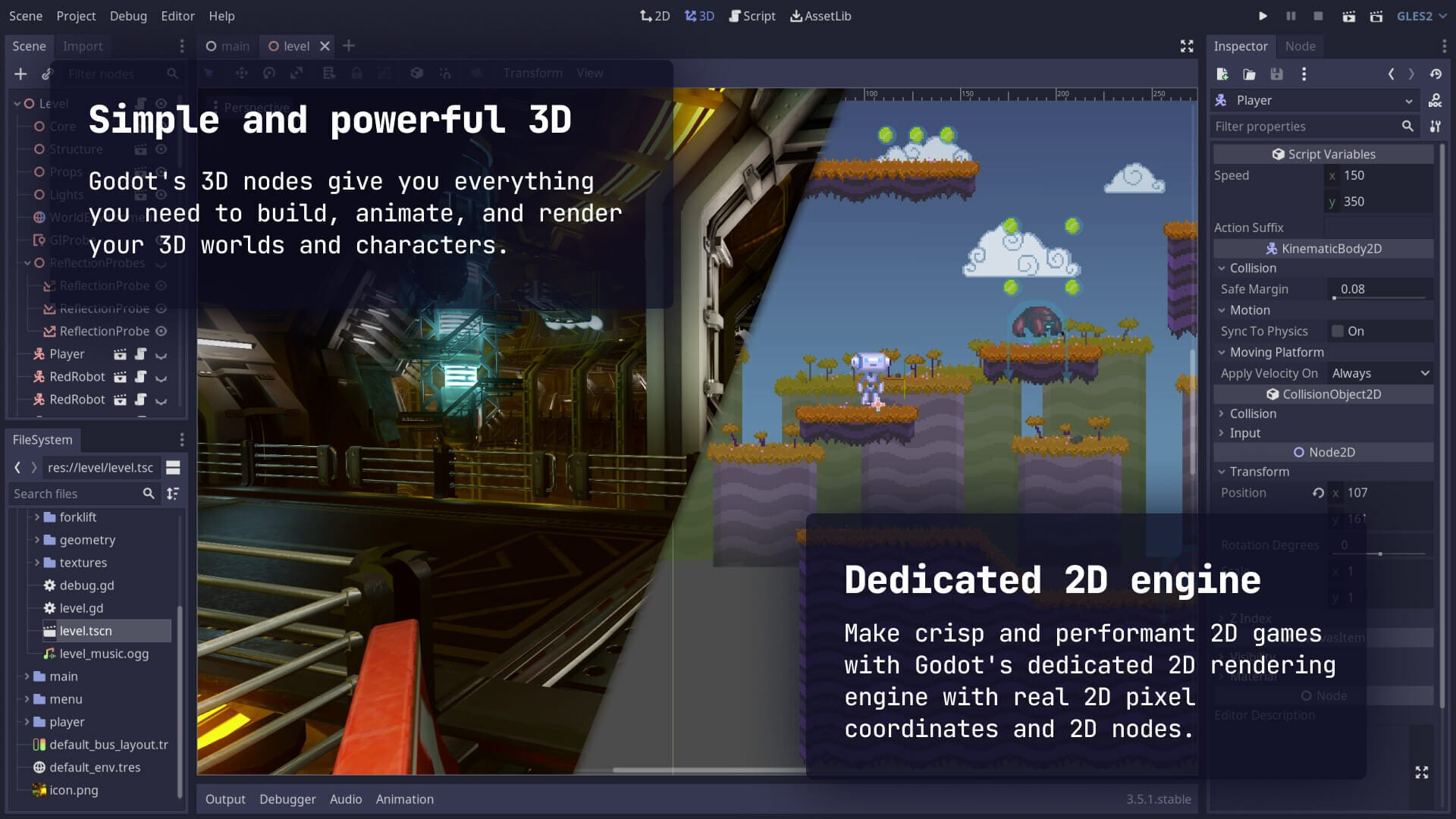
Using Godot feels like a breath of fresh air. The entire experience is curated around a rapid iteration cycle. The editor is astonishingly lightweight, launching in seconds and rarely getting in the user's way. The most transformative aspect is the live-editing feature; you can run a game, modify code or scene values in the editor, and see the changes reflected instantly without recompiling or restarting. This creates an incredibly tight feedback loop that accelerates experimentation and debugging to a degree that feels almost magical compared to the sluggish compile-test cycles of its larger competitors.
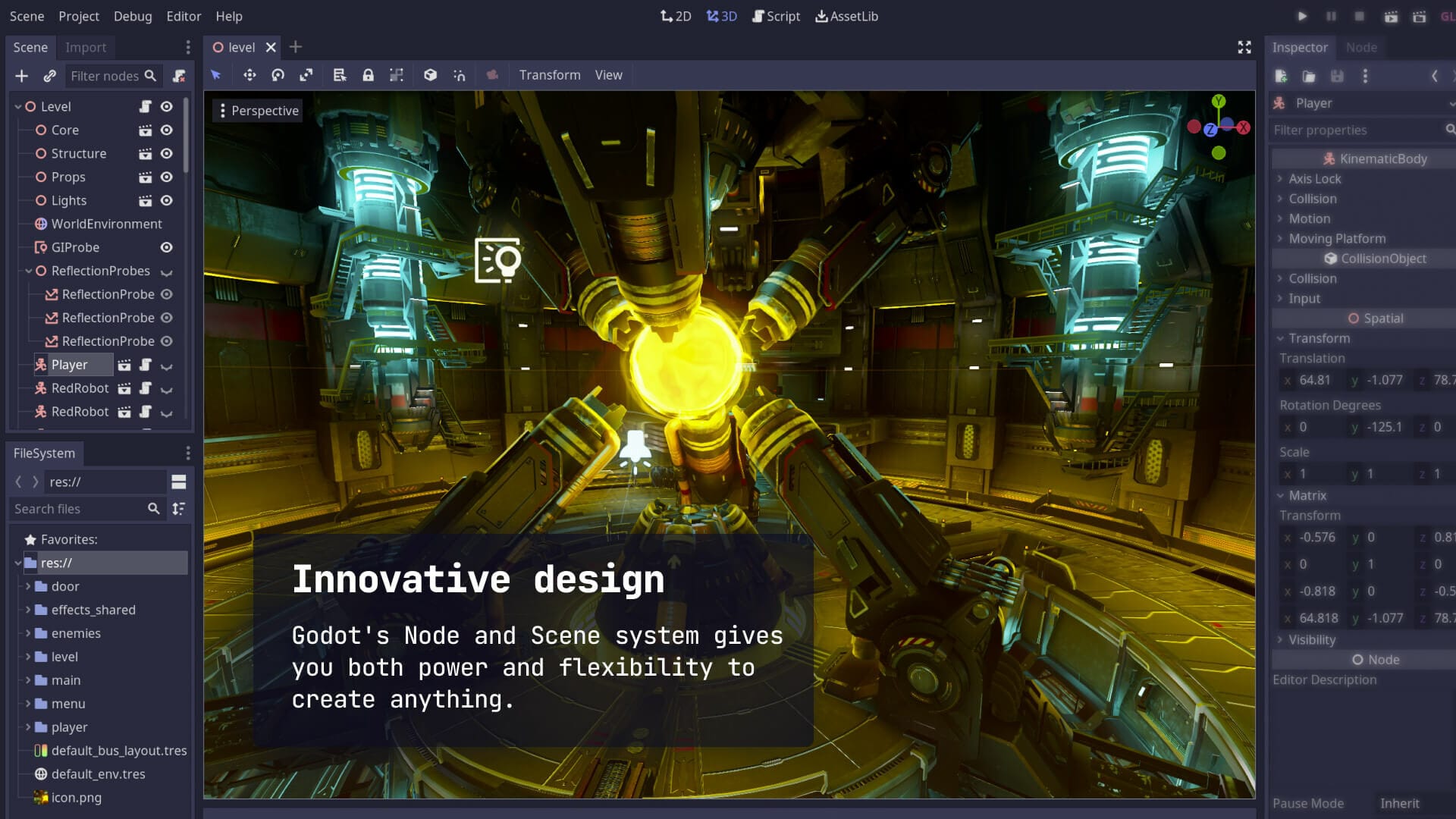
The node system is the conceptual heart of Godot. Everything is a node. A sprite is a Sprite2D node. Its movement logic is a script attached to that node. A particle effect is a GPUParticles2D node. These are grouped into a "scene." A player character might be one scene, and an enemy another. You then instance these scenes into your main game world, which is itself another scene. This "scene-as-a-prefab" model is profoundly powerful. It forces a mental model of encapsulation and reusability from the very beginning. However, it can present a minor stumbling block for developers accustomed to a strict Entity-Component-System (ECS) paradigm. While Godot can be bent to that pattern, its native approach is object-oriented and hierarchical, a design choice that prioritizes intuitiveness over raw, data-oriented performance in some cases. For the vast majority of projects, this is a worthy trade-off.
Scripting and Extensibility
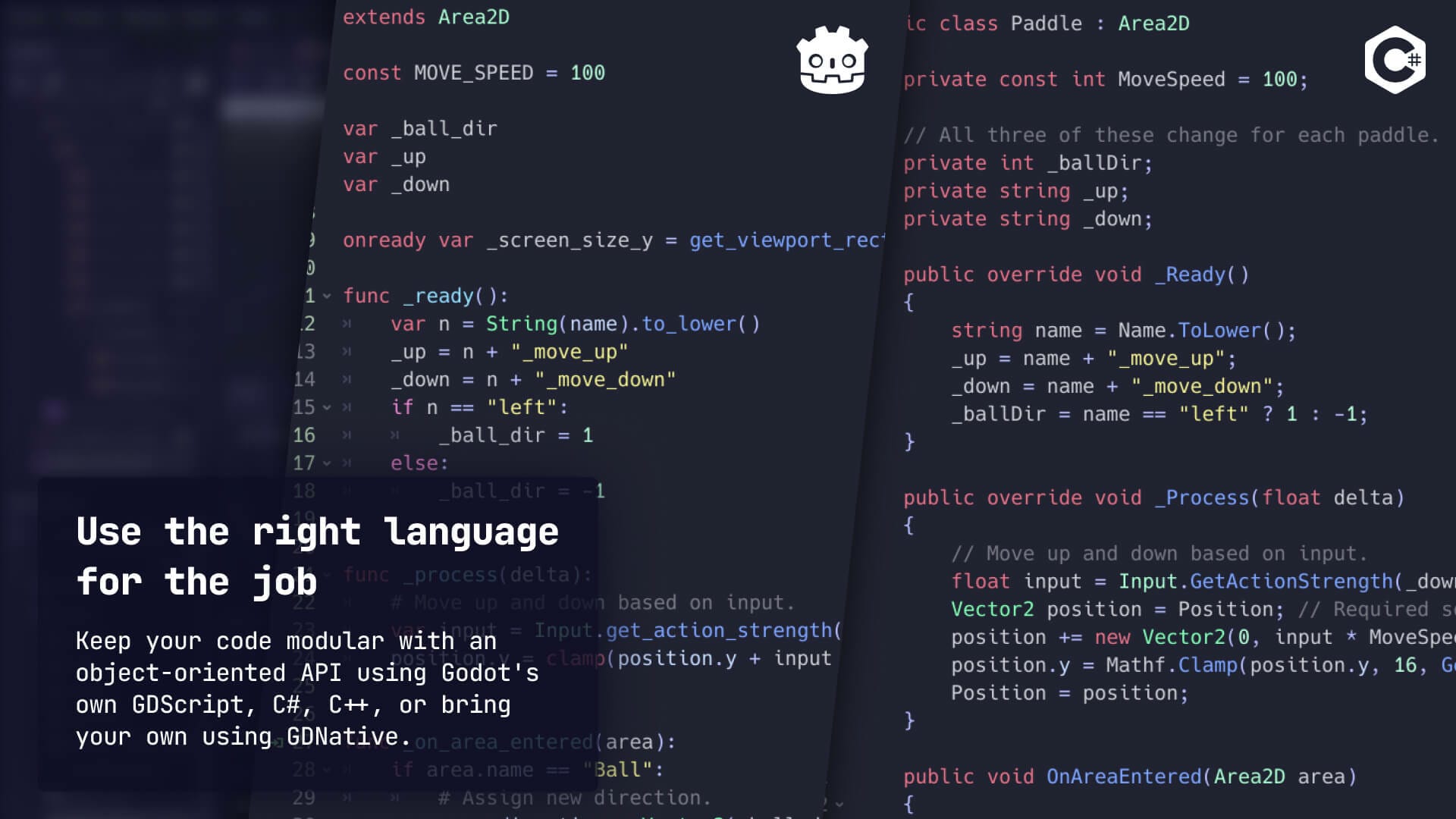
GDScript is, without exaggeration, one of the best things about the engine. By closely mirroring Python's syntax, it removes the intimidating barrier of C++ or the verbosity of C#. The language is statically typed but offers dynamic flexibility, providing the safety of type hints with the speed of a more lenient language for prototyping. The code editor is built directly into the IDE and is surprisingly capable, offering smart code completion, inline documentation, and direct links to the engine's extensive help files.
For those requiring maximum performance or integration with existing .NET libraries, the C# support is robust and well-maintained. Switching between the two is simple, allowing teams to use the right tool for the right job within the same project. This linguistic flexibility is a strategic advantage, widening Godot's appeal to a broader spectrum of developers.