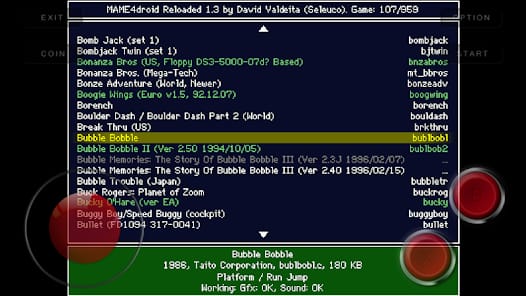

Bottom Line: MAME is an indispensable digital archive for anyone serious about game preservation, meticulously recreating arcade history with unparalleled accuracy, even if its demanding nature often frustrates casual users.
To call MAME a "utility" feels almost reductive. It is, fundamentally, a digital preservation project of staggering scope and meticulous execution. The dedication to recreating original hardware, down to the most obscure custom chips, is both its greatest triumph and its most significant barrier to entry. Unlike many emulators that prioritize user-friendliness or performance optimizations through abstraction, MAME's guiding principle is authenticity over convenience. This manifests in a few critical ways.
Firstly, the accuracy imperative means that MAME often mirrors the performance characteristics of the original hardware. Running a complex arcade system on modern hardware through MAME can be surprisingly resource-intensive. This isn't a flaw in the software; it's a direct consequence of its design philosophy. Expecting a modern PC to effortlessly run every emulated system is akin to expecting a perfectly restored antique car to handle like a contemporary sports sedan. The raw computational horsepower required to accurately simulate decades-old, often highly specialized, silicon can push even robust systems, and it certainly taxes mobile platforms. The experience, when perfectly tuned, is uncanny, a direct portal to the past, but the path to that perfection is often fraught with configuration challenges.
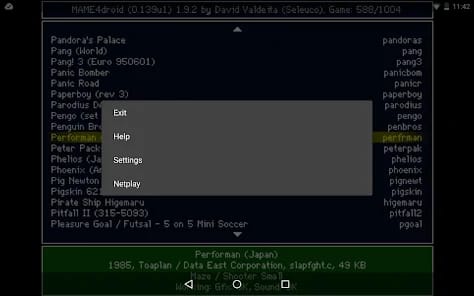
Secondly, the user experience around setting up and managing MAME is notoriously steep. This is not a utility for casual installation. The ecosystem of ROM sets, BIOS files, and the intricacies of MAME’s command-line or front-end configuration can be bewildering. For the uninitiated, the process of sourcing, verifying, and correctly integrating game files—often in specific versions tied to specific MAME releases—feels less like installing an application and more like performing a complex system administration task. This friction, while understandable given the project's goals, alienates a significant portion of potential users who merely want to revisit a childhood memory without delving into the esoterica of driver sets and XML configurations. The project’s priorities are clearly academic and archival, not consumer-grade accessibility.
However, for those willing to brave the learning curve, MAME offers an unparalleled reward: digital immortality for a dying art form. It is the last stand against bit rot and the relentless march of hardware decay. Historians and enthusiasts can dissect, analyze, and experience the nuances of game design and engineering from bygone eras. The sound emulation, in particular, often recreates the sonic landscapes of classic games with a precision that can evoke profound nostalgia. This isn't just about playing games; it's about understanding the technological limitations and creative solutions that defined entire generations of interactive entertainment. MAME serves as a crucial research tool, a digital museum, and a gateway for future generations to interact with foundational works of electronic culture. The depth of its preservation effort makes it an invaluable, irreplaceable tool, warts and all.