


Bottom Line: RemNote is a powerhouse of academic rigor that demands a steep intellectual down payment before it starts paying dividends in long-term retention. It is less a note-taking app and more a sophisticated engine for cognitive endurance.
To understand RemNote, you must first accept its fundamental premise: structure is the precursor to memory. In a standard document, information is linear and flat. In RemNote, information is a graph.
The Power of the "Rem"
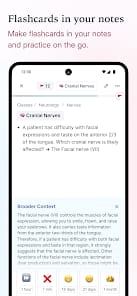
The genius of the system lies in the "Rem" hierarchy. Because every bullet point is an object, you can reference, tag, or transform it without losing context. This avoids the "folder fatigue" found in traditional apps. When you create a note about "Neuroplasticity," you aren't just writing text; you are creating a node that can be queried by the SRS engine. The workflow is deceptively simple: you take notes during a lecture, and by the time you’ve finished typing, your flashcard deck is already built. This eliminates the "double-work" of manual card creation, which is the primary point of failure for most students using Anki.
The PDF Workflow: A Researcher’s Dream
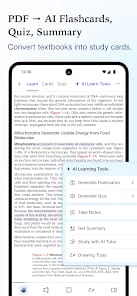
For those dealing with dense academic papers, the PDF integration is a revelation. The ability to highlight a sentence in a clinical study and have that highlight exist as a live reference in your "Second Brain" is transformative. If you’re reviewing your notes six months later and forget the context of a specific claim, clicking the reference opens the PDF to the exact page and highlight. This creates a closed-loop system where the source material and the distilled knowledge are tethered. It's a level of utility that makes standard PDF readers feel like relics of the paper age.
The Learning Curve: A Wall of Friction
However, we must talk about the friction. RemNote is not intuitive. It lacks the immediate "pick up and play" nature of Apple Notes or even Notion. The interface is dense, peppered with icons and keyboard shortcuts that require a significant time investment to master. For the uninitiated, the screen can feel cluttered, and the "Everything is a Rem" logic can lead to a messy graph if you don't approach it with a disciplined organizational strategy.
The onboarding process tries to mitigate this, but there is no escaping the reality: this is a professional tool. If you aren't willing to learn the difference between a "concept" and a "descriptor," or if you find the idea of bi-directional linking confusing, you will likely bounce off RemNote within an hour. It rewards the "power user" but offers very little comfort to the casual note-taker who just wants to save a grocery list.
Spaced Repetition Logic
The SRS algorithm itself is robust, allowing for specialized exam schedulers. You can tell the app, "I have a board exam in three weeks," and it will intelligently front-load the material you are struggling with. This isn't just a gimmick; it’s a sophisticated application of cognitive science. However, the reliance on this system means that if you fall behind on your "queue," the app can become an overwhelming source of anxiety rather than a tool for productivity.