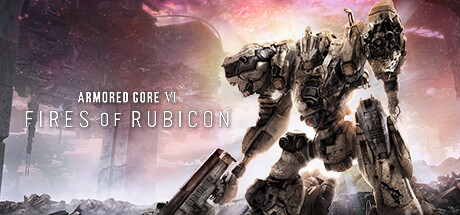
Bottom Line: ARMORED CORE VI FIRES OF RUBICON is a triumphant and punishing return to form for the series, offering some of the most intricate mech customization and brutally satisfying combat in years. It’s held back only by a narrative that fails to match the staggering highs of its gameplay.
ARMORED CORE VI lives and dies by its core loop: build, fight, fail, rebuild. It's a rhythm that will be familiar to FromSoftware devotees, but its application here is unique. Where success in Dark Souls is a matter of learning enemy patterns and timing, success in Rubicon is a matter of engineering. The true battle is often won in the garage, not on the battlefield.
The Assembly: A Tinkerer's Dream
The Assembly screen is where the game truly reveals its genius. This is not a simple case of equipping gear with bigger numbers. Every component is part of a complex, interconnected system of trade-offs. Bolting on a massive plasma cannon might give you overwhelming firepower, but its immense weight could cripple your mobility, and its energy consumption could leave you dead in the air when you need to dodge.
Do you opt for standard bipedal legs for a balanced approach? Or perhaps reverse-joint legs for superior jump height and agility, perfect for an aerial build? Quad legs offer stable firing platforms for heavy weapons, allowing you to hover, while tank treads provide maximum armor and let you drift around corners like a death-dealing go-kart, albeit at the cost of verticality. This depth extends to every part of your mech, or "AC." The generator dictates your energy capacity and recharge rate—the very lifeblood of combat. The FCS (Fire Control System) determines your lock-on speed and effectiveness at different ranges. This is a game for players who love to tinker, to pore over spreadsheets of data and create a machine that is a perfect extension of their will.
The Brutality of Combat
On the ground, the gameplay is blindingly fast. You are a whirlwind of steel and firepower, dashing between enemy barrages while unleashing your own. The central combat mechanic is the Attitude Control System, a stagger meter that, once filled, leaves an enemy vulnerable to a burst of direct-hit damage. This encourages relentless, suffocating aggression. You must stay on top of your target, constantly pelting them with a mix of kinetic, explosive, and energy fire to break their posture before they break yours.
This system shines brightest in the game's signature boss encounters. These are not mere bullet sponges; they are intricate mechanical puzzles. A boss that seems impossible with a lightweight, long-range build might just melt before a heavy, close-quarters AC armed with shotguns and melee weapons. The game demands that you diagnose the problem, return to the garage, and engineer a solution. This process of iterative design is intensely rewarding. The frustration of being stonewalled by a seemingly unbeatable foe evaporates into pure elation when your new configuration clicks and you finally tear it apart.
A Narrative Misfire
For all its mechanical brilliance, the game's narrative is its most significant weakness. The story is told almost exclusively through disembodied voices over your comms during missions and in briefings. While the voice acting is solid, this detached method of delivery makes it difficult to form any real connection to the characters or the stakes. The world-building is fascinating, touching on themes of corporate feudalism, transhumanism, and the cost of war, but the plot that hangs on this framework is sparse and fails to generate any real momentum or emotional weight. It exists primarily to shuttle you from one spectacular combat encounter to the next.