Overview
In an industry awash with procedural generation and endless grind, Children of Morta, developed by Dead Mage and published by 11 bit studios, dares to inject genuine soul into the roguelite formula. This is a story-driven action RPG built with deliberate care, using its mechanics to reinforce its narrative themes. Players take on the roles of members of the Bergson family, an extraordinary lineage bound by ancient duty and an encroaching, malevolent Corruption that threatens to consume their world, Rea. From the game’s evocative, fully voiced narration and striking pixel-art cinematics, it’s clear that Children of Morta seeks to evoke more than just adrenaline. It seeks empathy.
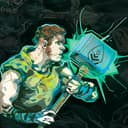
The game carves out a unique niche by focusing on the collective journey of a family rather than a lone hero. Each Bergson family member — from the stalwart warrior John to the agile archer Linda, the mystic mage Lucy, and the powerful brawler Mark, among others — brings a distinct fighting style and a unique skill tree to the fray. This isn’t a cosmetic choice; it’s central to the gameplay and progression. As players push into procedurally generated dungeons, dying functions as a narrative beat. Returning to the family home, a sanctuary of evolving character interactions and passive buffs, imbues every failed run with meaning. The game cleverly uses its roguelite structure to narrate themes of love, hope, longing, and sacrifice, transforming what could be repetitive into a deeply emotional and constantly evolving struggle. It’s a striking achievement that Dead Mage has reached such narrative resonance within a genre often criticized for its narrative scarcity. Children of Morta is experienced, felt, and remembered.
Key features
- Narrative-Driven Roguelite Action: A unique blend where an epic, fully voiced family saga profoundly influences and is influenced by the roguelite dungeon crawling and character progression.
- The Bergson Family System: Players control a diverse family of distinct heroes, each with unique combat styles, skill trees, and narrative arcs. The family home acts as a central hub where relationships develop and passive buffs are shared.
- Dynamic Procedural Dungeons: Explore ever-changing, perilous environments filled with diverse enemies, secrets, and challenges, ensuring no two runs are identical while maintaining a cohesive aesthetic.
- Empathetic Co-op Experience: Both local and online co-op options allow players to team up, sharing the emotional journey and intense combat, fostering teamwork through synergistic character abilities.
- Bundled Mobile Enhancements: The mobile versions offer a revamped interface, intuitive touch controls, cloud saves, and the inclusion of the ‘Ancient Spirits’ and ‘Paws and Claws’ DLCs, providing a comprehensive package on portable devices.
Analysis
The gravitational pull of Children of Morta lies in its audacious commitment to narrative within a genre typically prioritizing grind over introspection. The gameplay loop is familiar: descend into a corrupted dungeon, hack and slash through hordes of grotesque creatures, gather experience and currency, face a boss, likely die, and return to the Bergson family home. Yet, it’s this return that fundamentally shifts the paradigm. Instead of a sterile menu, players are greeted by a living, breathing household. Characters interact, grieve, celebrate small victories, and grow. A seemingly minor event in the dungeon can trigger a deeply personal interaction back home, unlocking temporary buffs or revealing new facets of the Bergson’s struggle. This narrative integration is not a superficial overlay; it’s the very foundation of the game’s emotional impact. Each death, while mechanically resetting dungeon progress, contributes to the family’s shared experience, making the player genuinely care about the fate of these pixelated heroes.
The character dynamics are equally compelling. With six distinct family members, each with unique combat mechanics, players are incentivized to experiment and master multiple styles. John, the sword-and-shield warrior, offers tanky resilience, while Linda’s rapid-fire bow demands precision and kiting. Lucy’s fire magic blankets the screen in chaos, contrasting with Mark’s frenetic, combo-driven brawling. Switching characters goes beyond preference; certain dungeons or bosses may implicitly favor specific skill sets, encouraging strategic adaptation. More critically, each character earns passive skill tree bonuses that benefit the entire family, a smart design choice that mitigates the frustration of starting over. Investing in one character indirectly strengthens all, reinforcing the central theme of familial unity.
However, the game’s roguelite repetition is not entirely without its friction points. While the narrative justifications are strong, and procedural generation keeps layouts fresh, some players may still find the process of re-traversing areas after a significant defeat a test of their patience. The core combat, while satisfyingly weighty and varied across characters, can occasionally devolve into button-mashing against overwhelming odds. Dead Mage has attempted to counter this with varied enemy types and environmental hazards, but the sheer volume of encounters can sometimes dilute the individual challenge. The game’s difficulty curve, particularly in later stages, demands not just skill, but an efficient understanding of character synergies and upgrade paths. This is where the game shines for those who embrace its strategic depth, but it can be a point of frustration for others seeking a more straightforward hack-and-slash experience. Despite these reservations, the overall journey remains captivating, a rare instance where a game’s heart beats as strongly as its combat rhythm.
Visuals & performance
Children of Morta is a visual treat, demonstrating that pixel art, when executed with deliberate intent, can convey immense emotional depth and environmental grandeur. The game’s aesthetic is a standout in modern pixel art, boasting impressive detail in character animations, enemy design, and the environments themselves. From the decaying gothic dungeons to the vibrant, lived-in Bergson home, every screen is rendered with palpable atmosphere. The vibrant cinematics, often brief but impactful, blend naturally with the gameplay, pushing the narrative forward with poignant imagery. Lighting effects are particularly strong, illuminating dark corridors and spell effects with a dynamic glow that enhances the combat. The UI is functional, if occasionally a little busy, but generally clear and doesn’t detract from the action.
A 2D game of this scope is light on hardware, and the design is well suited to all three platforms. On Steam, mouse and keyboard lend themselves to the game’s intricate combat. The Nintendo Switch version is built around the expected resolution and frame rate concessions for portability while retaining the core visual style. The Android version was designed with care, featuring a revamped interface and intuitive touch controls — often a critical hurdle for action-RPGs on mobile, and one the design largely addresses, though the inherent limitations of touch input for fast-paced combat remain. The inclusion of cloud saves on mobile is a welcome, almost essential, modern convenience, ensuring progress isn’t tethered to a single device.
Platform nuances
On Steam, Children of Morta gets the quintessential setup: crisp visuals and the tactile precision of mouse and keyboard, which greatly benefits ranged characters like Linda and Kevin. The Nintendo Switch version provides the invaluable flexibility of portable play. While battling the Corruption on the go is appealing, the smaller screen can make discerning enemy projectiles in chaotic encounters a challenge, and the joy-cons, while functional, lack the heft of a dedicated controller for long stretches.
The Android iteration is perhaps the most surprisingly robust. Dead Mage’s decision to include a revamped interface specifically tailored for touch screens, coupled with intuitive touch controls, demonstrates a clear understanding of mobile gaming’s unique demands. While no touch interface can fully replicate the precision of physical controls for an action RPG, the design here minimizes friction. The inclusion of both the ‘Ancient Spirits’ and ‘Paws and Claws’ DLCs from the outset on mobile platforms adds significant value, making it a comprehensive package for players who prefer to engage with games on their phones or tablets. The trade-off is the inherent input precision gap compared to console or PC, but for a game of this narrative depth, the accessibility afforded by its mobile presence is a net positive.
Final verdict
Children of Morta is a journey into the heart of a family fighting for survival against an existential threat. Dead Mage has not just iterated on the roguelite genre; they have elevated it, proving that procedural generation and relentless combat can coexist with a narrative that resonates deeply. Its striking art, varied combat, and clever family progression system make it a title we recommend wholeheartedly — with the caveat that its cyclical design may not captivate every player. Those who surrender to its rhythm will find an experience that is both challenging and profoundly moving.
Reviewed by the Rankeno RPG & Adventure Desk. Scores are out of 10; the overall score is the desk’s editorial judgement, informed by the four sub-scores above. How we review