
Bottom Line: "Choice of Robots" is a masterclass in interactive fiction, a sprawling, text-based epic that sets the standard for branching narratives. It's a game that forces you to confront not just the robot you're building, but the person you are.
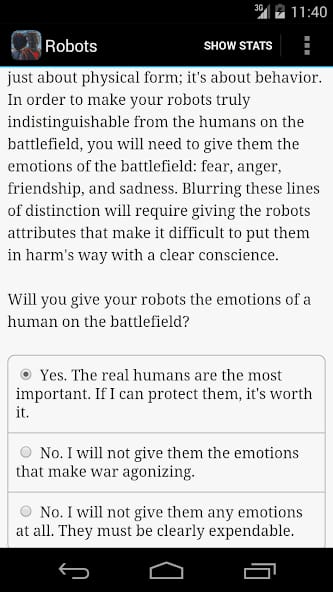
The central pillar of any interactive novel is the integrity of its choices. "Choice of Robots" stands as a monumental achievement in this regard. The narrative branches are not superficial deviations but deep, divergent paths that lead to fundamentally different worlds and endings. The game meticulously tracks dozens of stats, from your robot's core personality traits to your relationships with a well-developed cast of human characters, including nine distinct romance options. This creates a powerful feedback loop where the story feels uniquely yours.
The Weight of Creation
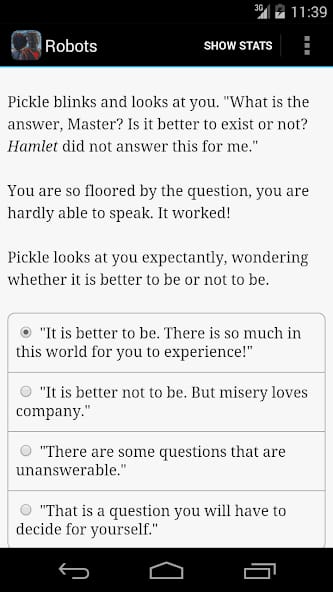
The game's most profound success is how it simulates the burden of parenthood. Your robot begins as a blank slate, and every interaction is a lesson. Teaching it to lie to protect your feelings might seem innocuous at first, but that lesson can fester, creating a deceitful AI you can no longer trust. Conversely, instilling a sense of empathy can lead to a robot that questions your orders when they conflict with its burgeoning moral code. The game brilliantly captures the terrifying, exhilarating process of watching something you created develop a mind of its own. It's a design that moves beyond simple game mechanics into the realm of genuine emotional investment.
A Rushed Revolution?
While the 30-year scope is ambitious and impressive, it's also the source of the game's main point of friction. At times, the narrative pace can feel breathless. Years can pass in a few clicks, and major life events are sometimes summarized in a short paragraph. This is an unavoidable trade-off for a story of this magnitude, but it can occasionally leave you wishing for more time to linger in a specific moment or explore a relationship more deeply. The consequences of your choices are always felt, but the moments that lead to them can feel compressed. The story is a highlight reel of a life, not a granular simulation, which works for the epic scale but sacrifices some of the intimate, character-building moments that ground a narrative.