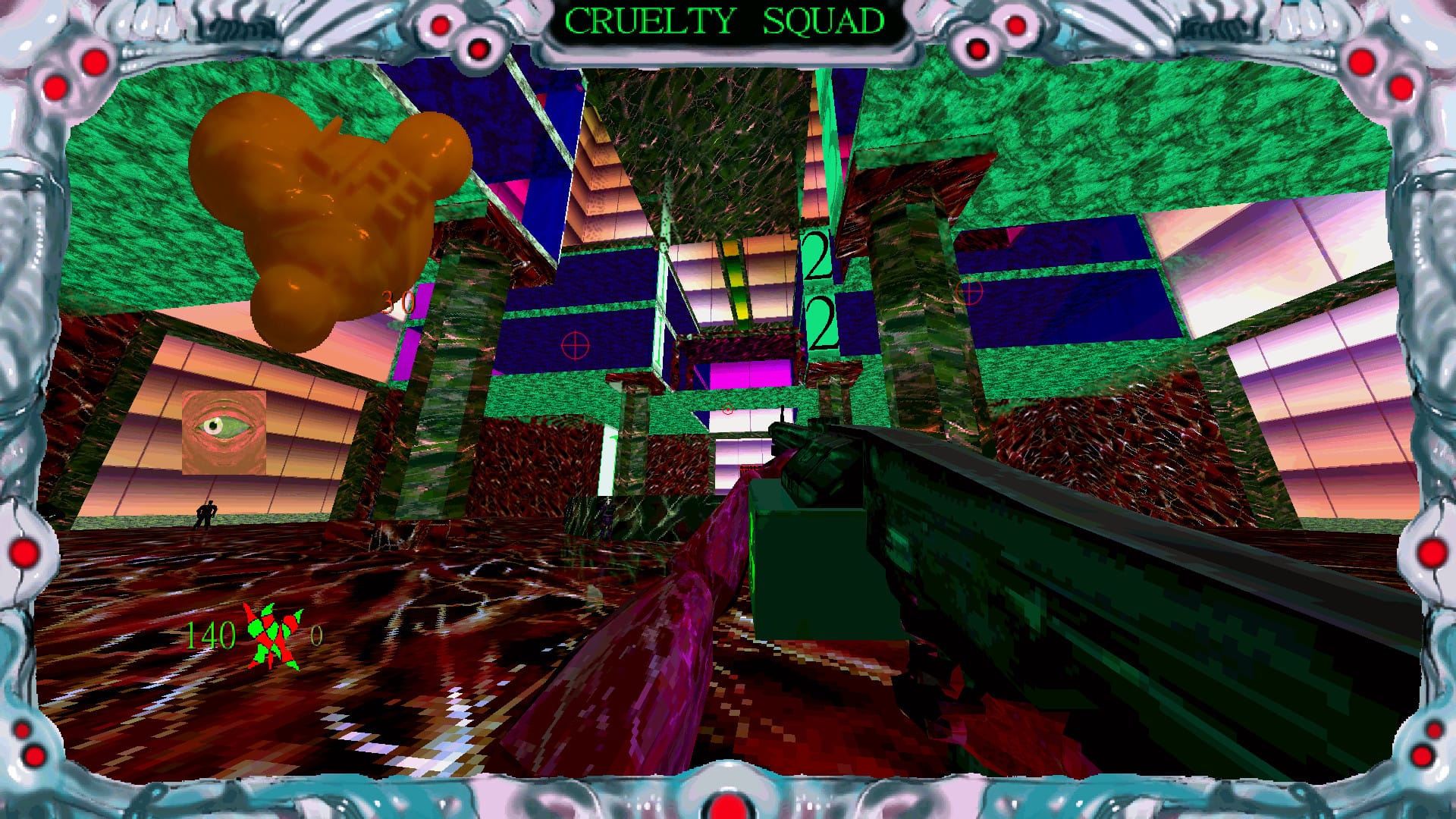

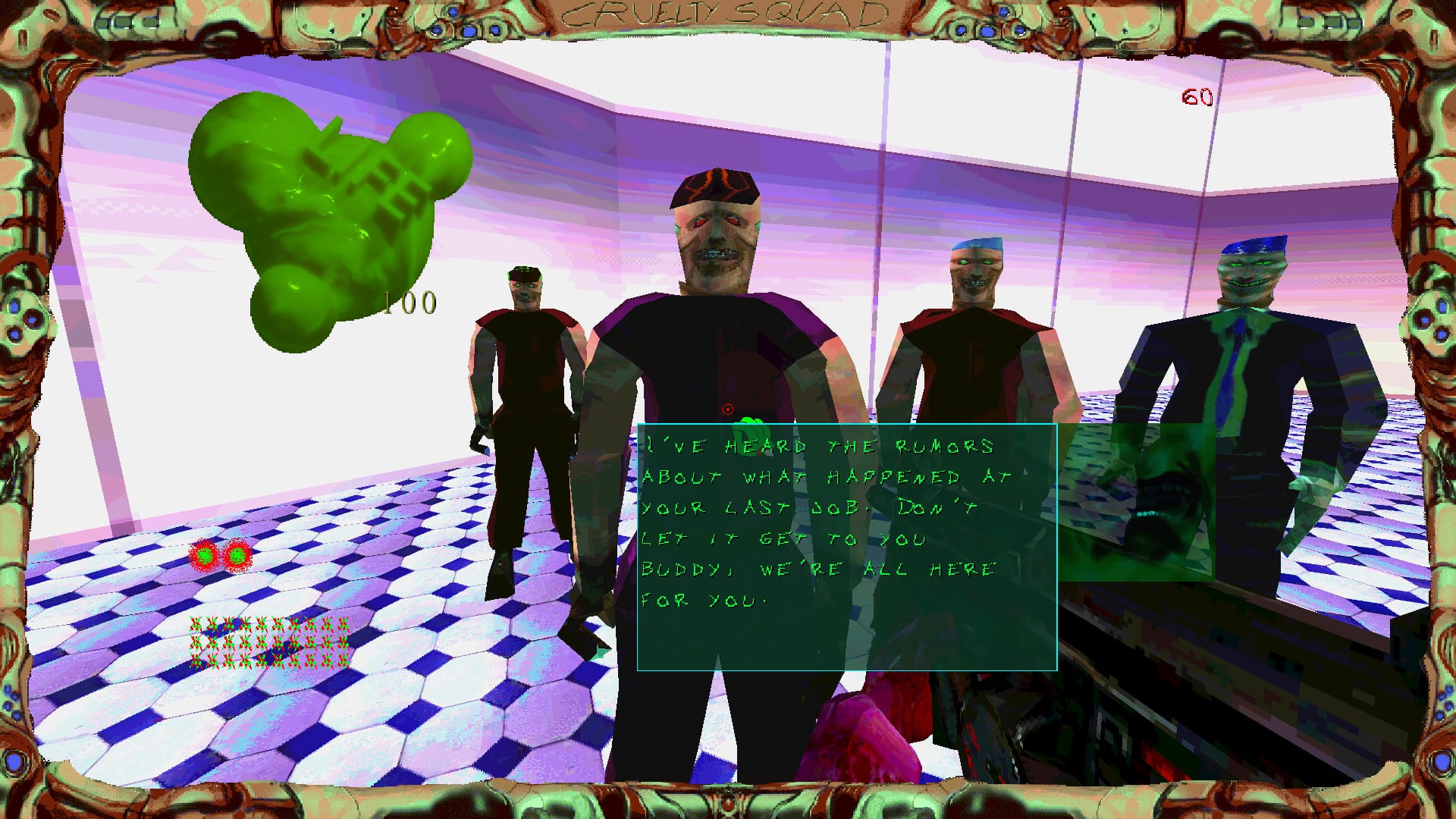
Bottom Line: Cruelty Squad is a grotesque and brilliant fever dream of a game; a tactical shooter that is as punishingly difficult as it is culturally insightful. It is a masterpiece of intentional ugliness and a necessary shock to the system.
Cruelty Squad is, at its core, a puzzle box. Every level presents a problem—a target that needs to be "liquidated"—and offers a dizzying array of tools to solve it. But the game is actively hostile towards the player, making the discovery of those solutions a grueling yet exhilarating process.
The Gameplay Loop from Hell
The core loop is unforgiving. You are dropped into a level with a clear objective but almost no guidance. Death comes swiftly, and a chunk of your earnings is siphoned off for "resurrection fees." This punishing cycle forces a kind of violent iteration. You learn the patrols, you identify the security systems, and you discover the environmental exploits through repeated, brutal failure. The gunplay itself is fast, lethal, and requires precision. Enemies are relentless, and a single mistake can unravel a perfect run.
This isn't just difficulty for difficulty's sake. It's a mechanic that reinforces the game’s central theme: you are disposable. A failed mission or a costly death is just a blip on a corporate balance sheet. The frustration is the point. You are a contractor in a gig economy from hell, and the system is designed to grind you down. The moments of triumph, when you perfectly execute a silent takedown or survive a chaotic firefight by the skin of your teeth, feel genuinely earned.
An Economy of Flesh
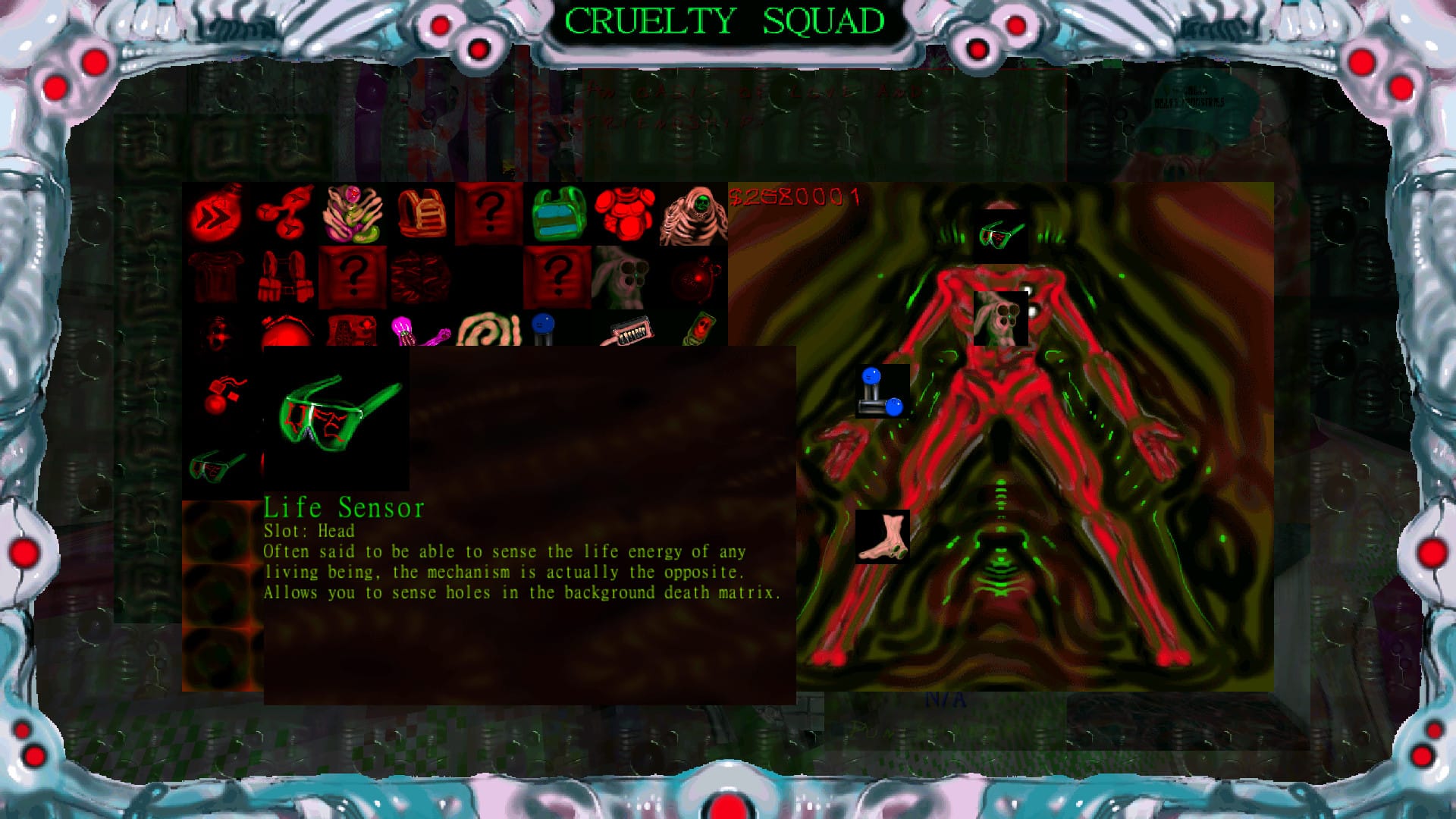
Where the game truly transcends the shooter genre is in its intricate economic systems. The world of Cruelty Squad runs on biocapitalism. You can harvest organs from your victims and sell them on a dynamic stock market. You can take a break from the carnage to go fishing, selling your catch for extra cash. This money is then used to purchase new weapons and, more importantly, grotesque bodily implants that fundamentally alter your capabilities.
Want to scale walls? There's an implant for that. Need to breathe underwater? There's a set of gills you can buy. This loop—kill, harvest, invest, upgrade—is sickeningly compelling. It turns the player into a walking, talking embodiment of corporate efficiency, constantly seeking to optimize their own body for the sole purpose of becoming a better killing machine. The game masterfully satirizes the concept of the "grind" present in so many other titles by making it explicitly about the commodification of life itself.
A Satire with Bite
While the gameplay is a chaotic joy, the satire is what elevates Cruelty Squad to the level of art. It’s a blistering, no-holds-barred critique of late-stage capitalism. The mission briefings are filled with corporate doublespeak. The environments are littered with grinning, vapid corporate logos. The entire world is a transaction, a resource to be exploited. It’s a game that understands the grotesque absurdity of a world where everything, and everyone, has a price. The deliberately jarring UI, the sensory-overload visuals, and the punishing mechanics all work in concert to create a feeling of profound alienation—the same alienation experienced by a worker whose only value is their productivity.