
Overview
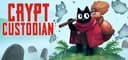
Being dead is usually the end of the line, but for Pluto, a mischievous black cat with a penchant for chaos, it is merely the start of a very long shift. Developed by Kyle Thompson—the solo developer behind Sheepo and Islets—Crypt Custodian takes the standard “search-action” blueprint and tilts the camera, offering a refreshing isometric perspective on a genre that often feels trapped in two dimensions.
The premise is delightfully low-stakes for a setting involving eternal damnation: after an accidental breakage in the Afterlife Palace, the Afterlife Warden sentences Pluto to serve as a janitor for the “grounds beyond.” Armed with a trusty broom, Pluto is cast out into the wilds of the spirit realm. It is a brilliant setup that immediately establishes the game’s core identity. This isn’t a dark, gothic descent into madness; it’s a colorful, quirky exploration of what happens to the “bad ghosts” who didn’t quite make the cut for the celestial penthouse.
Thompson has carved out a specific niche in the indie landscape, focusing on “cozy” Metroidvanias that prioritize fluid movement and approachable difficulty over the soul-crushing friction popularized by titles like Hollow Knight. Crypt Custodian is a strong expression of that design philosophy. It positions itself as a gateway into the genre, yet offers enough mechanical depth to satisfy veterans who might otherwise scoff at its vibrant palette. By focusing on the “Janitor” motif, the game turns the act of clearing out spectral beasts and navigating interconnected biomes into a satisfyingly methodical experience that feels less like a struggle for survival and more like a journey toward redemption.
Key features
- Isometric Metroidvania Navigation: A rare 2.5D perspective that changes how players perceive space, secrets, and combat lanes, moving away from traditional side-scrolling.
- The Badge Customization System: A deep, flexible upgrade tree that allows players to mix and match passive and active buffs, tailoring Pluto’s broom-based combat to their specific playstyle.
- Narrative Character Beats: Instead of generic NPCs, the world is populated by “bad ghosts” at a local tavern, each offering collectible Polaroids that reveal their human histories and provide emotional weight to the exploration.
Analysis
The core of any Metroidvania lives or dies by its movement and its “lock-and-key” progression. Crypt Custodian handles both with an elegance that belies its solo-developer origins. The design calls for a snappy, responsive gait, and the combat—a mix of broom swipes and spectral abilities—is built around immediacy, with dashes and decoys meant to register the instant they’re triggered.
The Gameplay Loop: Cleaning Up the Great Beyond
The loop is classic, yet refined. Players explore a biome, hit a wall they can’t bypass, find a new ability, and backtrack to unlock secrets. The isometric view adds a layer of spatial puzzle-solving that feels fresh. Finding hidden paths behind trees or under walkways requires a different kind of environmental awareness than a 2D map.
The combat encounters are frequent but rarely overwhelming. Thompson understands that the joy of a janitor-themed game is the “clean.” Wiping out a room of spectral beasts is designed to feel like clearing a dusty shelf—satisfying, tactile, and rhythmic. The real depth, however, lies in the Badge System. As players explore, they find or buy badges that take up limited slots. One might prioritize a badge that extends reach, one that causes explosions on the third hit of a combo, or one that focuses entirely on survivability. This system creates a constant incentive to explore every corner of the map, as a single new badge can completely change how the next boss is approached.
Narrative Friction and the “Cozy” Tension
Where the game rises above many of its indie peers is in its heart. The “bad ghosts” players meet at the tavern are not villains; they are outcasts. Collecting Polaroids to uncover their tragic backstories provides a narrative thrust that goes beyond simply “opening the next door.” It grounds the mechanical progression in a human (or feline) story about friendship and the unfairness of judgment.
Critics of the genre often point to the punishing difficulty of modern indies as a barrier to entry. Crypt Custodian leans into an approachable difficulty curve. While veteran players may find some of the early boss battles a bit too telegraphed, the game introduces complexity through its optional challenges and end-game encounters. It respects players’ time, providing plenty of fast-travel points and a map system that is clear without being hand-holdy. It’s a rare game that manages to feel relaxing while still asking players to master its dodge-roll timings and pattern recognition.
Visuals & performance
Visually, the game is a triumph of hand-drawn aesthetic. The colors are lush, and the character designs are brimming with personality. Pluto is expressive even in his small, isometric form, and the Afterlife Warden is a wonderfully imposing foil. The art direction manages to make “underworld janitor work” look like a weekend at a boutique park.
The design is also well suited to modest hardware: a 2D-leaning game of this scope is light on system requirements, and its zone transitions are built to be quick. The soundtrack deserves its own mention—it’s atmospheric and chill, perfectly matching the “cozy adventure” vibe while ratcheting up the tension during boss encounters without becoming jarring.
Platform nuances
On Steam, the game is a natural fit for the Steam Deck. The isometric visuals pop on the smaller screen, and the control scheme translates well to handheld play—a stable framerate matters for some of the later bullet-hell inspired boss patterns.
The Nintendo Switch version should be equally at home. Given the game’s 2D-leaning technical requirements, the hardware is more than sufficient for its visual ambitions, and the Switch’s portability fits the game’s “bite-sized exploration” feel perfectly. Handheld or docked, the design favors precise inputs, though the Joy-Cons’ analog sticks are likely the weaker option for the more frantic boss encounters.
Final verdict
Crypt Custodian is an easy game to recommend. Kyle Thompson has proven once again that he is one of the more thoughtful architects working in the indie space today. By subverting the grim tropes of the afterlife and the punishing difficulty of the Metroidvania, he has created something that feels both familiar and fresh. It is a game about cleaning up messes—both literal and emotional—and it does so with a level of polish and heart that stands out in any genre. We rate it a Great: recommended with real reservations, chiefly for veterans seeking a sterner challenge.
Reviewed by the Rankeno RPG & Adventure Desk. Scores are out of 10; the overall score is the desk’s editorial judgement, informed by the four sub-scores above. How we review