
Bottom Line: A punishing yet brilliant survival sandbox that trades hand-holding for deep, systemic gameplay and a stark, unforgettable art style. It's a masterpiece of the genre, provided you have the grit to endure it.
The Gameplay Loop: Learn, Die, Repeat
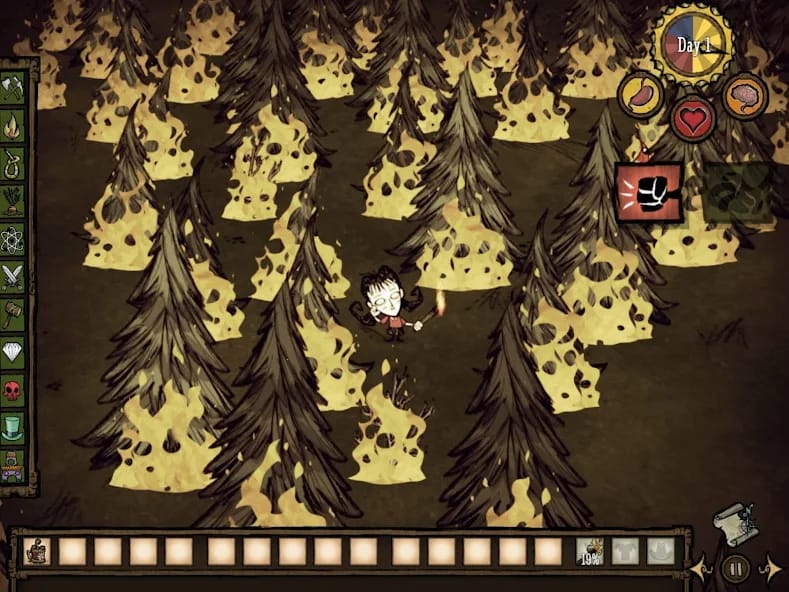
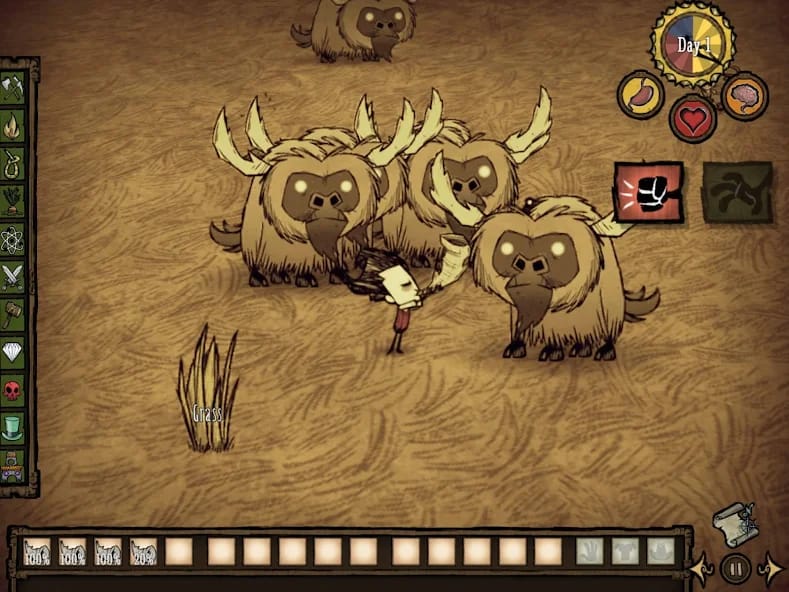
The core gameplay loop of Don't Starve is as simple as it is brutal. You are dropped into the world with nothing and tasked with one goal: survive. This breaks down into a constant, frantic cycle of gathering resources, crafting tools, and staving off the relentless decay of your vital statistics. The first day is a scramble for twigs, grass, and flint to craft an axe and a pickaxe. By nightfall, you need a fire to keep the unseen terrors of the dark at bay. This initial tension never truly dissipates; it merely evolves. Soon, your concern shifts from a nightly fire to a sustainable food source, then to preparing for the first winter, a challenge that requires significant foresight and resource stockpiling.
Death in Don't Starve is permadeath. When you die, your world is erased (unless you've found a rare revival item). This punishment is not arbitrary; it is the game's primary teaching mechanism. Each death imparts a critical piece of information. You died of starvation? Next time you'll prioritize traps and crock pot recipes. Froze to death? Next time you'll craft a Thermal Stone and a winter hat well before the first snow. This cycle of failure and learning is what makes success so gratifying. The game does not reward reflexes so much as it rewards knowledge and planning.
Interface and Controls
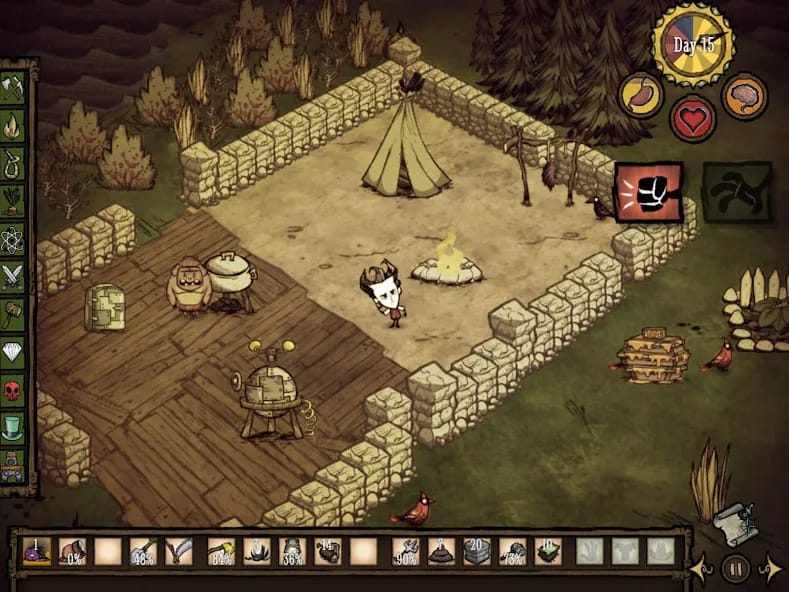
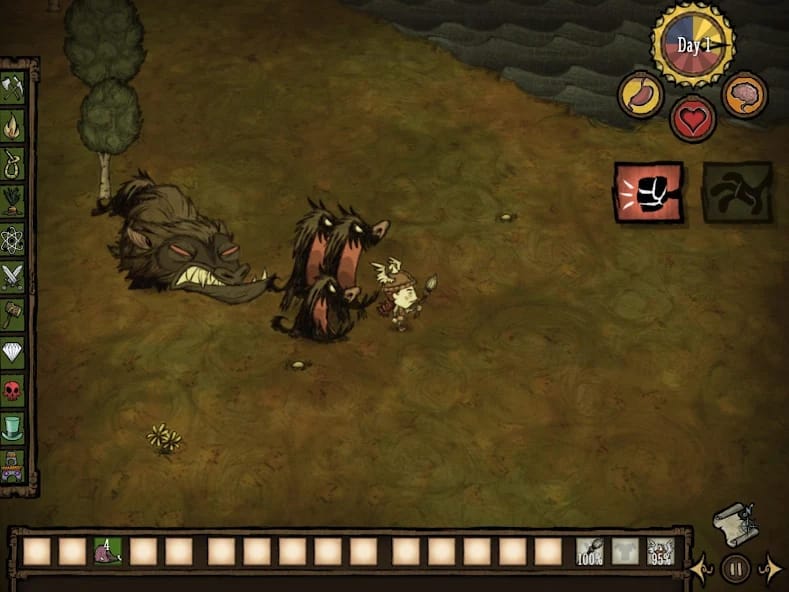
The game's UI is minimalist and effective. Your inventory, crafting menu, and vital stats are always visible but rarely intrusive. The crafting tab is split into logical categories, allowing for quick access once you've learned what you're looking for. On PC and console, the controls are precise and intuitive. However, the transition to the "Pocket Edition" for mobile devices introduces some necessary compromises. The touch-based controls work surprisingly well for slower-paced activities like gathering and base management. The game employs a "tap-to-move" and "tap-to-interact" system that is generally reliable. The challenge, as noted by many critics, arises during high-pressure situations. Precisely kiting a charging enemy or quickly swapping tools in a panic can be clumsy on a touchscreen, leading to frustrating deaths that feel less instructive and more like a control failure. It is a competent adaptation, but the precision of a mouse or gamepad remains the superior experience.