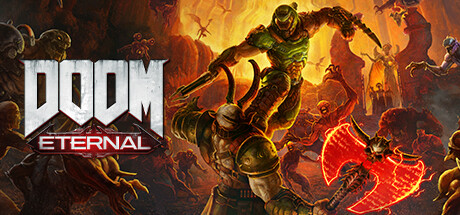
Bottom Line: Doom Eternal isn't merely a game; it's a meticulously engineered masterclass in kinetic combat, demanding aggressive precision and rewarding it with an adrenaline-fueled ballet of demonic obliteration. This is not casual escapism; it is a brutal, exhilarating gauntlet that redefines the modern first-person shooter.
To call Doom Eternal a mere sequel is to misunderstand its ambition. It is a highly distilled, almost scientific refinement of the 2016 reboot's core principles, pushing the "power fantasy" not through invincibility, but through empowering competence. The genius lies in its combat loop, a brilliantly brutal ecosystem that mandates aggression. Every enemy becomes a walking health pack, ammo dispenser, or armor shard, provided you engage them on the game's terms. This isn't about cover shooting; it’s about arena management, a three-dimensional chess match where every move is a high-octane flurry of rockets, plasma, and ripping flesh.
The expanded arsenal isn't just more guns; it's a toolbox, each implement purpose-built for specific demonic threats. The Plasma Rifle isn't merely an energy weapon; its heat blast mod is crucial for detonating Mancubus cannons. The Heavy Cannon’s precision scope makes short work of weak points, like the Revenant’s jetpack. Mastering these tools, and more critically, the rapid weapon-swapping between them, is the true skill ceiling of Doom Eternal. This isn't an arbitrary mechanic; it’s a necessity for survival, a rhythm-action game disguised as a blood-soaked shooter. You are constantly cycling through your weapons, each serving a specific role in dismantling the demonic horde. The flow state achieved when seamlessly transitioning from a sticky bomb barrage into a super shotgun blast, followed by a chainsaw execution, is unparalleled.
Mobility has also been dramatically upgraded. The addition of the double-dash and wall-climbing fundamentally alters arena navigation. No longer are you merely strafing; you are darting, soaring, and grappling across multi-tiered environments. The Super Shotgun’s Meat Hook epitomizes this philosophy, transforming a powerful close-range weapon into a mobility tool that yanks you directly into the face of a demon, setting up perfect glory kills or quick escapes. This verticality and speed make every encounter feel like a precisely choreographed ballet of destruction, demanding constant situational awareness and quick decision-making.
The demon destruction system serves as both a visceral delight and a strategic indicator. Watching a Cacodemon’s eye burst or a Mancubus’s arm cannons shatter under fire provides immediate, satisfying feedback. More importantly, it guides the player: target the weak points, strip their armor, and transform powerful threats into manageable fragments. This visual language reinforces the tactical demands, encouraging players to prioritize targets and utilize specific weapons to exploit vulnerabilities.
Where the game occasionally stumbles is in its narrative ambition. While it attempts to build out the lore of the Doom Slayer and the universe, these exposition dumps, often delivered through collectible codex entries or during brief lulls in the action, can feel like interruptions rather than enrichments. The game's core strength is its uninterrupted, visceral gameplay; the narrative, while present, struggles to carry the same weight as the combat. Similarly, some of the platforming sequences, while adding verticality, occasionally break the intense combat flow, feeling more like necessary navigation than integral gameplay.
Gameplay Loop
The core loop is a high-stakes improvisation. You enter an arena, assess the immediate threats, prioritize targets based on their resource drop (health/armor/ammo), and then unleash a symphony of lead and fire. The Flame Belch coats demons in armor shards, the chainsaw carves through fodder for ammo, and glory kills provide critical health boosts. This constant push-and-pull, where offense is defense, creates a unique tension. There's no safe space, only calculated aggression. It’s a game that respects your intelligence, presenting complex combat puzzles and giving you every tool to solve them.
User Experience Flow
The user experience is predominantly one of relentless, exhilarating challenge. The onboarding, while thorough, can feel like an information overload given the sheer number of mechanics introduced. However, once internalized, these mechanics click into a sublime rhythm. The game does an excellent job of escalating difficulty, introducing new demon types and environmental hazards that force continuous adaptation. The "extra lives" mechanic is a clever concession, allowing players to recover from a single fatal mistake without completely breaking the flow of a difficult encounter. The pacing is masterfully controlled, interspersing intense combat arenas with quieter exploration and platforming segments, providing just enough breathing room before the next onslaught.