
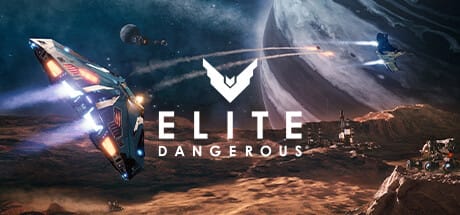

Bottom Line: Elite Dangerous offers an unparalleled canvas for cosmic ambition, painting a 1:1 scale Milky Way that demands dedication. Its triumphs in scale and ship mechanics are occasionally overshadowed by content sparse enough to feel genuinely empty, and an expansion that stumbled out of the gate.
The gravitational pull of Elite Dangerous lies in its sheer verisimilitude and the immense canvas it presents. Flying through a 1:1 scale Milky Way is not a mere bullet point; it’s a profound experiential differentiator. The silence of deep space, the distant twinkle of nebulae, the sudden roar of a jump drive – these elements conspire to create an atmospheric density few games achieve. Yet, this scale is a double-edged sword. While it enables moments of sublime awe, it also contributes to the criticism of barren content. Billions of stars mean billions of largely identical systems, and the journey between them, while punctuated by resource collection and jump-scooping, can often feel like a digital equivalent of commuting: necessary, but rarely thrilling.
The core gameplay loop thrives on player agency. Starting with a humble Sidewinder, the arc from a struggling pilot to a wealthy trader, a feared bounty hunter, or a legendary explorer is genuinely compelling. The simulation offers a granularity that appeals to aficionados: power distribution, module management, even the subtle nuances of atmospheric flight (in 'Odyssey') are all factors. Combat is a test of skill, demanding precise maneuvering, energy management, and weapon timing. Trading requires understanding supply and demand across diverse economies. Exploration is a testament to patience, revealing breathtaking vistas and scientific data for those willing to venture into the black.
However, the game's onboarding friction is undeniable. Elite Dangerous eschews hand-holding, expecting players to learn its myriad systems through trial, error, and external resources. This commitment to realism, while admirable for its target audience, serves as a significant barrier to entry. The sheer volume of information, the complex keybindings, and the opaque mission structures can deter many before they ever reach the rewarding core. The pace, too, is a point of contention. Elite Dangerous is a marathon, not a sprint. Progression, whether through wealth acquisition, rank progression, or exploration mileage, is often glacially slow, demanding hours of dedicated play for incremental gains. This deliberate pacing can either be meditative or maddening, depending on the player's disposition.
The 'Odyssey' expansion represents a pivotal, yet problematic, chapter. The promise of on-foot planetary exploration and first-person shooter mechanics was ambitious, aiming to bridge the gap between ship-bound activities and ground-level interaction. In concept, this expansion sought to deepen immersion by allowing players to step out of their cockpits. In execution, however, 'Odyssey' was marred by a notoriously rocky launch, plagued with severe performance issues, myriad bugs, and a general lack of polish that severely impacted the user experience. The technical debt incurred at launch cast a long shadow, highlighting the challenges of integrating such a complex new layer onto an already intricate simulation. While subsequent patches have improved its state, the initial reception underscored a critical misstep in delivering a smooth, high-quality experience.