

Bottom Line: Evoland masterfully translates gaming history into an interactive adventure, offering a poignant, albeit brief, retrospective on the evolution of RPGs that prioritizes concept over narrative depth.
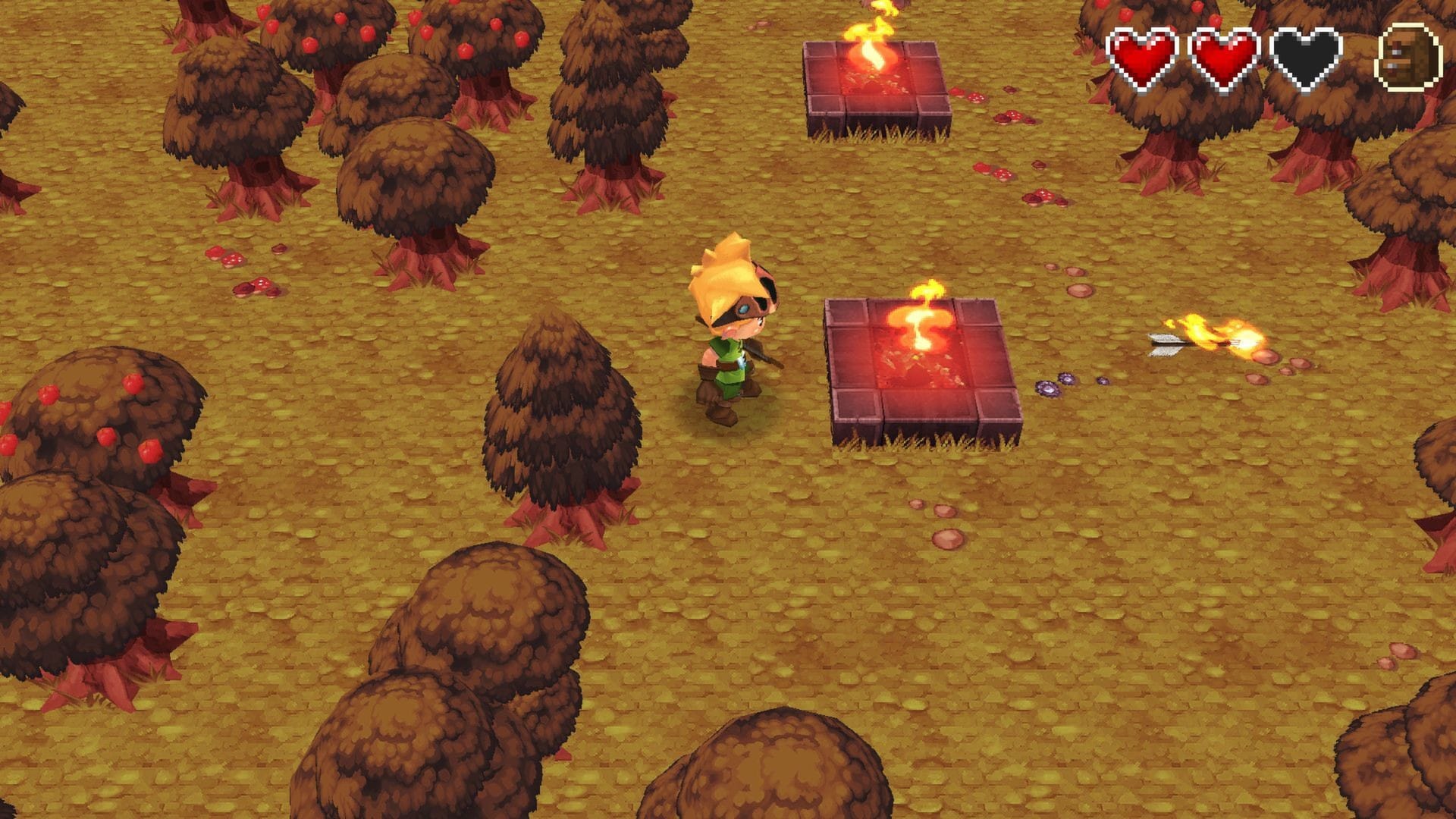
Evoland’s true genius lies in its unwavering commitment to its central conceit: experiencing the evolution of video games firsthand. When a chest provides the simple luxury of sound, or the revolutionary shift from eight directions of movement to omnidirectional freedom, the impact is palpable. These aren't mere cosmetic changes; they fundamentally alter the player's interaction with the world. The shift from a static screen to a scrollable map, or the introduction of a rudimentary inventory system, suddenly makes environments feel larger and possibilities expand. This progressive reveal is a masterclass in game design as historical narrative.
However, this narrative structure, while innovative, comes with an inherent trade-off. By constantly evolving its mechanics and visual language, Evoland struggles to develop any single gameplay system to significant depth. Each new era or genre segment is a fleeting snapshot, a tantalizing glimpse rather than a fully realized experience. The real-time combat sections, while functional, lack the tactical nuance of a dedicated action RPG. Similarly, the turn-based battles, though charmingly familiar, offer limited strategic depth before the game pushes you forward to the next innovation. This isn't necessarily a flaw, but a deliberate consequence of its design; the journey is the destination.
The game's humor, largely derived from its meta-commentary and direct references to gaming clichés, lands consistently. Discovering chests that "unlock" the ability to save anywhere, or witnessing NPCs comment on the sudden appearance of 3D models, elicits genuine chuckles. It's a game made by gamers, for gamers, and that shared understanding forms a strong bond.
Exploration and puzzle-solving are present, but like the combat, they serve more as vehicles for the evolutionary premise than as compelling challenges in their own right. Dungeons are straightforward, designed to guide the player through the next technological revelation. The narrative itself is thin, acting primarily as a scaffold upon which the evolutionary spectacle is built. This absence of a deep, compelling story is perhaps Evoland’s most significant shortcoming when judged against traditional RPG metrics, though it could be argued that the true "story" is that of gaming itself. The brevity of the experience also contributes to this feeling of undeveloped potential; just as one begins to settle into a new gameplay style, it's already time for the next paradigm shift. For some, this rapid pace is part of its charm, a condensed historical tour. For others, it leaves them wanting more, a deeper exploration of each evolutionary phase.