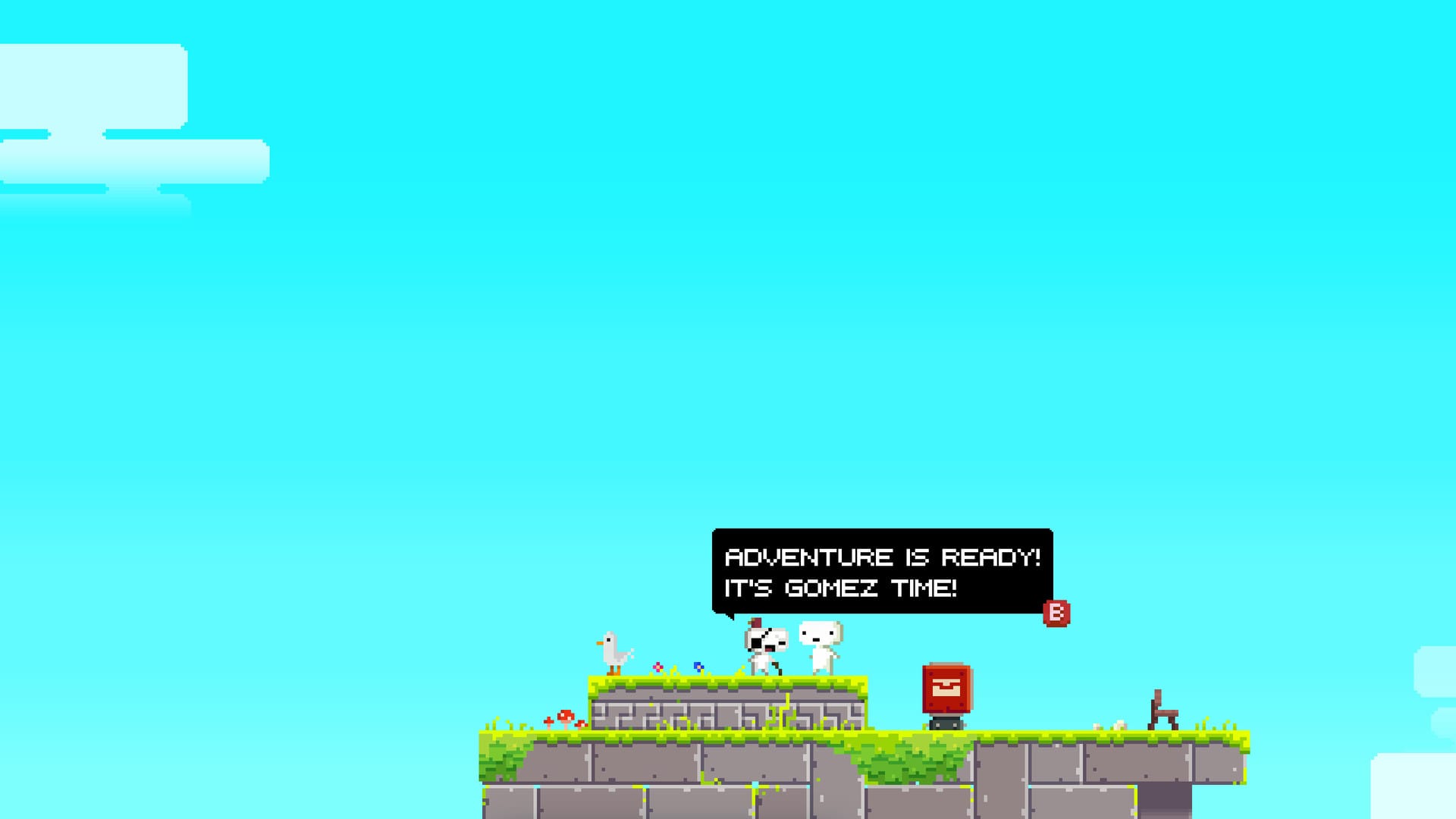



Bottom Line: Polytron's FEZ isn't just a puzzle-platformer; it's a profound statement on perception, delivering an unparalleled spatial manipulation mechanic that redefines interaction with digital worlds, albeit with a few minor, persistent technical echoes.
To genuinely dissect FEZ is to confront the limitations of traditional game design paradigms. Its central mechanic, the world-rotation, isn't a gimmick; it's the very grammar of interaction. Gomez, initially confined to a flat plane, gains the ability to perceive depth, and by extension, to manipulate it. This involves more than just toggling views; it requires an active mental gymnastics routine, where the player must reconcile seemingly disparate 2D representations into a coherent 3D mental model. The "aha!" moments, frequent and intensely satisfying, arrive when the player realizes a distant platform is actually adjacent when viewed from a different angle, or a seemingly impassable chasm can be bridged by a cleverly rotated perspective. It is a brilliant deconstruction of Euclidean space within a digital context.
The puzzle design within FEZ is both its greatest strength and its most polarizing characteristic. Polytron chose to design a world that rewards deep, often obsessive, observation. Beyond the core rotation puzzles, the game is littered with cryptic symbols, unwritten languages, and environmental cues that hint at larger, meta-puzzles. This approach fosters a profound sense of player-driven discovery, inviting meticulous exploration rather than hand-holding. For players who relish deciphering abstract riddles and connecting seemingly unrelated pieces of information, FEZ offers an intellectual feast. However, this same design can lead to moments of genuine frustration for those accustomed to more direct objectives or explicit signposting. The game does not apologise for its obscurity, demanding patience and a willingness to simply exist within its world until the next logical (or illogical) leap presents itself. This non-linearity, while liberating, also means that progression can feel opaque, occasionally leading players to wander without immediate purpose.
Critical reception for FEZ has been overwhelmingly positive, celebrating its innovation and artistic merit. Indeed, its unique core mechanic and intelligent puzzle-solving are frequently lauded as benchmarks in the genre. Yet, even masterpieces can possess minor imperfections. Throughout its lifespan, FEZ has been noted for occasional technical inconsistencies. Frame rate hiccups during auto-saves, while not game-breaking, do momentarily break the immersion, pulling the player from its captivating illusion of depth back into the reality of its underlying code. Furthermore, the very nature of its puzzles—once solved, they remain solved—inherently limits the game's replayability from a purely mechanical standpoint. While the allure of uncovering every last secret or cube might entice a second playthrough, the core intellectual challenge diminishes significantly once the solutions are known. This is not necessarily a flaw, but an inherent characteristic of puzzle games that FEZ's design amplifies. Its utility lies in the singular experience of discovery, not in repeatable procedural generation or combat loops.