



Bottom Line: Freeze! presents an atmospheric, physics-driven puzzle experience marred by inconsistent design choices that oscillate between clever spatial challenges and outright tedium, ultimately failing to consistently leverage its innovative core mechanics.
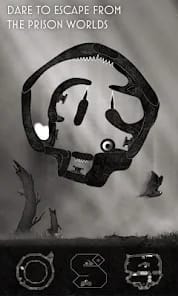
Freeze! endeavors to carve out a unique niche within the crowded mobile puzzle space, and in moments, it undeniably succeeds. The fundamental gameplay loop—rotating the prison cell and judiciously deploying the "Freeze" mechanic—is, when executed well, a masterclass in elegant design. The sensation of a perfectly timed "Freeze," allowing the eye-shaped hero to drift past a rotating saw blade or into a precisely positioned exit, provides a genuine rush of accomplishment. This core interaction demands both keen spatial awareness and a refined sense of timing, elevating it beyond mere tap-and-play mechanics prevalent in many contemporary mobile offerings. The initial levels serve as an engaging tutorial, subtly introducing the interplay between environmental rotation and gravity suspension, allowing players to acclimate to its unique physics.
However, the game's ambition is frequently undermined by its inconsistent level design. While many puzzles are commendably clever, requiring genuine insight and experimental approaches, others descend into frustrating trial-and-error. The "Internal Research/Notes" highlight a common sentiment: "some levels were criticized for being tedious or annoying, particularly those without the 'freeze' mechanic." This observation cuts to the heart of Freeze!'s principal failing. The "Freeze" button isn't just a feature; it's the game's defining innovation. Levels that strip this away, or diminish its importance, expose the underlying mechanics as less engaging, sometimes reducing the experience to little more than clumsy environmental rotation. The "changing mechanics between levels" also introduces an element of design whiplash, hindering the player's ability to develop a consistent mental model for problem-solving. This isn't innovation; it's a lack of focus, a failure to fully commit to the very systems that make the game distinctive.
The user experience flow, particularly in later stages, suffers from this unevenness. The learning curve, while initially smooth, becomes jagged, with sudden spikes in difficulty that feel less like organic progression and more like artificial gating. What begins as a contemplative challenge morphs into a test of patience, sometimes bordering on outright annoyance. Furthermore, the decision to gate additional worlds behind in-app purchases, while a standard monetization strategy, was met with "dissatisfaction for some players." In a game predicated on a unique atmospheric experience, fragmenting that experience behind paywalls felt antithetical to the immersive promise. This commercial decision, when coupled with the aforementioned design inconsistencies, further diluted the sense of a cohesive, premium product.