
Bottom Line: Groundspeak’s official app is the indispensable, if sometimes uninspired, digital key to the world’s largest treasure hunt. It successfully turns your smartphone into a modern-day compass for real adventure, but its full power remains locked behind a dated premium subscription model.
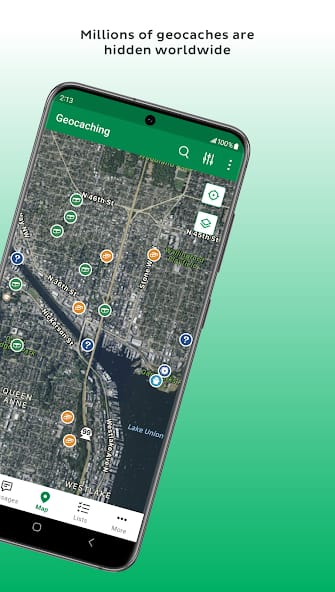
The Geocaching experience is a fascinating hybrid of digital and physical interaction. The app is merely the conduit to a tangible reward—a clever hide, a scenic view, a signed logbook. The fundamental gameplay loop is deeply satisfying, tapping into a primal urge for discovery and exploration. It starts with the map, a seemingly simple representation of nearby adventure. The initial thrill of seeing dozens of potential finds clustered around your location is a powerful hook.
The Onboarding Funnel
For new players, the app presents a curated, simplified experience. It foregrounds "Beginner" caches with low difficulty and terrain ratings. The navigation tools are intuitive, with a compass view that points directly to "Ground Zero." This initial interaction is smooth and effective, designed to deliver a quick win and the dopamine hit of a successful find. The friction, however, begins to show almost immediately. Many of the most interesting-looking caches on the map will inevitably be marked "Premium." The app's business model is built around a hard paywall, and it isn't shy about it. The free tier feels less like a complete experience and more like an extended trial. This aggressive upsell is a constant presence, a persistent reminder that the real game requires a subscription. For a modern mobile app, this feels archaic. The lack of a "freemium" model with cosmetic or convenience-based in-app purchases, in favor of a hard annual subscription, is a holdover from a previous era of software and represents the app's single greatest weakness.
Interface and User Experience
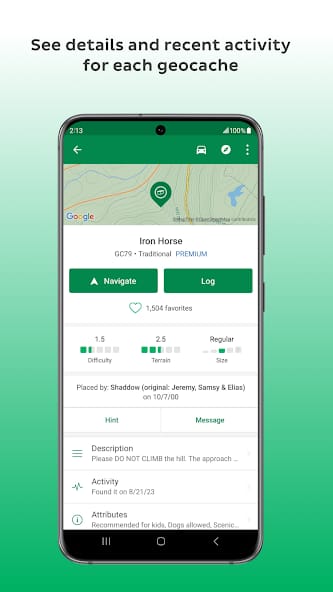
The UI itself is functional but lacks flair. It’s a workhorse, not a show pony. Menus are logically laid out, and accessing cache details, hints, and recent activity is straightforward. Yet, the design language feels dated, caught somewhere between the skeuomorphism of the early 2010s and the flat design of today, achieving mastery in neither. There’s a distinct lack of polish; animations are utilitarian, and the overall aesthetic doesn’t inspire the same sense of adventure that the game itself does.
The most critical part of the user experience—the map—is where performance can be a pain point. On dense urban maps or during heavy use, the app can feel sluggish, and GPS wander can be a frustrating variable when you're searching within the final 10-meter circle. The reliance on a constant data connection for the free version is a significant drawback for a game that actively encourages you to explore remote parks and wilderness areas, making the offline maps a key driver—or cudgel—for the premium upgrade.