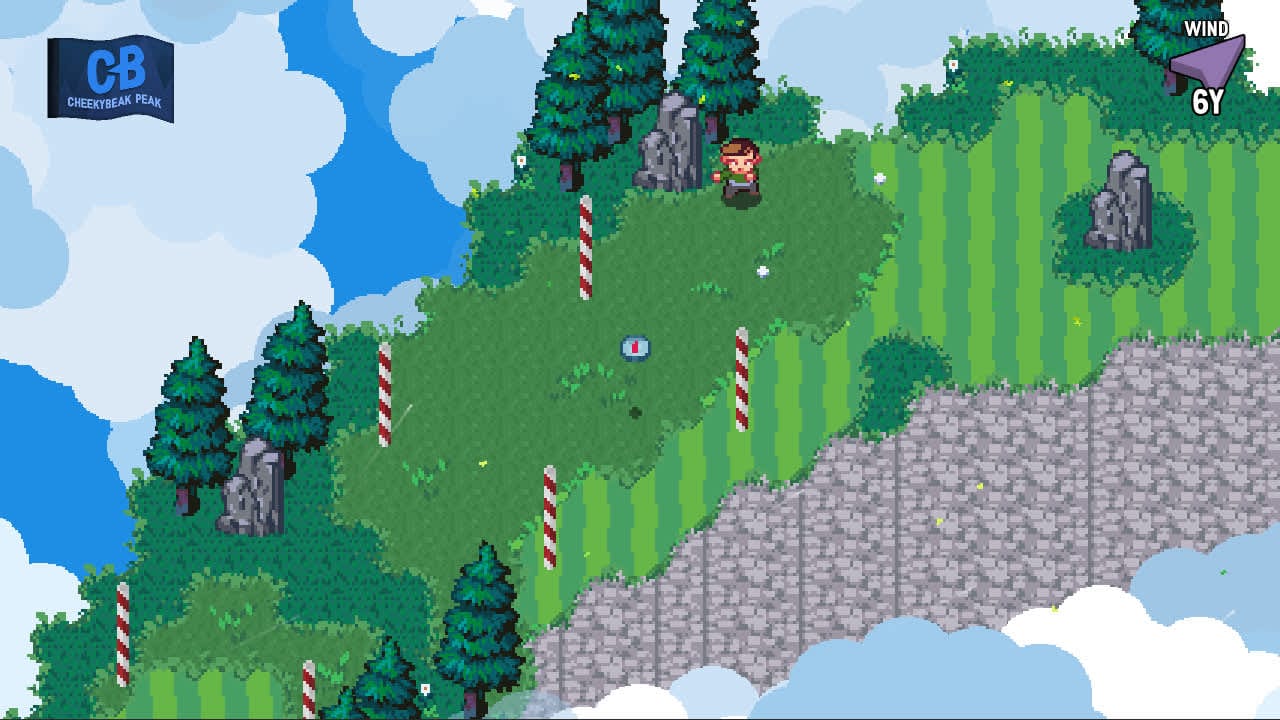
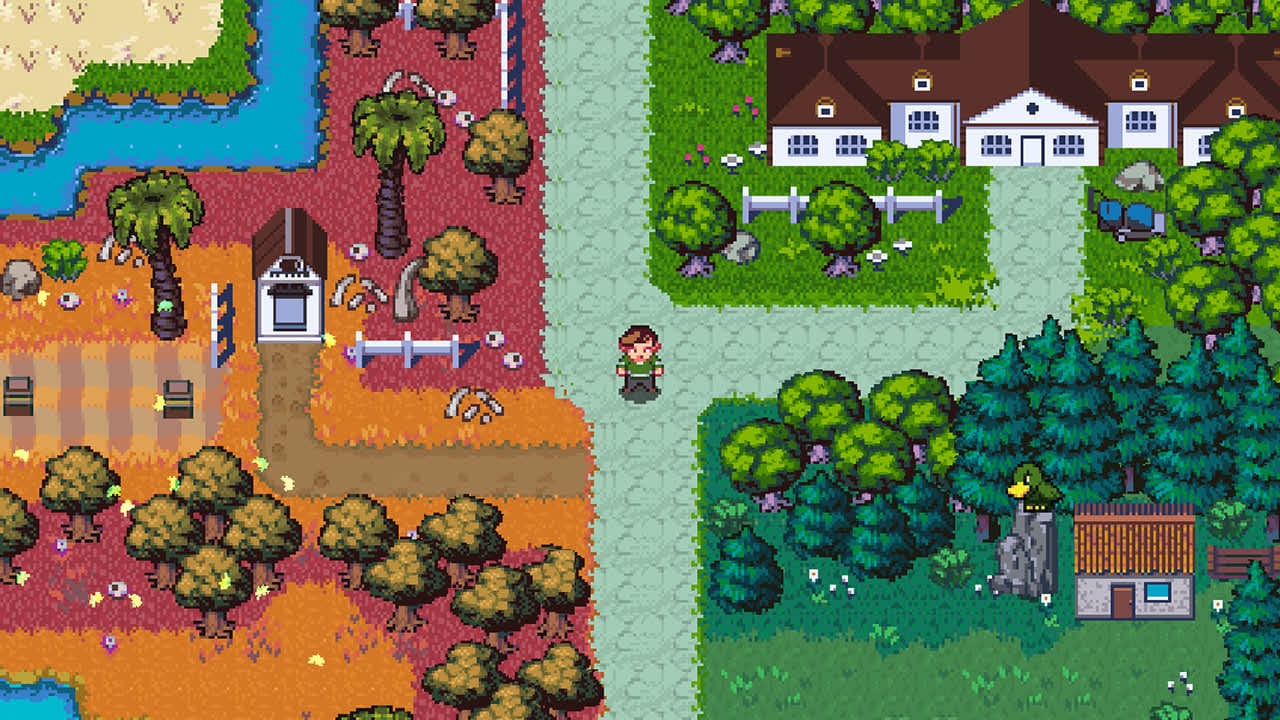
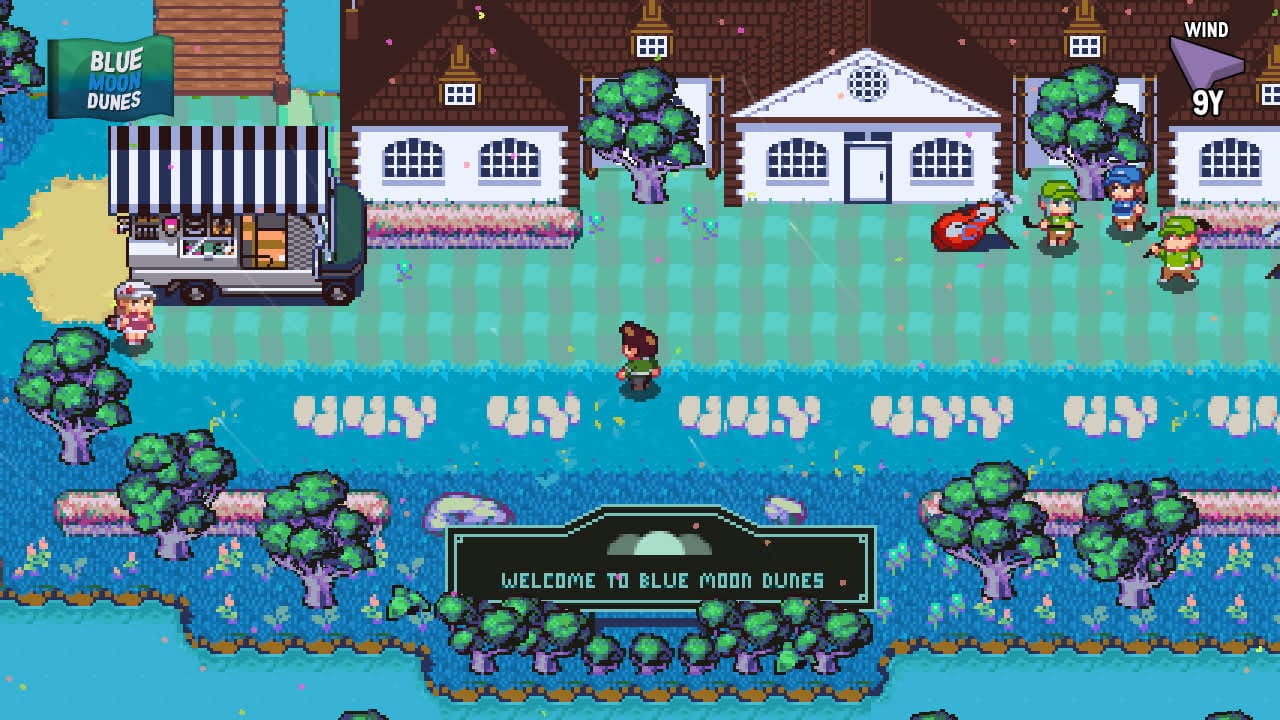
Bottom Line: Golf Story takes a premise that shouldn't work — a golf RPG made by two people — and turns it into one of the Switch's most charming early exclusives. Its back nine drags, but the front nine is pure joy.
The Writing Carries It
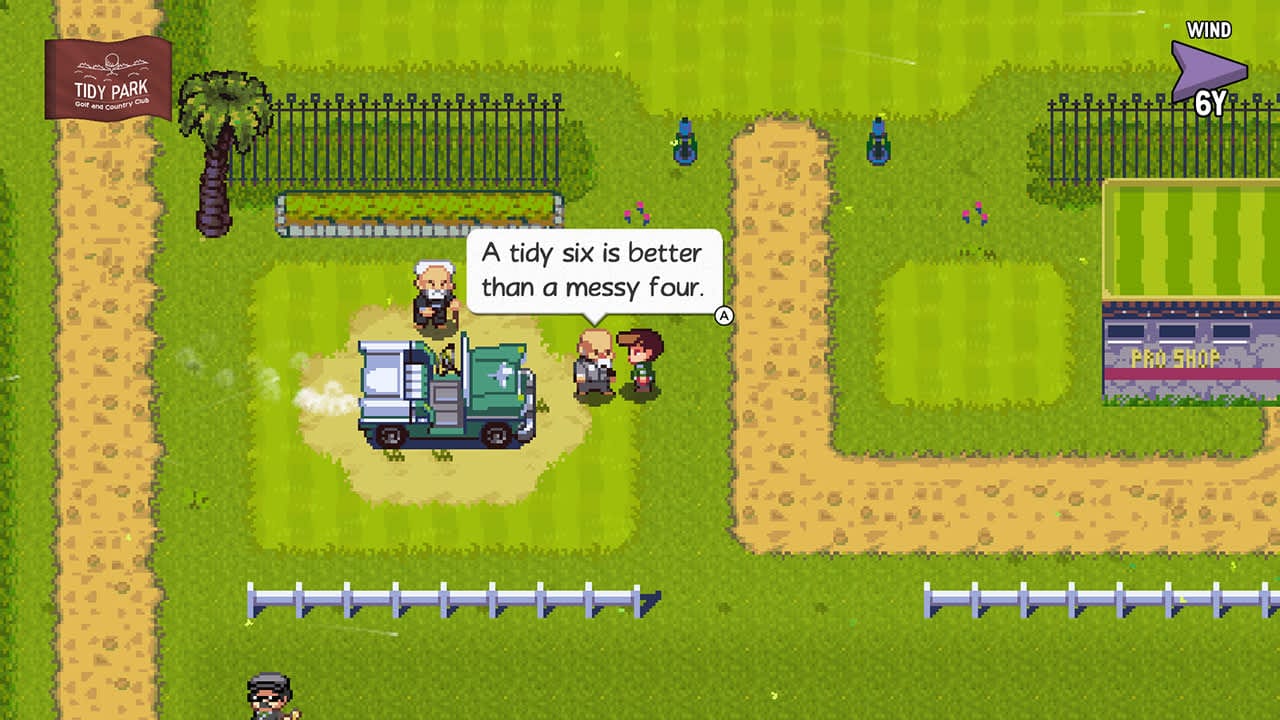
Let's be clear about what you're buying: Golf Story is a comedy first. The script is dry, self-aware, and specifically Australian in its deadpan — NPCs bicker about nothing, coaches deliver motivational speeches that curdle into insults, and the protagonist's earnest determination is constantly undercut by a world that couldn't care less about his dream. The story beats are genuinely dramatic when they want to be, but the game's default register is a raised eyebrow. Very few games this cheap are this consistently funny.
The Gameplay Loop
The core loop alternates between structured golf (proper rounds against rivals, with real stakes) and unstructured mucking about (wandering a region, hitting balls at problems, collecting stat points). This rhythm is the game's best design decision. Just as a full 18 holes starts to feel long, the game hands you a treasure map or a disc golf challenge or a quest to feed cheese to a mouse via wedge shot. The variety isn't deep, but it's relentless.
The golf itself deserves a fair accounting. The three-click swing system is competent and readable, with enough shot-shaping (spin, club selection, power modulation) to reward skill. But anyone arriving from Everybody's Golf or a PGA sim will find it shallow — there's no advanced ball-striking model here, and the putting is forgiving to a fault. Sidebar clearly made a deliberate trade: accessible golf in service of the adventure. The right call for this game, but worth knowing before you buy.
Where It Stumbles
The back half sags, and there's no polite way around it. Around region five or six, the quest design starts recycling — fetch this, hit that, play another forced minigame. The frisbee (disc golf) segments are the community's consensus low point: fiddly, over-long, and mandatory at moments when you just want to get back to golf. There are also stretches where progression gates behind grinding challenge completions, which reads as padding in a game that otherwise respects your time.
Control inconsistency is the other legitimate gripe. Contextual actions occasionally fight you — the game sometimes can't decide whether you're trying to talk, tee up, or sprint — and a few precision challenges demand more from the controls than they reliably deliver. None of it is game-breaking. All of it is noticeable across a 15-20 hour run.
The Stat System
The upgrade design is smarter than it first appears. Pouring points into drive power actively weakens your accuracy and spin until you rebalance, which means every stat purchase is a real decision with a real cost. It's a small system, but it does what RPG progression should: it makes your golfer feel like your golfer. By the final courses, the difference between a fresh save and a maxed build is dramatic — long par 5s that once required perfect play become genuine eagle opportunities.