


Bottom Line: LYNE transcends the minimalist puzzle genre, offering a masterclass in design where deceptively simple rules unfold into an endlessly complex and profoundly satisfying intellectual challenge, all delivered without a hint of modern mobile gaming's monetization bloat.
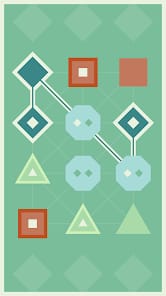
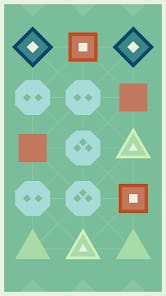
LYNE's greatest triumph lies not in its originality—the concept of connecting dots or creating paths is as old as puzzles themselves—but in its execution. Bowker takes a foundational idea and refines it to an almost platonic ideal. The core mechanic involves drawing lines between identical symbols, ensuring that each symbol is connected only once and all lines flow continuously without crossing. What initially appears trivial—a simple path-drawing exercise—rapidly evolves. As the grids expand and the number of distinct shapes proliferates, the spatial constraints become an intellectual knot. The game doesn't introduce new mechanics every few levels; instead, it leverages the existing rules to create exponentially more intricate scenarios. This incremental complexity is where LYNE truly shines. It teaches through doing, allowing players to discover the emergent properties of its rule set rather than bombarding them with tutorials.
The game's difficulty curve is a masterclass in pacing. Early levels serve as a gentle onboarding, instilling confidence and familiarizing the player with the visual language. Then, subtly, the game begins to tighten the screws. A seemingly innocuous additional node can demand a complete re-evaluation of the entire board. This elegant progression prevents burnout and encourages persistence. There are moments of intense frustration, certainly, where a solution seems perpetually out of reach, only for a sudden flash of insight to illuminate the entire path. That "aha!" moment, common to all great puzzle games, is LYNE's central reward. It’s a pure, unadulterated dopamine hit derived from intellectual conquest.
The user experience flow is remarkably fluid. Restarting a puzzle is instantaneous, a single tap or click erasing the board and presenting a fresh canvas for experimentation. This low-friction iteration loop is critical; it encourages trial and error without punishment, fostering a sense of playful exploration even in the face of daunting complexity. The interface, sparse as it is, is functionally impeccable. Every symbol, every line, serves a direct purpose in conveying information, removing any visual clutter that might detract from the puzzle itself. There's a certain genius in how the game communicates its state and rules without a single line of explanatory text beyond the initial welcome.
LYNE's procedural generation capabilities further amplify its value. While the hundreds of pre-designed puzzles offer a curated journey, the daily challenges provide an endless wellspring of fresh content. This ensures that the game doesn't simply conclude; it perpetually reinvents itself, offering new brain teasers daily. This is not merely a feature, but a philosophical statement: the challenge of LYNE is meant to be ongoing, a continuous engagement with logical deduction. The absence of monetization, particularly in its mobile incarnation, is another powerful statement. In a market awash with energy systems, hint purchases, and cosmetic microtransactions, LYNE's commitment to a pure, unadulterated experience stands as a testament to its design principles. It’s a game that respects the player’s intelligence and time, demanding only their mental engagement, not their wallet.