
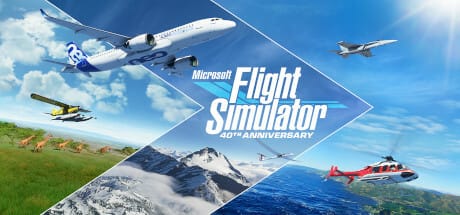


Bottom Line: Microsoft Flight Simulator, in its current iteration, remains an unparalleled achievement in digital realism, transforming Earth into an explorable, dynamic stage. Its technical prowess in recreating our planet is staggering, though such ambition inevitably comes with its own demanding set of compromises.
Microsoft Flight Simulator operates on a scale previously unimaginable, an ambition that both defines its brilliance and underpins its inherent friction. The core experience is an act of profound digital tourism, enabling players to trace flight paths across continents, soar over their childhood homes, or explore remote archipelagos with a fidelity that borders on the uncanny. The immediate sensation is one of overwhelming freedom, a vast, unbroken canvas stretching in every direction. This is not a game constrained by invisible walls or loading zones; it is the entire globe, seamlessly streamed, a technical ballet executed with remarkable precision.
The unparalleled simulation extends far beyond mere visual splendor. Asobo Studio's commitment to authentic flight dynamics is evident in every control input. Each aircraft, from the iconic Cessna 172 to the formidable Boeing 747, possesses a distinct personality, demanding respect for its aerodynamic envelope and operational procedures. The advanced physics engine calculates the subtle interplay of air currents, wing surfaces, and environmental conditions, transforming every flight into a tactile experience. This is further enriched by the dynamic weather system, a triumph of meteorological simulation. Flying into a real-time storm over the Atlantic, feeling the buffeting winds, seeing the lightning illuminate the cumulonimbus clouds, and adjusting flight parameters accordingly, is an immersive masterclass that few, if any, other titles can rival. This isn't canned weather; it's a living, breathing atmosphere reacting to genuine global data.
However, such profound realism inevitably introduces significant onboarding friction. For novices, the learning curve is less a curve and more a sheer cliff face. Mastering even basic take-offs and landings, let alone complex navigation or instrument flight rules (IFR), requires dedication. The included interactive lessons are a necessary scaffold, but they only scratch the surface of the operational depth available. This isn't a pick-up-and-play arcade title; it's a dedicated simulation demanding patience, study, and often, supplementary equipment like joysticks or HOTAS setups to truly unlock its potential. The sheer number of systems to manage, buttons to press, and procedures to follow can be intimidating, a barrier to entry that, while authentic, can deter all but the most committed. The balance between accessibility and absolute fidelity is a constant tension within Flight Simulator, one it largely resolves by allowing players to scale realism up or down, but the underlying complexity remains. The game implicitly asks: how much simulation can you handle? For those who embrace the challenge, the reward is an incredibly satisfying and deeply educational experience.