Overview
In an industry fixated on the “hundred-hour epic,” Minit arrives as a stark, confident rebuttal. Developed by the collaborative quartet of JW, Kitty, Jukio, and Dom, and published by the ever-eccentric Devolver Digital, this title is a striking example of minimalist design. The premise is brutally simple: you are a peculiar, duck-like creature who picks up a cursed sword from a beach, and from that moment on, you live your life in one-minute increments. When the timer hits zero, you die and respawn at your last saved home. What sounds like a Sisyphean punishment is, in fact, the game’s central, clever conceit. Every item you acquire, every shortcut you unlock, every puzzle you solve, persists through death. The world, initially an impassable labyrinth, slowly and satisfyingly unfurls as knowledge and abilities accumulate over dozens of fleeting lifetimes. Minit surgically removes the bloat that plagues modern gaming—the endless fetch quests, the padded-out maps, the meaningless collectibles—and distills the adventure genre down to its purest essence: discovery, progress, and the thrill of overcoming a challenge. It shows how much can be accomplished when every single second is designed to matter.
Key features
- The 60-Second Loop: The game’s defining feature. A strict timer dictates the pace of all exploration and puzzle-solving, forcing players to prioritize actions and memorize the landscape. Death is not a failure state, but an integral part of the progression system.
- Persistent Metroidvania-Style World: Despite the constant dying, the player’s inventory and impact on the world are permanent. Finding a new item like a coffee cup to push boxes or gardening gloves to chop down trees unlocks permanent new routes and shortcuts, allowing deeper exploration with each subsequent life.
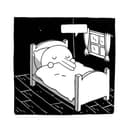
- Aesthetic Minimalism: Presented in a stark, 1-bit, black-and-white visual style, the game’s graphics are intentionally simple. This removes visual noise and focuses the player entirely on navigation, character interaction, and environmental cues. The chiptune soundtrack is equally essential, providing an urgent, catchy backdrop to the frantic pace.
Analysis
The Tyranny and Genius of the Clock
The 60-second timer is not a gimmick; it is the foundational pillar upon which Minit is built. It’s a design choice that informs every other aspect of the experience, and its execution is excellent. In the opening moments, this constraint feels oppressive. You can barely stumble from your house to the next screen before your brief existence is extinguished. But with the second, third, and tenth life, a strange and wonderful cognitive shift occurs. The timer stops being an enemy and starts being a partner.
The brain begins to optimize. Players learn the precise number of seconds it takes to run from the lighthouse to the desert, and internalize the locations of the gruff old man who needs his coffee, the lost hotel guest, and the serpent in the sea. Each run becomes a targeted mission: “This life, I will only try to get the lighthouse key,” or “This life, I’m going to see what’s past that broken bridge.” This forced efficiency creates a gameplay rhythm that is intensely satisfying. The game respects your time by making every second of it count. There is no meandering; there is only intention. The world is built as a series of nested puzzles, each designed to be solved within a few well-executed minutes, spread across several lives. Unlocking a new shortcut or finding a new home to respawn from feels like a hard-won victory against the tyranny of the clock.
A World Etched in Black and White
The narrative and world-building are as sparse and effective as the visuals. There are no lengthy cutscenes or exposition dumps. The story is told through quirky NPC interactions and environmental details. The lore of the cursed sword and the beleaguered factory emerges not through instruction, but through curiosity, sharpened by the time limit, driving exploration of every corner of the world. The characters are charmingly absurd, from a rambling cartographer to a ghost who just wants to see the sea one last time.
This minimalist approach does more than just create a “retro” feel; it actively engages the imagination. The lack of detail forces focus on function, to see the world as a set of interconnected systems rather than a series of pretty pictures. It’s a bold rejection of the modern obsession with photorealism, arguing that clarity and readability are far more important to a game’s core function. The sound design by Jukio deserves special mention, as the energetic and often haunting chiptune score is the lifeblood of the experience, driving the pace and cementing the game’s unique, melancholic-yet-hopeful tone.
Visuals & performance
The 1-bit aesthetic is the game’s visual signature, and it’s a triumph. It’s clean, instantly readable, and timeless. Every screen is carefully composed to guide the player’s eye without a single wasted pixel. This isn’t laziness; it’s extreme artistic discipline. A game of this scope is also light on hardware, and its simple controls and modest demands suit the full range of platforms it ships on. The focus is entirely on the gameplay, and the visuals serve that purpose without distraction.
Platform nuances
Minit’s simple controls translate well across platforms, but there are subtle differences.
- Steam (PC/Mac): A keyboard is arguably the most precise input option, allowing for sharp, immediate movements that suit speed-running certain segments. A controller also works beautifully, feeling natural and comfortable.
- Nintendo Switch: A natural fit for the platform. The game’s short-burst structure is ideal for handheld play, and it supports both Joy-Cons and a Pro Controller.
- Android: While functional, this is the weakest of the three. Virtual on-screen controls for a game that requires such rapid, precise movement are inherently compromised. It’s playable, but the tactile feedback and precision of physical buttons are sorely missed and can lead to frustrating, unforced errors.
Final verdict
Minit is a triumph of constrained design. It proves that a single, powerful idea, executed with precision and confidence, can be more impactful than a hundred lesser ones. By turning time itself into both the primary obstacle and the primary resource, the developers have crafted an adventure that feels both entirely original and immediately classic. It is a sharp, intelligent, and deeply rewarding game that lodges itself in the brain and doesn’t let go until the curse is finally lifted. We rate it a Great: clearly recommended, with its brevity and mobile controls the main reservations.
Reviewed by the Rankeno RPG & Adventure Desk. Scores are out of 10; the overall score is the desk’s editorial judgement, informed by the four sub-scores above. How we review