

Bottom Line: Murdered: Soul Suspect presents an undeniably unique premise—a deceased detective solving his own murder—wrapped in a compelling supernatural narrative, yet its execution is frequently undermined by simplistic mechanics and underdeveloped gameplay systems.
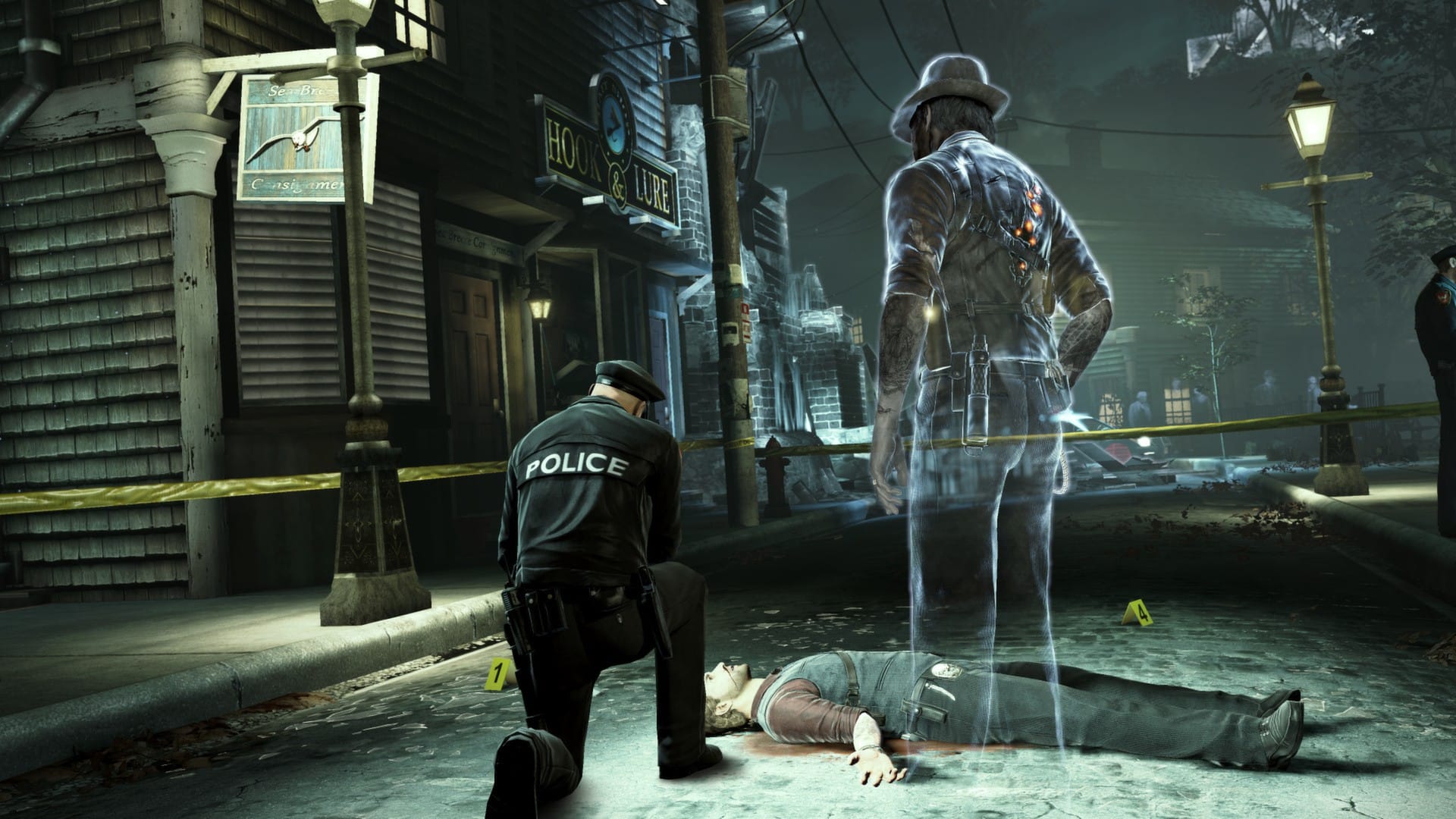
Murdered: Soul Suspect is a fascinating case study in game design, a product of audacious ambition colliding with execution constraints. At its core, the concept—a ghost detective solving his own murder—is a masterstroke of narrative ingenuity. The setting of Salem, steeped in witch trials and dark history, provides an impeccably atmospheric canvas for this spectral drama. From a conceptual standpoint, Airtight Games had a potential genre-redefining title on its hands, a unique blend of film noir mystery and paranormal horror.
However, the game's lauded premise struggles under the weight of its own mechanistic simplicity. The investigative gameplay, while conceptually engaging, rarely demands true deductive reasoning from the player. Ronan’s ghostly powers, such as possessing individuals to influence their thoughts or peering into spectral remnants, often boil down to linear sequences of prompt-following and context-sensitive button presses. Clues are generally highlighted, and the process of "solving" a mystery usually involves selecting the obviously correct pieces of evidence from a small, curated list. This approach severely limits player agency; rather than feeling like a sharp-witted detective, Ronan often operates as a mere observer, guided through a predetermined path. The potential for open-ended inquiry, for lateral thinking or genuine misdirection, remains largely untapped. This is a critical missed opportunity, preventing the game from truly earning its detective thriller moniker.
Furthermore, the integration of stealth mechanics against malevolent demonic entities is arguably the game's weakest link. These sequences are jarringly inconsistent with the investigative tone and feel fundamentally underdeveloped. Ronan must sneak past these creatures, banishing them from behind with a quick-time event. The challenge is negligible, the AI is rudimentary, and the threat feels more like an arbitrary roadblock than a genuine source of suspense. These moments disrupt the narrative flow and detract from the otherwise compelling story, feeling less like an organic part of the spectral world and more like a forced attempt to inject conventional gameplay elements into an experience that clearly didn't need them. It's a prime example of design features being included out of perceived necessity rather than genuine synergy.
Despite these mechanistic shortcomings, the narrative—particularly the exploration of Ronan's purgatorial existence, his backstory, and the evolving relationship with Joy—maintains a captivating hold. The world-building around the 'Dusk' and its rules is well-realized, offering intriguing lore. Character interactions, especially Ronan's gruff yet endearing exchanges with Joy, provide genuine emotional resonance. The story, even with its predictable moments, is genuinely interesting, compelling players to uncover the truth behind the central mystery. This narrative strength explains the dichotomy in its reception: while critics often focused on the game’s shallow mechanics (and rightly so), many players found profound enjoyment in its unique story and atmosphere. For those who prioritize narrative immersion and world-building over intricate gameplay systems, Murdered: Soul Suspect delivers a memorable, if mechanically uneven, experience.