

Bottom Line: Neon White is a fiercely intelligent, unapologetically stylish, and brutally demanding speedrunning FPS that sets a new benchmark for the genre through its masterful fusion of parkour and puzzle solving.
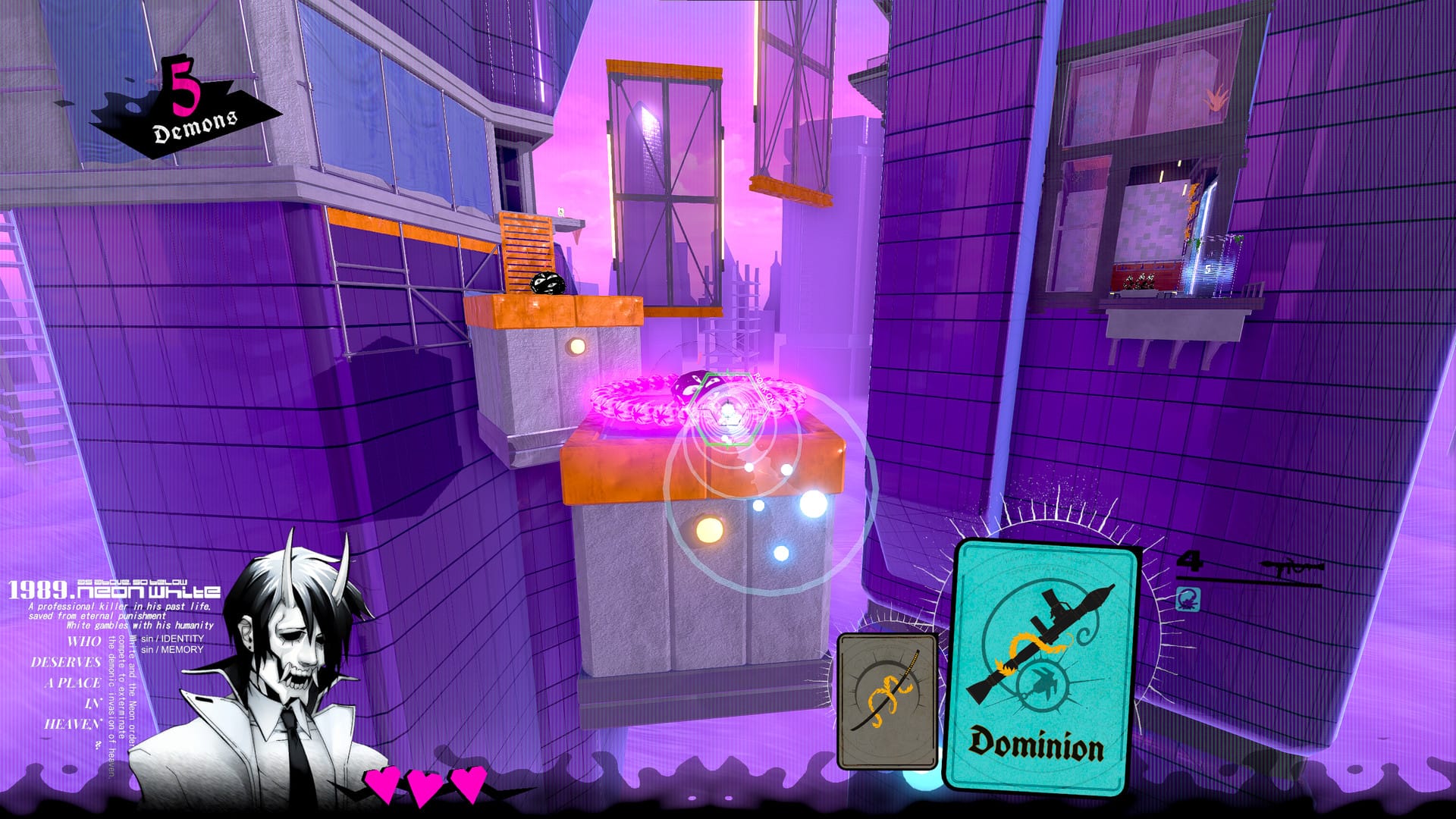
Neon White’s genius is not in its shooting, which is perfunctory at best. The genius is in the moment you realize the guns are a lie. They are not primarily tools of destruction; they are tools of movement. The game’s entire mechanical heart is the Soul Card system, and understanding its dual purpose is the key to unlocking the whole experience. A pistol card gives you a few shots, but discarding it gives you a double jump. A shotgun becomes a horizontal air dash. A submachine gun becomes a ground-pounding shockwave that can propel you skyward.
The Core Loop: A Puzzle of Violence
This creates an extraordinary gameplay loop that is less about reflexes and more about resource management and route-planning. Each level is a puzzle. Each demon is not an enemy but a resource—a container holding the specific card you need to get to the next platform. Do you use the shotgun card to kill the three demons in front of you, or do you discard it to dash across the chasm, bypassing them entirely? This constant, split-second decision-making is where Neon White transcends its genre trappings. It’s not an FPS; it’s a high-velocity chess match against the level designer. The first time you clear a level, you might earn a Bronze medal and feel a sense of relief. But the game immediately shows you a "Hint" for a shortcut, a ghost of a faster player, and the siren song of the global leaderboards. This is where the obsession begins. Chasing the "Ace" medal for each level—a feat requiring near-perfect execution—becomes a consuming passion. You aren't just playing; you are studying, rehearsing, and ultimately, performing a violent ballet. The feeling of finally chaining together a perfect sequence of discards, jumps, and shots to shave three seconds off your best time is a rush few games can match.
A Narrative Disconnect?
Where the game's airtight mechanical focus wavers is its narrative. After a blistering, sixty-second run that demands monk-like concentration, you are abruptly dropped into a visual novel sequence. The dialogue is snappy, self-aware, and steeped in anime tropes. The characters are amnesiac pretty-boys and quirky demon girls who trade witty banter and flirtatious barbs. For some, this will be a welcome, charming reprieve from the intense gameplay. For others, the tonal whiplash will be severe. The writing feels like it was penned for a completely different audience than the one that would obsess over optimizing frame-perfect jumps. It’s not poorly written, but its placement feels like an interruption—a lengthy cutscene in the middle of a world-record sprint. It’s a bold choice, but one that undeniably creates a fracture in the experience, making the story feel more like an obstacle to the next gameplay fix than a compelling reason to push forward.