
Overview
Red Candle Games, known for its unflinching narrative bravery in titles like Devotion and Detention, steps into the frenetic world of action-platformers with Nine Sols. This is a carefully crafted experience steeped in a “Taopunk” aesthetic, a fascinating synthesis of cyberpunk’s dystopian edge with the ancient philosophical underpinnings of Taoism and Eastern mythology. Players are thrust into a visceral quest for vengeance, tasked with dismantling the tyrannical reign of nine formidable rulers known only as the Sols.
From the outset, Nine Sols distinguishes itself with a combat system that boldly eschews conventional hack-and-slash for a more cerebral, Sekiro-inspired deflection mechanic. This central pillar demands precision, timing, and patience, transforming each encounter into a rhythmic dance of parries, blocks, and counters. Beyond the battlefield, the game invites exploration through interconnected regions, each brimming with secrets, non-player characters offering upgrades, and new abilities waiting to be unearthed. The visual presentation is equally ambitious: hand-drawn, anime-style landscapes brought to life with fluid sprite-based animations and punctuated by evocative, manga-inspired cutscenes. Launched on Steam in May 2024 and later released on the Nintendo Switch, the game brings its unique challenge to a wide audience. However, this cross-platform journey has not been without its technical compromises, creating a dichotomy in how the game lands on each platform that warrants closer scrutiny.
Key features
- Taopunk Worldbuilding: A genre-bending fusion of dystopian cyberpunk, ancient Taoist philosophy, and rich Eastern mythology, creating a distinct and lore-heavy universe.
- Deflection-Focused Combat: A challenging, Sekiro-inspired parry and block system that prioritizes precise defensive maneuvers and timing over aggressive offense.
- Hand-Drawn 2D Artistry: Striking anime-style graphics, fluid sprite animations, and dynamic manga-inspired cutscenes that define its unique visual identity.
- Interconnected Exploration: A sprawling, non-linear world map encouraging discovery, side quests, and the uncovering of hidden pathways and upgrades.
- Narrative-Driven Vengeance: An immersive storyline centered on a hero’s quest for retribution against the powerful Sols, woven into the game’s mythological backdrop.
Analysis
The gravitational pull of Nine Sols emanates directly from its combat philosophy. Red Candle Games didn’t merely nod to FromSoftware’s Sekiro; they internalized its core principle: that defense, honed to a razor’s edge, can be the most potent offense. Every enemy, from the smallest grunt to the most imposing Sol, becomes a puzzle to be solved through rhythmic deflection. The design promises the satisfaction of a perfectly timed parry, disrupting an enemy’s posture and opening them to a devastating counter-attack. It’s a system that demands a fundamental rewiring of muscle memory for many players, shunning dodge-rolls in favor of direct engagement and precise timing. The learning curve is steep, occasionally brutal, yet by design deeply rewarding. Mastery comes from understanding enemy attack patterns, anticipating tells, and internalizing the almost musical cadence of combat.
However, a combat system built on such exacting timing inherently raises the stakes for performance. When frame rates falter, the critical windows for deflection shrink, transforming challenging encounters into exercises in frustration. This is where the game’s ambitions occasionally clash with hardware limitations, a point explored further below.
Beyond the parry-and-punish loop, Nine Sols’ “Taopunk” setting is more than just a stylistic veneer. The fusion of neon-drenched cybernetic enhancements with ancient talismans and philosophical tenets creates an engaging backdrop for its lore. NPCs often speak in riddles or offer cryptic advice, mirroring Taoist parables, while the technological overlay provides a gritty realism to the mythological elements. The world-building feels cohesive and genuinely original, reflecting Red Candle’s narrative prowess. Exploring this world, however, presents a mixed bag. The interconnected design offers a satisfying sense of discovery, rewarding players who deviate from the critical path. Hidden areas often conceal vital upgrades or fragments of lore, encouraging thoroughness. Yet, some areas can feel deliberately obtuse, and the map, while functional, occasionally lacks the granularity needed for efficient navigation in a densely layered environment. This isn’t a critique of challenge, but rather of clarity in a genre that often benefits from elegant signposting.
The progression system, which ties into the NPC interactions and discovered abilities, offers a meaningful path for character growth. Each upgrade is designed to feel impactful, whether it’s a new combat maneuver or a passive buff that subtly alters the flow of battle. The balancing of these enhancements ensures that player skill remains paramount, rather than relying solely on stat checks. This focus on player agency and skill expression positions Nine Sols as a purist’s action-platformer, an experience where success is earned, not granted.
Visuals & performance
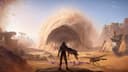
Visually, Nine Sols is a triumph of artistic direction. The hand-drawn anime aesthetic is a foundational element of the game’s identity. Every background, every character sprite, and every frame of animation exudes careful craftsmanship. The environments are layered and dynamic, pulling the eye with vibrant colors and intricate details that belie its 2D nature. The sprite-based animations are fluid and expressive, particularly during combat, where every attack and deflection lands with a satisfying visual snap. The manga-inspired cutscenes are a particular highlight, delivering narrative beats with a raw, kinetic energy that complements the Taopunk theme. This isn’t about photorealism; it’s about art as an emotional and narrative conduit, and Nine Sols uses it well.
However, this visual splendor comes with a caveat: performance. A game of this kind is light on hardware, and the PC version is well positioned to deliver the stable frame rates its demanding combat requires. The Nintendo Switch, by contrast, is a far more demanding proposition for a title whose success hinges on microsecond timing and precise input; any fluctuation there is detrimental to the core gameplay experience. A dropped frame can mean a missed parry, an unfair hit, and a frustrating death. The UI design itself is functional, if occasionally a little busy, but it generally steps aside to let the artwork and action take center stage.
Platform nuances
Nine Sols on Steam versus the Nintendo Switch presents two distinct propositions. On PC, the game has every advantage. The precision offered by a mouse and keyboard or a high-quality gamepad allows players to fully engage with the demanding deflection mechanics, and stable frame rates ensure that the challenging combat is fair, relying purely on player skill rather than hardware lottery. This is, by design and by platform, the definitive way to experience Nine Sols, allowing its intricate combat and striking visuals to shine unhindered.
The Nintendo Switch port, conversely, embodies the classic compromise of portability versus performance. The ability to take the captivating Taopunk world on the go is appealing, but a deflection-focused title is uniquely vulnerable to performance hiccups, as even minor dips can throw off timing and create a sensation of unfairness. For a game that asks so much of the player’s reflexes, the Switch version needs a stable foundation for that challenge to feel equitable. Until such technical concerns are thoroughly addressed, the Switch version remains a compromised iteration of an otherwise accomplished game.
Final verdict
Nine Sols showcases Red Candle Games’ commitment to artistic vision and challenging game design. It crafts a unique “Taopunk” identity, visually striking and narratively compelling, anchored by a combat system that is punishing and rewarding in equal measure. The artistry in its hand-drawn world and fluid animations makes every moment a visual feast. However, the technical disparities between platforms keep it from broader appeal. On PC, it is a hard-hitting action-platformer that earns its reputation. On the Nintendo Switch, while still possessing its core brilliance, the performance demands cast a shadow over its most crucial mechanical elements. We recommend it to players who crave a demanding, beautiful, and distinctive challenge — and who have access to a robust platform.
Reviewed by the Rankeno Action Desk. Scores are out of 10; the overall score is the desk’s editorial judgement, informed by the four sub-scores above. How we review