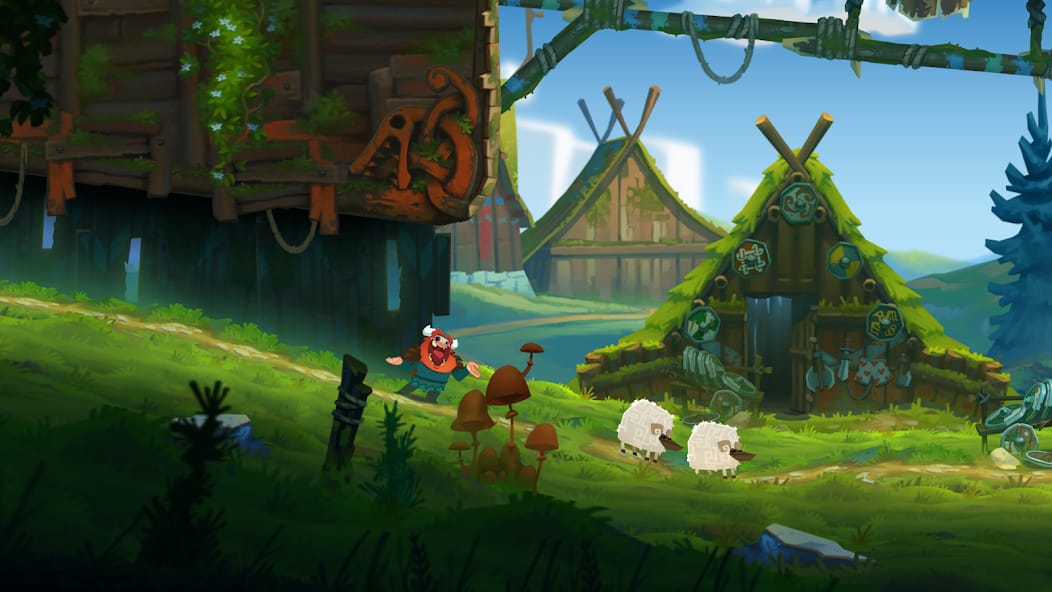


Bottom Line: Oddmar doesn’t invent the platformer; it perfects it for the modern age. This is a gorgeous, fluid, and utterly confident game that stands as a defiant benchmark for what a “premium” mobile title should be.
The single most compelling aspect of Oddmar is its complete lack of hostility toward the player. It is a game built on a foundation of respect. It respects your time with generous checkpointing and concise levels. It respects your intelligence by teaching you its mechanics through elegant level design, not intrusive tutorials. And it respects your wallet by offering a complete, polished product for a single purchase. In a market dominated by psychological tricks and engagement metrics, playing Oddmar feels like an honest transaction.
A Study in Frictionless Flow
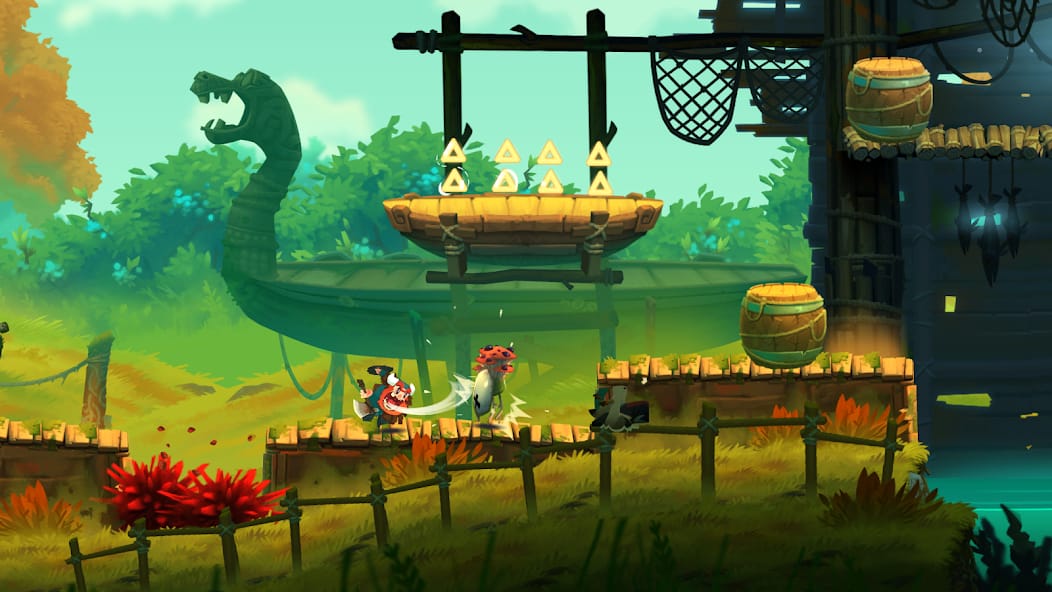
The developers at Mobge Ltd clearly studied the masters of the genre. The influence of games like Rayman Origins is undeniable, particularly in the rhythmic, almost musical flow of the platforming. Oddmar wants you to find a state of grace, chaining jumps, slides, and attacks into a seamless ballet of movement. The physics engine is the star here. Your axe isn't just a weapon; it's a tool for breaking obstacles that block a critical slide. Your shield isn't just for defense; a ground-pound can launch you higher or trigger mechanisms in the environment.
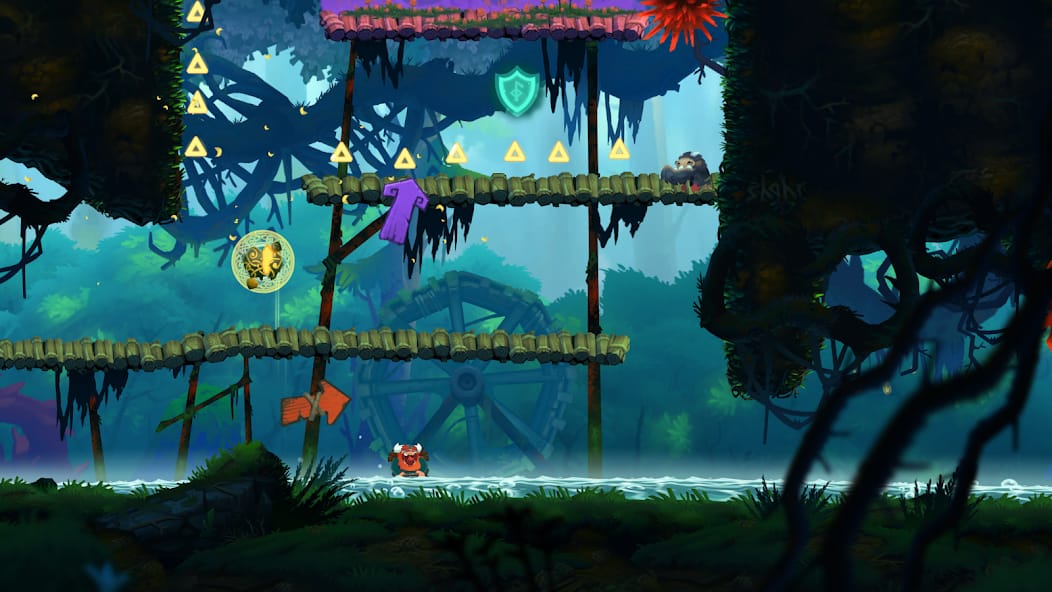
This focus on flow is what makes the experience so compelling. The challenge comes not from punishing difficulty, but from mastering the system to navigate the intricate levels with style. Collecting all the coins in a stage or completing it within a certain time limit provides the optional, hardcore challenge, but simply reaching the end is an accessible and consistently rewarding journey. The gameplay loop is tight and gratifying: you are always moving forward, always seeing something new, and the controls are so responsive that failure always feels like your own, not the game's.
More Than a Pretty Face
While the visuals are what will initially draw you in, the gameplay has surprising substance. It avoids the pitfall of many modern platformers that feel like a checklist of genre tropes. Each world introduces a new environmental concept or enemy type that forces you to adapt. One area might focus on navigating treacherous water currents, while another is built around riding massive, wooly beasts through collapsing caverns.
The combat is simple—a primary axe attack and a shield-stomp—but it integrates perfectly with the platforming. It's less about complex combos and more about timing and positioning. An enemy isn't just an obstacle; it might be a platform you need to bounce off with a well-timed shield drop to reach a higher ledge. This design choice, where every element serves multiple purposes, is the hallmark of an expertly crafted game. The narrative, while light, provides just enough motivation to pull you through the world, turning Oddmar's journey from a simple quest into a genuinely endearing tale of self-discovery.