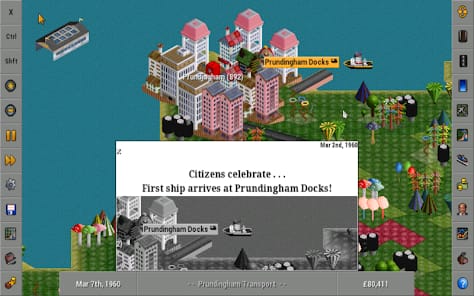
Bottom Line: OpenTTD is not merely a nostalgic recreation; it's a sprawling, meticulously engineered business simulator that demands strategic prowess, offering unparalleled depth and replayability for those willing to master its intricate logistical ballet.
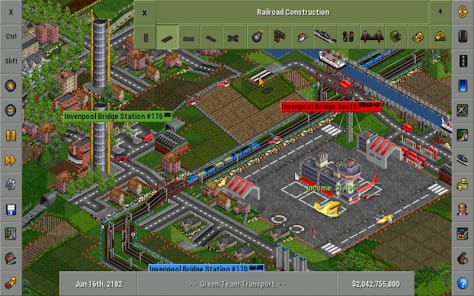
OpenTTD operates on a principle of emergent complexity, where simple actions—laying a track, buying a train—cascade into a dense web of interlocking challenges. At its core, the game's appeal derives from its logistical choreography. Players are presented with a blank canvas, a nascent economic landscape ripe for exploitation. The initial thrill comes from connecting two disparate points: a coal mine to a power plant, a forest to a sawmill. But the real game begins when these individual links must scale into a vast, interconnected system. This isn't just about drawing lines on a map; it's about understanding supply and demand, managing vehicle capacities, optimizing travel times, and, crucially, mastering the notoriously deep rail signaling system.
The rail signaling system alone is a masterclass in design. It transforms what could be a mundane task into a puzzle of spatial logic and timing. Block signals, pre-signals, path signals—each serves a distinct purpose in allowing multiple trains to share complex track layouts without collision or congestion. Failure to grasp these nuances results in gridlock, a frustrating but highly instructive lesson in infrastructure planning. This steep learning curve, while initially daunting, is precisely what cements OpenTTD's reputation. It rewards perseverance and experimentation, fostering a sense of genuine accomplishment when a perfectly synchronized rail network hums efficiently, ferrying millions of tons of cargo.
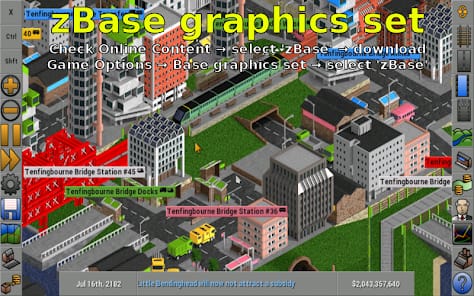
Beyond the fundamental mechanics, OpenTTD's longevity is inextricably linked to its vibrant open-source community and unparalleled modding capabilities. This isn't merely an ancillary feature; it's the game's lifeblood. The base game, while complete, serves as a robust framework upon which countless graphical sets, vehicle packs, new industries, and sophisticated AI personalities are built. Want a more realistic European rail system from the 1950s? There’s a mod for that. Prefer a futuristic sci-fi setting? It’s likely available. This community-driven expansion ensures that the game never truly stagnates, offering an almost infinite variety of scenarios and challenges. This degree of customization transforms OpenTTD from a singular game into a platform for economic and logistical experimentation, continuously re-engaging its veteran players and providing fresh experiences for newcomers.
The multiplayer experience is another critical dimension. While single-player provides ample opportunity for solitary optimization, competing or collaborating with up to 255 other players introduces an entirely new layer of strategic depth. Economic warfare, shared infrastructure projects, or simply observing diverse approaches to empire-building adds a dynamic social element rarely seen in simulation games of this pedigree. The game's stable netcode and scalable architecture accommodate these massive sessions, turning individual rail lines into battlefronts for market dominance or cooperative ventures against the clock. This collective experience reinforces the game’s core tenets of planning and adaptation, as external forces – be they rival corporations or cooperative partners – continuously shift the economic landscape.
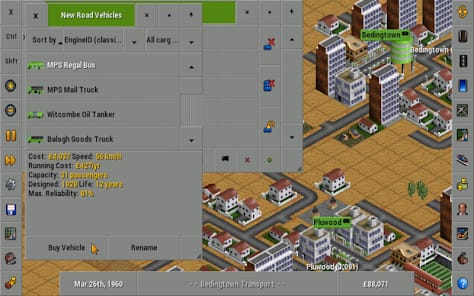
However, the game's onboarding friction is undeniable. Its user interface, while functional, adheres to a utilitarian design philosophy that can feel impenetrable to modern sensibilities accustomed to slick, guided tutorials. New players are often thrown into the deep end, reliant on external wikis, YouTube guides, and community forums to understand even basic concepts. This isn't necessarily a flaw, but a characteristic of a game that prioritizes depth over immediate accessibility. It’s a simulation that respects its players' intelligence and their willingness to invest time in mastery, rather than spoon-feeding them information. This approach, while alienating to some, is precisely what appeals to its dedicated fanbase, fostering a sense of belonging among those who have navigated its complexities. The interface, initially overwhelming, eventually becomes second nature, its efficiency born from directness rather than aesthetic flourish.