
Bottom Line: Papers, Please transforms the drudgery of a bureaucratic job into a riveting, morally complex thriller. It’s a masterwork of interactive storytelling where the weight of your decisions is matched only by the relentless pressure of the job itself.
The Tension of the Booth
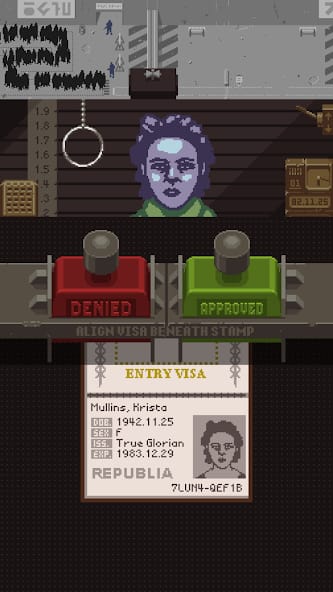
The genius of Papers, Please is its ability to turn a mundane task into a high-stakes tightrope walk. The gameplay loop is deceptively simple at first: a person appears, hands you their papers. You check them against the day’s rules. Is their passport expired? Is their entry permit forged? Does their face match their photo? Spot the discrepancy, interrogate them, and either approve their entry or deny them with a heavy thump of the red stamp.
But the complexity spirals with surgical precision. Soon you’re cross-referencing work passes, checking diplomatic seals, and using a fingerprint scanner to verify identities. The clock is always ticking. Each person in the queue is a puzzle, but also a drain on your time. You feel the pressure mounting as the line grows and the sun begins to set. This is where the game’s core conflict ignites: the choice between diligence and speed. Taking an extra moment to verify a suspicious detail might uncover a forger, but it costs you precious seconds that translate into less pay. This mechanical tension is the foundation for the game’s emotional weight. You are not just pushing pixels; you are performing a job, and the stress feels remarkably, uncomfortably real.
Bureaucracy as a Narrative Engine
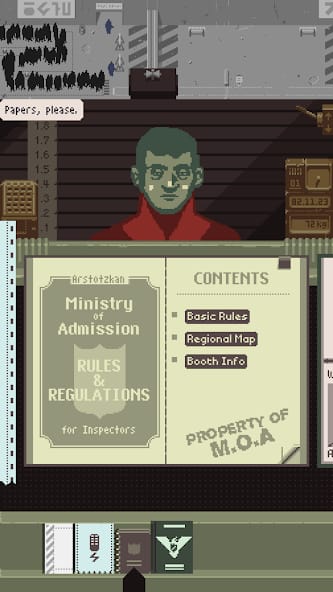
Few games have so successfully weaponized their user interface to tell a story. Your workspace—a small, cluttered desk—becomes a character in itself. It starts clean, with just your rulebook and stamps. Before long, it’s a chaotic mess of papers, scanner printouts, and confidential notes. The state’s escalating paranoia is mirrored in the physical clutter you must manage. A new rule requiring a specific ID supplement isn't just a new mechanic; it's a narrative beat, a sign that the political situation in Arstotzka is deteriorating.
The story of a nation slowly closing its fist is told through these bureaucratic decrees. You learn about diplomatic disputes, outbreaks of disease, and terrorist threats not through expository dialogue, but through dry, impersonal memos from on high. This detached delivery makes the world feel chillingly authentic. The game doesn't need to show you the gulags or the secret police in action; their presence is felt in the desperate pleas of the people at your window and the fear in their pixelated eyes.
The Weight of Choice
For all its mechanical brilliance, the soul of Papers, Please lies in its moral dilemmas. An old man gives you the wrong papers, but he just wants to see his son one last time. A woman lacks the proper entry permit, but her papers mention she is fleeing a dangerous situation. Do you follow the rules, ensuring your own family's survival, or do you risk everything for a stranger?
There are no easy answers. The game is not a simple parable of good versus evil. Helping someone often means directly or indirectly harming someone else, or putting your own family in jeopardy. Taking a bribe from a smuggler might give you enough money to afford medicine for your sick child, but it could also allow a terrorist to cross the border. These aren’t choices between a "good" path and a "bad" path. They are choices between different shades of compromise, desperation, and failure. The game forces you to build your own moral compass, then relentlessly challenges its direction. The most impactful moments are the quiet ones, when you stamp "DENIED" on a weeping mother’s passport and have to live with the consequences.