
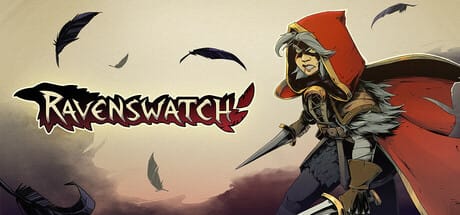



Bottom Line: Ravenswatch offers a compelling, stylish co-op roguelike experience, marred by solo player friction and a nagging sense of repetition that limits its long-term appeal despite its rich thematic foundation.
Ravenswatch immediately commands attention with its vibrant, cel-shaded visual identity and the ingenious premise of weaponized fairy tales. Passtech Games has crafted a mechanically sound top-down roguelike, but one whose design philosophies often clash, leaving a mixed impression.
The fundamental Gameplay Loop is centered on the "3 days and 3 nights" cycle. This time constraint adds a palpable urgency to exploration and resource acquisition, forcing players to make strategic decisions about clearing areas, pursuing quests, or hunting down elite enemies for upgrades. The talent and item systems are robust, offering a satisfying degree of customization. Each run genuinely feels distinct in terms of the specific build crafted, fostering that addictive "just one more run" mentality inherent to the roguelike genre. However, the limited pool of three primary maps, while visually distinct, begins to show its seams after repeated runs. While layouts are procedurally generated, the environmental tilesets and objective structures become predictable. This can lead to a sense of superficial variety rather than truly fresh experiences, ultimately impacting the game’s long-term retention beyond the initial novelty.
The Character Design & Uniqueness is undeniably the game's strongest suit. The reimagining of characters like the Pied Piper or the Snow Queen as roguelike combatants is inspired. Each hero's kit feels genuinely unique, dictating different tactical approaches to crowd control, single-target damage, and mobility. For example, Sun Wukong's decoy and transformation abilities offer a highly mobile, burst-damage playstyle, contrasting sharply with Little Red Riding Hood's more methodical, cleaving attacks. This diversity is not just cosmetic; it deeply influences the build path and synergizes exceptionally well in multiplayer scenarios. Identifying optimal team compositions and leveraging character strengths against specific enemy types forms the tactical bedrock of co-op play.
Herein lies the critical fault line: Combat & Difficulty Scaling. The action is fluid, responsive, and often exhilarating, especially when a well-executed build tears through hordes of the Nightmare's minions. The variety of over 50 enemies, each with unique attack patterns, keeps players on their toes, and the boss encounters are genuinely challenging, demanding pattern recognition and precise execution. Yet, the game's difficulty curve, particularly for solo players, feels disproportionately steep and at times, outright unbalanced. What feels like a tense, manageable challenge in a party of four quickly escalates into an exercise in frustration when navigating the same encounters alone. The game seems engineered from the ground up for multiplayer engagement, with solo players feeling like an afterthought. This manifests as punishing damage sponges, overwhelming enemy density, and a lack of specific solo-player compensations in character scaling or item drops. This design choice, while perhaps intentional, alienates a significant segment of the roguelike audience who prefer solitary progression. The "repetitiveness" frequently cited by players online often stems not just from limited level count, but from encountering the same disproportionate challenges in a solo context, dampening the inherent Replayability that procedural generation is supposed to guarantee. The thrill of crafting a "potent build" dissipates when the underlying challenge often feels arbitrary rather than earned.