
Bottom Line: RimWorld is less a game and more a masterclass in procedural narrative—a brutal, brilliant, and endlessly replayable story generator that finds the grim humor in planetary survival.
RimWorld's genius lies in its disciplined focus on a single design pillar: consequence. Every system in the game feeds back into the central narrative engine, creating ripples that can turn into tidal waves. The true game isn't about optimizing resource chains; it's about managing the fallout from a series of increasingly complex, often disastrous, events.
The Story Machine
The most brilliant and visible innovation here is the AI Storyteller. Where other games use difficulty settings, RimWorld offers personality. Choosing "Cassandra Classic" gives you a traditional rising-action structure, with threats that scale predictably. "Phoebe Chillax" provides long stretches of peace for players who prefer to build, but her infrequent threats are no less deadly. And then there's "Randy Random," an agent of pure chaos who might send you a cargo pod full of life-saving medicine one minute and a pack of man-hunting elephants the next.
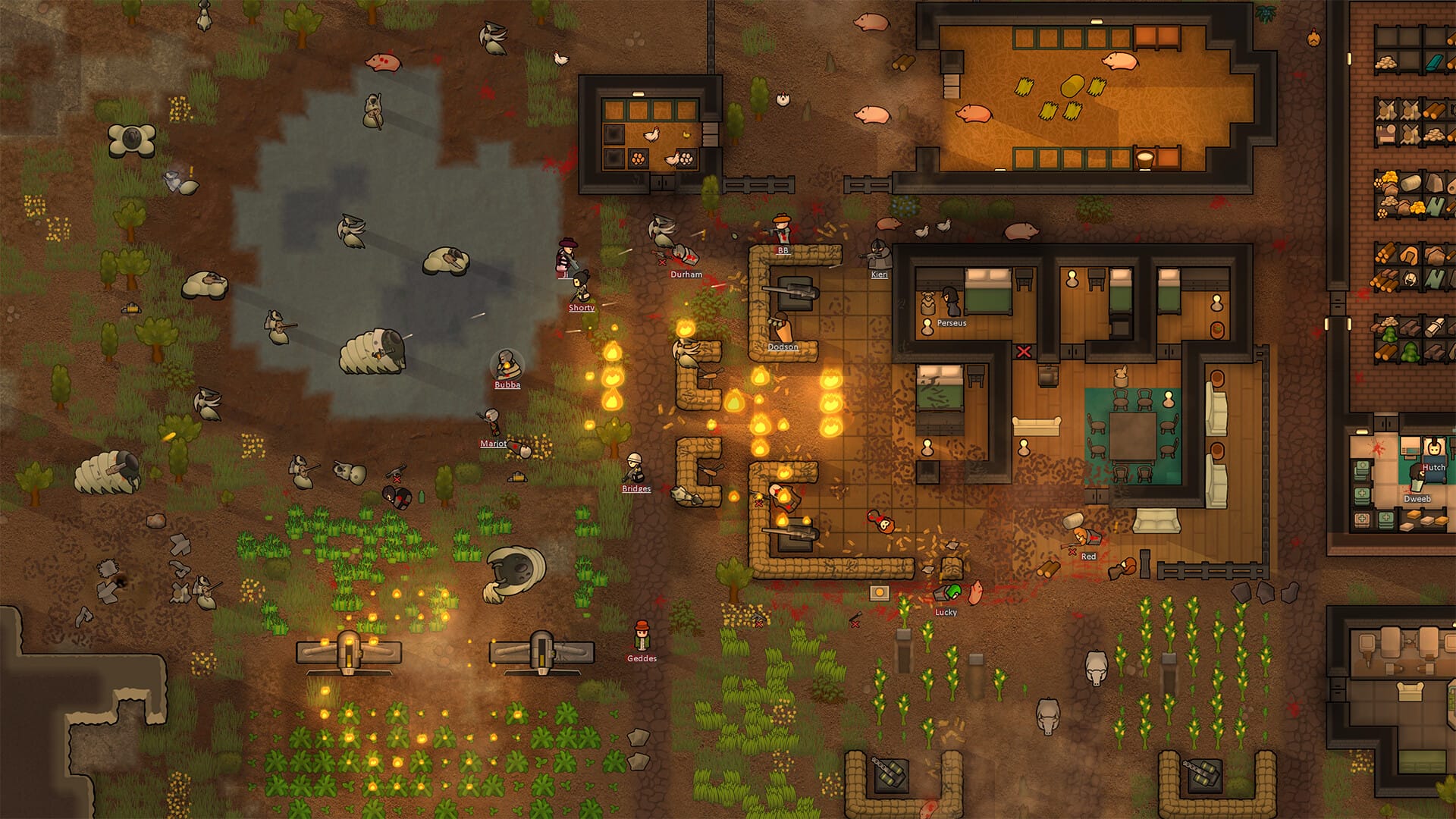
This system is about more than just difficulty; it's about dramatic pacing. Randy, in particular, seems to have an innate understanding of dramatic irony. He’ll let you successfully defend against a massive pirate raid, leaving you celebrating amidst the wreckage, only to have your best doctor suffer a heart attack while tending to the wounded. The storyteller isn't just throwing dice; it's weaving a narrative, and often, that narrative is a dark comedy at your expense.
The Human Element
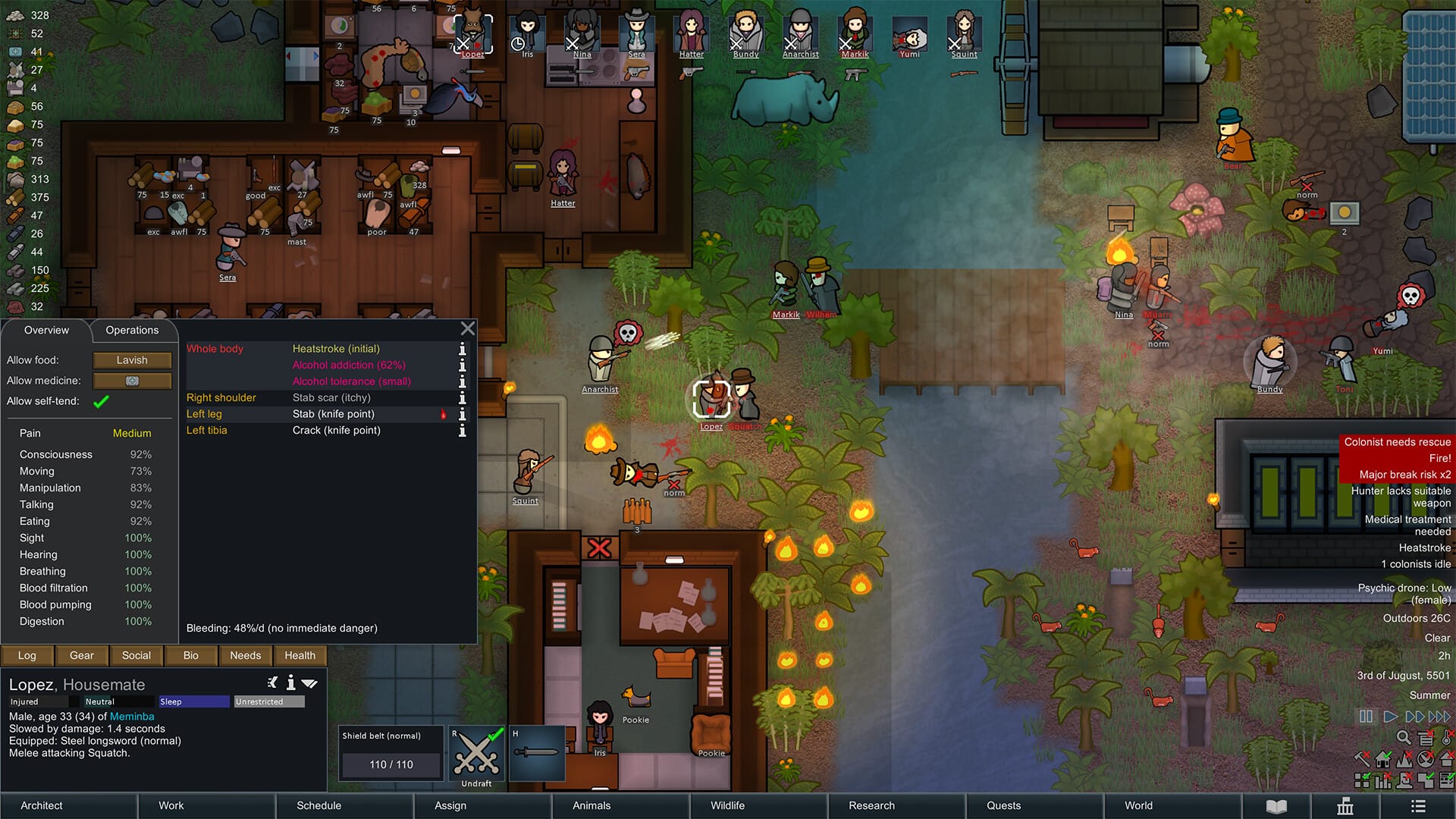
The colonists themselves are the stars of this tragic play. They arrive with backstories that matter. A "Vatgrown Soldier" will be a crack shot but may have a social stigma that makes them abrasive. A "Former Neurosurgeon" might be a peerless doctor but also a pyromaniac who will start fires in the medical bay during a psychic drone event that lowers everyone's mood.
This is where the simulation's depth becomes truly apparent. You don't just manage hunger and thirst; you manage mood. A colonist's happiness is a complex ledger of debits and credits: the joy of a new bedroom, the sorrow of a lost friend, the frustration of eating without a table. Let that mood drop too low, and they might have a mental break, going on a destructive rampage, binge-eating all your survival meals, or simply wandering off into the wilderness in a daze. Keeping your colonists sane is a far greater challenge than keeping them fed. It forces you to make decisions that are not just strategically optimal but also humane.
The Learning Cliff
Let's be clear: RimWorld is not for the faint of heart. Its interface is dense, packed with information, and the initial onboarding is minimal. The game doesn't hold your hand; it pushes you into the deep end and expects you to learn to swim. The first several colonies you build are almost guaranteed to fail, often in spectacular fashion. A forgotten heatwave cooks your colonists in their own base. An infection from a squirrel bite, improperly treated, claims your best constructor. A short circuit in a power conduit starts a fire that consumes your entire food supply. This initial friction is, without question, the game's biggest barrier. But it's not a flaw; it's a filter. Pushing through it and mastering the game's intricate mechanics is an immense reward in its own right.