

Bottom Line: Sapiens presents an ambitious, meticulously crafted vision of prehistoric colony simulation, offering a compelling sandbox for digital evolutionists despite the inherent unpolished edges of its Early Access journey.
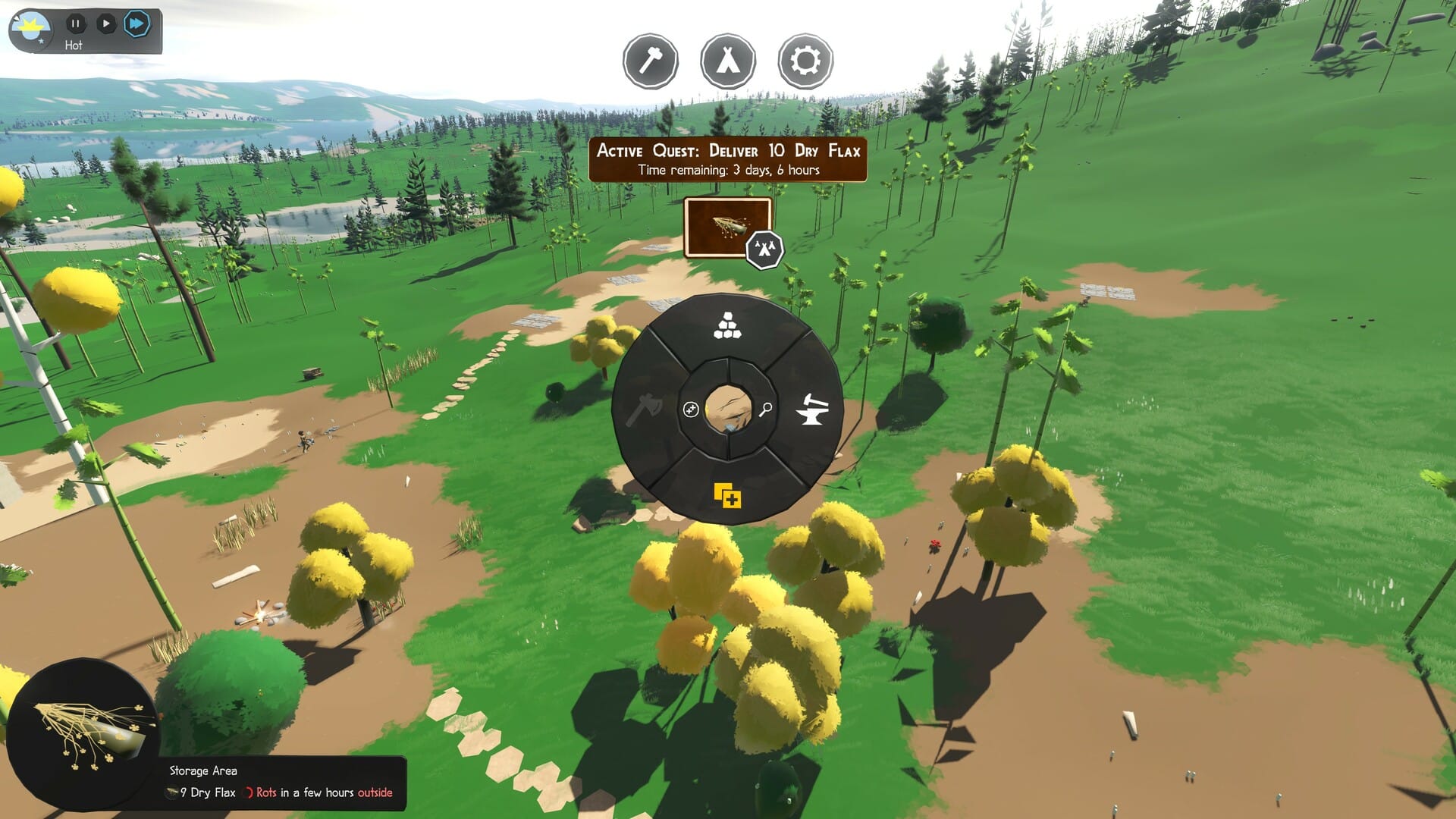
Sapiens arrives in a digital landscape already saturated with survival and colony simulation experiences, yet it distinguishes itself with a singular focus on the truly prehistoric. The core gameplay loop centers on a relentless pursuit of efficiency and discovery, beginning with the stark reality of basic survival. Initially, players spend their time directing individual tribe members to chop trees, hunt game, and gather berries – a micro-management dance that quickly scales in complexity. This initial onboarding friction is palpable; the game offers little hand-holding, expecting players to deduce complex systems through experimentation. For veterans of the genre, this steep learning curve is a feature, not a bug, offering a satisfying challenge. For newcomers, it might prove a significant barrier.
The true genius of Sapiens lies in its organic world-building. The terrain isn't merely aesthetic; it dictates strategy. A rich vein of flint near a dense forest might dictate your first settlement's location, while a distant clay deposit will inform future expansion. This environmental realism grounds the simulation in a way few others achieve. Directing a Sapiens to construct a dwelling isn't a click-and-wait affair; it involves sourcing logs, cutting planks, and physically assembling components. This meticulous process imbues every structure with a sense of earned permanence. The dynamic technology tree is less a linear progression and more a sprawling web of necessity and opportunity. Discovering fire isn't merely an unlock; it opens up new cooking methods, smelting capabilities, and societal structures. The ripple effects of each discovery propagate through the nascent civilization, creating a genuine sense of advancement.
However, the Early Access badge carries inherent caveats. While the ambition is laudable, the execution can, at times, feel rudimentary. The user interface, while functional, occasionally lacks the intuitive polish expected of a modern simulation. Information density can be overwhelming, and navigating complex tasks often requires more clicks and menu diving than ideal. Pathfinding for individual Sapiens, a perennial challenge in this genre, occasionally falters, leading to frustrating inefficiencies or, worse, unintended deaths. The "Very Positive" user reviews undoubtedly laud the game's innovative core and the evident passion of its sole developer. Yet, a critic must dissect beyond the enthusiasm. The long-term loop, while compelling, can succumb to periods of grind, particularly in the mid-game where major breakthroughs become rarer and resource acquisition becomes a repetitive chore. The multiplayer aspect, while intriguing, is often subject to the vagaries of Early Access networking and synchronization, a common pitfall for complex simulations. The game’s strategic depth is undeniable, but it still feels like a foundation waiting for its intricate architecture to be fully realized.