Overview
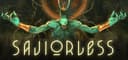
In an industry often chasing sprawling open worlds and endless content loops, “Saviorless” emerges as a refreshing, albeit concise, anomaly. Developed by Empty Head Games and published by Dear Villagers, this 2D platformer carves its niche with an almost audacious commitment to artistic integrity and narrative complexity. Set against the backdrop of the Smiling Islands, a dark fantasy realm rendered with striking hand-drawn artistry, “Saviorless” is a visual poem. Its market positioning eschews the mainstream, instead targeting players who prioritize atmospheric immersion, sophisticated storytelling, and a refined gameplay experience over sheer volume. The game’s premise—following Antar, a determined child striving to become a Savior—serves as a simple entry point into a world far more intricate and foreboding than its initial appearance suggests. This isn’t a casual romp; it’s an invitation to engage with a world that demands attention, rewarding those willing to piece together its fragmented truths. The design philosophy feels like a deliberate pushback against the bloat endemic to many modern titles, opting for a concentrated burst of craft that leaves a lasting impression rather than a drawn-out, diluted one.
Key features
- Dynamic Character Switching: Players command three distinct characters—Antar, Savior, and Nento—each possessing unique abilities that fundamentally alter gameplay, demanding strategic adaptation for puzzles and combat encounters.
- Exquisite Hand-Drawn Artistry: The game’s visual identity is its most immediate draw, featuring carefully animated, high-contrast aesthetics that evoke a sense of profound dark fantasy and contribute significantly to its pervasive, melancholic atmosphere.
- Nonlinear Narrative Structure: “Saviorless” eschews conventional storytelling, presenting its lore and plot in a fragmented, non-chronological manner that compels players to actively engage in interpretation and deduction to unravel its enigmatic twists.
Analysis
“Saviorless” doesn’t just offer a gameplay loop; it presents an intricate dance between vulnerability and power, curiosity and consequence. The core mechanic of shifting between Antar, the fragile child, the formidable masked Savior, and the enigmatic hunter Nento is the game’s beating heart. In Antar’s segments, the design pushes players through the treacherous landscapes of the Smiling Islands with a palpable sense of trepidation. These sections are built around intricate environmental puzzles, stealth passages where evasion is paramount, and moments of quiet exploration that emphasize the beauty and danger of the world. The platforming is designed to be precise, demanding careful timing and observation, drawing players into the child’s desperate journey.
The transition to the Savior persona fundamentally shifts the paradigm. Where Antar is nimble and vulnerable, Savior is a force of nature. Combat becomes a brutal, rhythmic affair, often against grotesque “nightmarish monsters” that call for aggressive yet tactical engagement. This duality is about shifting psychological states, reflecting Antar’s internal struggle and the escalating stakes of his quest. The third character, Nento, introduces yet another layer of complexity. While details on Nento’s specific mechanics are sparse, the promise of a “merciless hunter” suggests a focus on tracking, perhaps more aggressive, calculated combat, or even unique traversal options that unlock new avenues of exploration. This tripartite character design ensures that the gameplay never stagnates, constantly challenging the player to master diverse skill sets and understand when each persona is most advantageous.
The nonlinear narrative is another standout element, requiring players to actively participate in constructing the story rather than passively consuming it. Clues are scattered across the world, embedded in environmental details, cryptic dialogue, and the very structure of the game’s progression. This approach, while potentially alienating for those accustomed to more direct storytelling, profoundly enhances the sense of mystery and discovery. Each “page” collected is a piece of a larger, unsettling mosaic, leading to genuine “unexpected twists” that feel earned due to the player’s investment in piecing them together. This is about thematic depth, allowing the game to explore its dark fantasy themes with a maturity rarely seen in the genre.
However, the game’s relatively short playtime deserves scrutiny within this analysis. While some might view this as a drawback in terms of “value,” the concentrated nature of “Saviorless” could also be considered a strength. It suggests a deliberate design choice: to deliver a potent, tightly wound experience without filler. Every jump, every puzzle, every combat encounter feels purposeful, contributing directly to the narrative or world-building. This economy of design keeps the game tightly paced from start to finish, avoiding the lulls that often plague longer titles. The question isn’t whether it’s “short,” but whether the experience it offers justifies its runtime. For a game so rich in atmosphere and narrative intrigue, a concise delivery can amplify its impact, leaving players wanting more, rather than feeling overwhelmed. The immersive soundtrack complements this by deepening the emotional resonance of each segment, pulling players further into the melancholic beauty of the Smiling Islands.
Visuals & performance
The visual identity of “Saviorless” is its crown jewel. The “exquisite hand-drawn artwork and animations” are not hyperbole; they form the bedrock of its captivating dark fantasy world. Every frame feels like a concept piece brought to life, with stark contrasts, intricate detailing, and fluid character movement that put it far beyond typical 2D pixel art. The character designs, from Antar’s youthful vulnerability to the Savior’s imposing silhouette and the monsters’ grotesque forms, are rendered with an artistic confidence that speaks volumes. This visual style doesn’t just look good; it functions as a primary storytelling device, conveying mood, peril, and wonder without explicit exposition. On the technical front, a 2D game of this scope is light on hardware, so the visual flair should shine without compromise on either platform. The atmospheric soundtrack is tightly integrated, swelling and receding to underscore moments of tension, despair, and triumph, completing an audiovisual experience that is both cohesive and deeply affecting.
Platform nuances
On Steam, “Saviorless” benefits from the inherent precision of mouse and keyboard inputs, allowing for exact platforming and swift combat responses, which can be particularly advantageous in demanding sections. The PC platform also offers the potential for higher resolutions, allowing the detailed hand-drawn art to truly pop on larger displays. However, a controller is likely the preferred input for many 2D platformer enthusiasts, and the game should feel natural with either.
For Nintendo Switch, the game’s artistic style and concise nature make it an ideal candidate for portable play. The visuals, while potentially scaled down, should retain their impact on the smaller screen, and the atmospheric design lends itself well to focused, on-the-go sessions. The Switch’s native joy-cons provide a familiar and comfortable input method for this genre, making it accessible to a wide audience. The intimate nature of the game’s narrative might even be amplified by the personal, handheld experience, drawing players deeper into Antar’s solitary journey.
Final verdict
“Saviorless” is a carefully crafted piece of interactive art. Its commitment to a distinct visual style, a complex multi-character mechanic, and an evocative, nonlinear narrative sets it apart in a crowded genre. While its brevity may be a point of contention for some, it functions here not as a flaw, but as a deliberate choice to deliver a concentrated, impactful experience. Empty Head Games has produced a title that doesn’t just capture attention—it demands it, then rewards it with beauty and unexpected depth. This is a game we recommend, with the caveat that its brevity and demanding storytelling won’t suit everyone, and one that will linger in the memory long after its final frame.
Reviewed by the Rankeno Action Desk. Scores are out of 10; the overall score is the desk’s editorial judgement, informed by the four sub-scores above. How we review