
Overview
Revisiting a masterpiece is a fool’s errand more often than not. When Konami announced that Bloober Team—a studio with a polarizing track record for “surface-level” horror—would be handling the remake of the 2001 classic Silent Hill 2, the collective intake of breath from the industry was audible. On paper, this remake carried the risk of desecrating a sacred text. The original game didn’t just define survival horror; it defined the capacity for video games to explore guilt, sexual frustration, and the rotting architecture of the human subconscious.
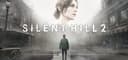
The 2024 iteration of Silent Hill 2, released October 7, 2024, is a revelation. Built on Unreal Engine 5, this isn’t a mere “remaster” with a fresh coat of paint. It is a comprehensive reconstruction that understands the original’s core appeal: its oppressive, suffocating atmosphere. Players still take on the role of James Sunderland, a man whose grief is so profound it has manifested as a literal fog-shrouded town. The premise remains untouched—James receives a letter from his wife, Mary, who died three years ago, beckoning him to their “special place.” What follows is a descent into a nightmare that feels both familiar and terrifyingly new.
Bloober Team, working in close collaboration with original creature designer Masahiro Ito and composer Akira Yamaoka, has managed to expand the scope of the town without diluting its potency. The upgrade goes beyond higher polygon counts to the way the light dies in a hallway or how the volumetric fog reads as a physical weight against the camera. The market positioning here is clear: Konami wants to reclaim the survival horror throne currently occupied by Capcom’s Resident Evil remakes, and they’ve chosen the most difficult, emotionally taxing entry in their library to do it.
Key features
- Over-the-Shoulder Perspective: A complete departure from the fixed camera angles of 2001, providing an intimate, claustrophobic view of the horror.
- Unreal Engine 5 Fidelity: Utilization of Lumen lighting and Nanite geometry to create environments that feel damp, decayed, and distressingly real.
- Expanded Narrative & Puzzles: New areas to explore and reconfigured puzzles that challenge veterans while maintaining the original’s thematic relevance.
- Modernized Combat System: A fluid, weightier combat loop that emphasizes James’s desperation rather than making him an action hero.
Analysis
The most significant hurdle for any Silent Hill remake is the tension between modern accessibility and the series’ inherent “clunkiness” that fueled its dread. In the original, the combat was stiff, and the camera was an adversary. Bloober Team’s solution—the shift to a modern over-the-shoulder perspective—could have easily turned this into a generic shooter. It doesn’t. Instead, the proximity to James’s shoulder heightens the tension. The player is no longer an omniscient observer; they are trapped in the grime with him.
The Fog and the Friction
The gameplay loop thrives on environmental friction. Every door might be broken; every alleyway might hide a “Lying Figure” spitting acid through the mist. The combat has been overhauled to feel more tactile. James swings a steel pipe with a desperate, uncoordinated exhaustion that feels narratively consistent. There is a “dodge” mechanic now, but it isn’t a superhero’s dash; it’s a frantic lunge to avoid a blow. Resources remain scarce enough that every encounter is designed to feel like a potential mistake. Rooms aren’t “cleaned out”; they are survived.
Psychological Architecture
Where this remake truly shines is in its level design. Bloober has expanded the interiors of the Wood Side Apartments and the Brookhaven Hospital, adding layers of environmental storytelling that weren’t possible in 2001. Puzzles have been cleverly re-contextualized. The puzzles involve interacting with objects that reflect James’s fractured psyche. The pacing is deliberate—almost agonizingly slow at times—forcing players to sit with the discomfort of the town’s silence before the radio static begins to shriek.
The Sound of Guilt
The auditory design is perhaps the game’s greatest asset. Akira Yamaoka’s rearranged soundtrack retains the industrial, trip-hop-infused melancholy of the original while adding new layers of atmospheric noise. The 3D spatial audio is deployed to devastating effect: footsteps overhead, the wet slosh of a monster around an unseen corner. It works through sensory deprivation and overload, oscillating between deafening silence and a cacophony of metallic screeches.
Narrative Weight
Critically, the game avoids the “MCU-ification” of its characters. The performances are subtle. James feels like a man on the verge of a breakdown, not a protagonist in a horror movie. His interactions with Maria—the woman who looks like his wife but is distressingly different—are handled with the necessary maturity. The game doesn’t over-explain its metaphors; it lets players linger on the disturbing imagery of Ito’s creatures, understanding that the horror is entirely internal.
Visuals & performance
Visually, the game is a triumph of art direction over raw power, though the power is certainly there. The volumetric fog is among the best in the medium, shifting and swirling naturally around James as he moves. The character models are highly detailed, with facial animations designed to convey the nuance of James’s internal struggle without a single word of dialogue.
Unreal Engine 5’s well-known shader compilation stutter remains a consideration on PC, particularly during initial area transitions before assets are cached. The lighting, particularly the way the flashlight interacts with different surfaces—blood-slicked tile vs. rusted metal—is central to the gameplay, and a game of this visual fidelity carries correspondingly high hardware demands.
Platform nuances
On Steam, mouse and keyboard support is competent, though this is a game built for the haptic feedback of a controller. The precision of a mouse makes the revamped combat slightly easier, which risks undercutting the tension. Higher resolutions and frame rates on a high-end rig let the atmospheric detail pop in ways lower-spec setups can’t match.
Final verdict
The Silent Hill 2 remake is a rare achievement. It proves that with the right creative stewards, even the most delicate masterpieces can be brought into the modern era without losing their soul. Bloober Team has moved beyond being a “jump-scare” studio to one capable of handling deep, psychological complexity. It’s one of the best horror games of the decade, and we rate it as outstanding.
Reviewed by the Rankeno Action Desk. Scores are out of 10; the overall score is the desk’s editorial judgement, informed by the four sub-scores above. How we review