


Bottom Line: Speaking Simulator delivers a brilliantly chaotic, physics-driven satire on human communication, proving that sometimes, failing spectacularly is the ultimate comedic triumph. Its innovative mechanics captivate, though the novelty, like social grace, can eventually wear thin.
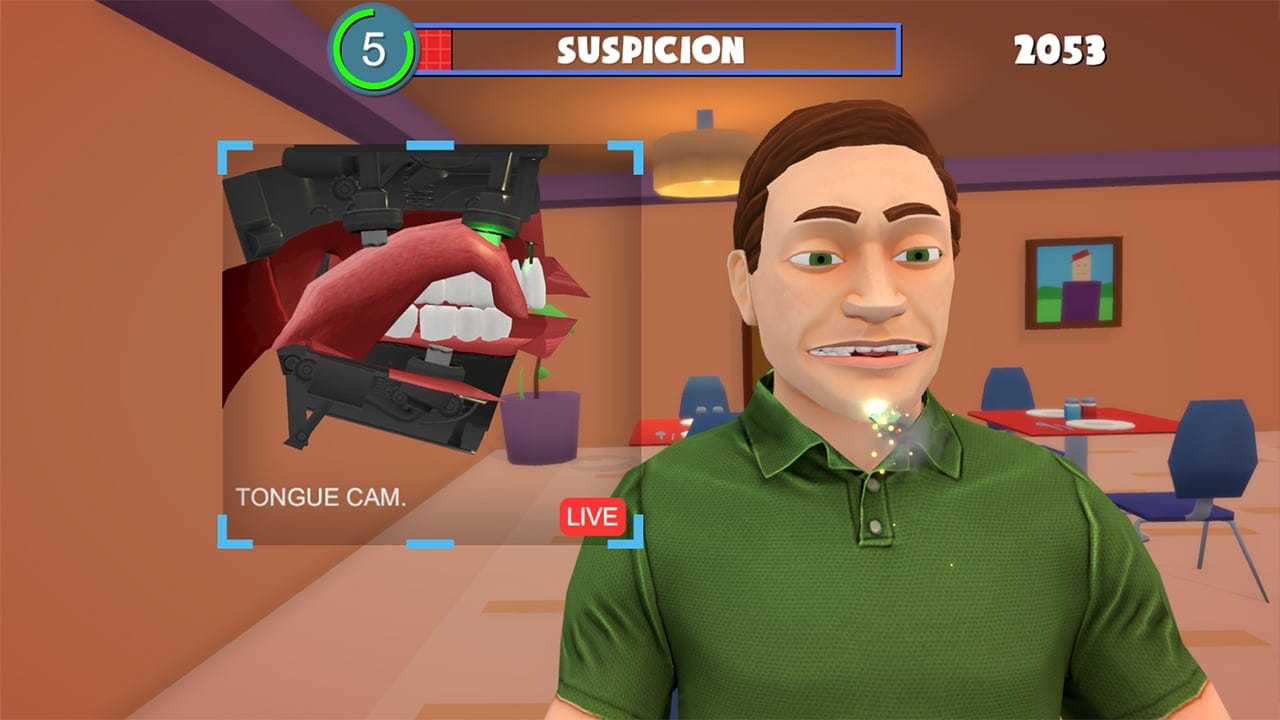
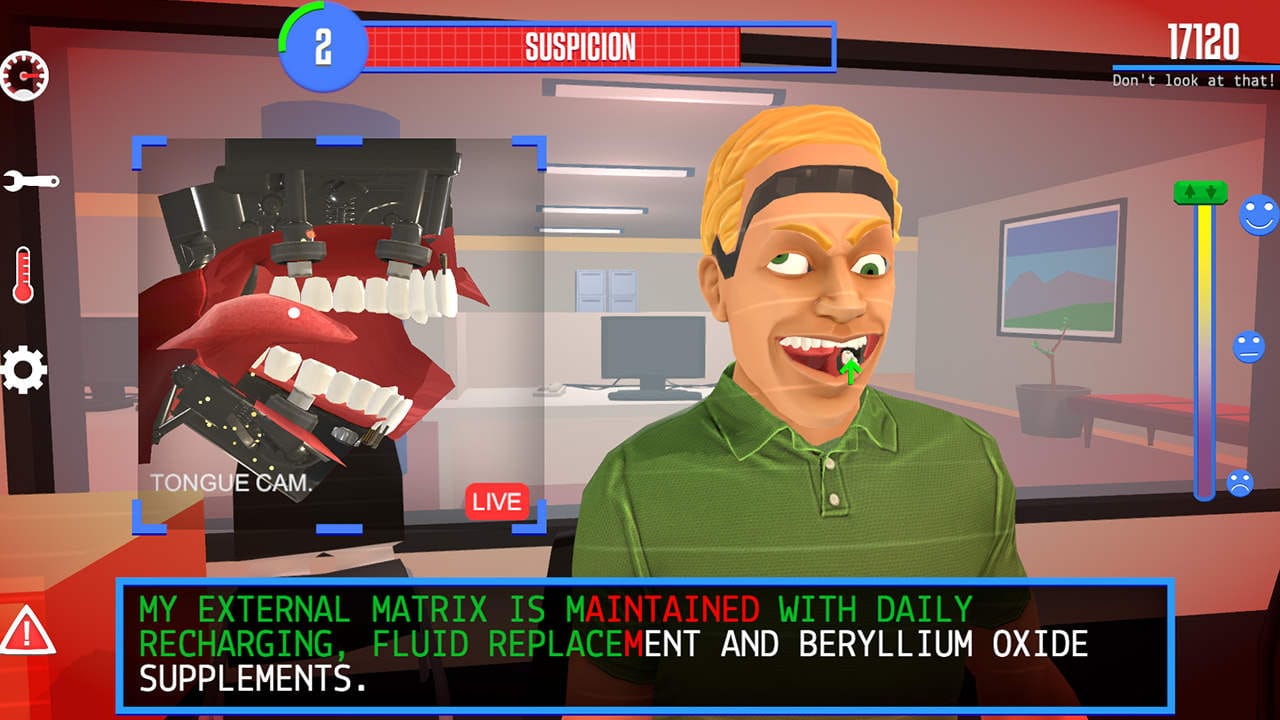
The brilliance of Speaking Simulator lies in its relentless commitment to an absurd core mechanic. It takes the most fundamental aspect of human interaction—speech—and transforms it into a grueling, yet uproarious, test of dexterity and timing. The control scheme is intentionally cumbersome, forcing players to wrestle with the android's pliable, often recalcitrant, facial apparatus. This isn't poor design; it's the design. Like an avant-garde performance art piece, the struggle is the experience. Successfully articulating a simple phrase feels like a monumental achievement, a testament to overcoming the game's inherent resistance. The comedic payoff for failure is immediate and spectacular, a jarring transition from a tense attempt at normalcy to a grotesque carnival of springs, wires, and detached eyeballs. This cycle of hopeful attempt, inevitable blunder, and explosive payoff constitutes the primary gameplay loop, delivering consistent, if repetitive, laughs.
However, a critical eye must acknowledge the inherent limitations of such a focused design. While the initial hours are a masterclass in unique humor and engaging frustration, the finite number of social scenarios and the largely static nature of the control challenges mean that the novelty, much like the android's face, eventually begins to fray. The "social technology" upgrades offer a compelling sense of progression early on, transforming a purely mechanical challenge into one layered with subtle emotional mimicry. Yet, even these additions can't entirely mask a certain lack of long-term depth. The game’s commentary on the performative aspect of social interaction remains potent, but the vehicles for that commentary—the 10 scenarios—are, by definition, limited. Players who seek sprawling narratives or complex strategic layers will find Speaking Simulator wanting. Its value is concentrated in its intense, singular premise, rather than an expansive world.
The intentional difficulty, while core to the humor, walks a fine line. For some, the constant struggle against the controls will be a source of joyous, shared laughter. For others, it will inevitably cross into genuine frustration, rendering the experience less "challenging" and more "tedious." The game succeeds precisely because it embraces this friction, leveraging it for comedic effect. It asks players to not just play a game, but to participate in a deliberately broken system, and in doing so, reveals the inherent fragility beneath our polished social veneers.