

Bottom Line: A masterclass in real-time tactics that proves the genre didn't die with Mimimi Games; it just needed a dose of pulp-sci-fi adrenaline and a werebear.
The core of Sumerian Six is its gameplay loop, a rhythmic cycle of observation, planning, and execution that feels incredibly rewarding. Unlike many stealth games that punish you for breaking the shadows, Sumerian Six encourages a certain level of aggressive experimentation. You aren't just a ghost; you are a disruptor.
The Action Planner: A Rube Goldberg Machine
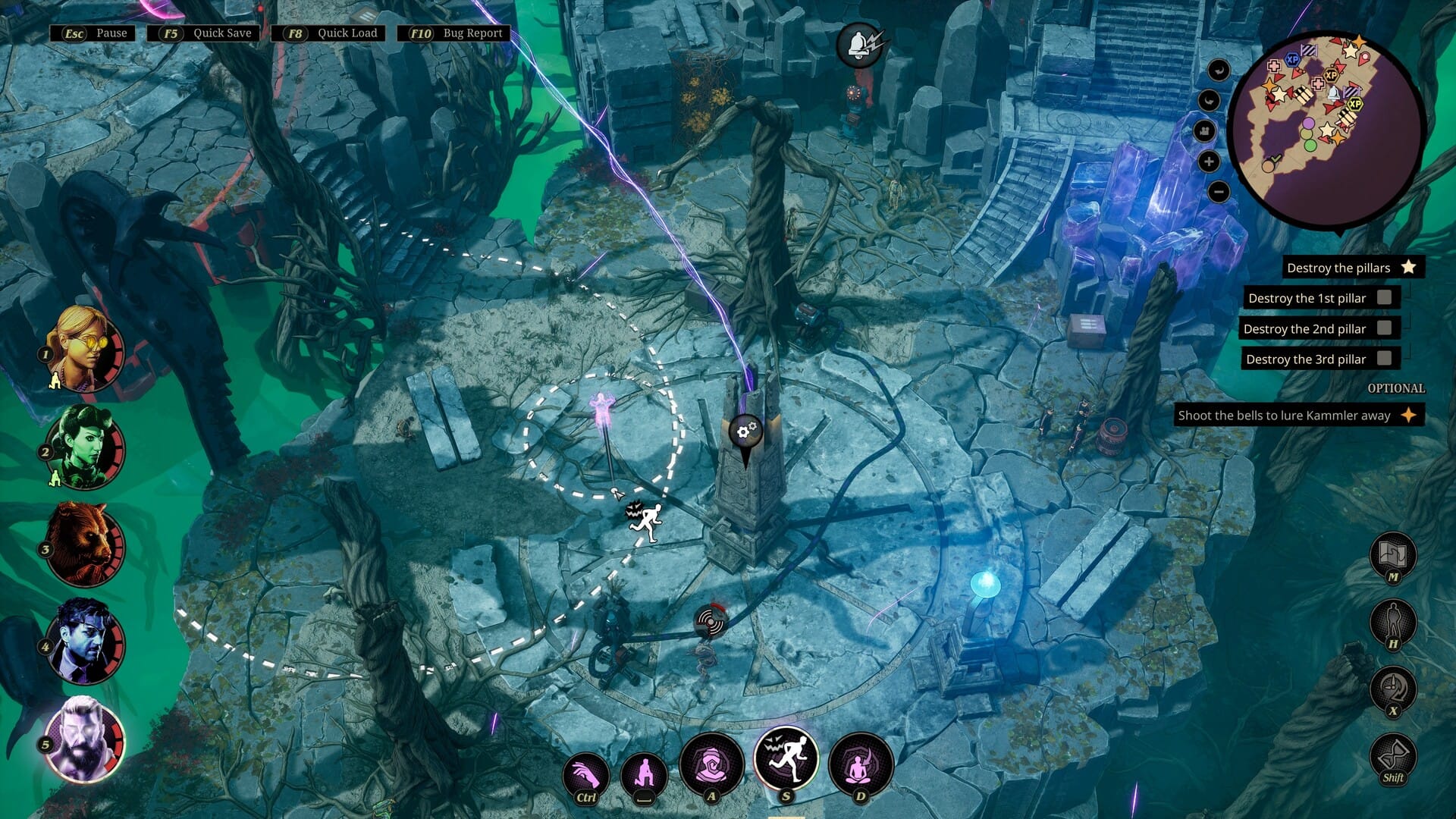
The Action Planner is the game's undisputed MVP. While many RTT titles offer a "pause and command" feature, Artificer has polished this into a central pillar of the experience. It allows you to synchronize takedowns that would be physically impossible in real-time. Picture this: Sid Sterling possesses a guard to walk him away from his post, while simultaneously, Rosa Reiss sets a chemical trap, and Wojtek Galica readies a pounce. You hit the 'Execute' button, and the screen erupts into a beautifully timed sequence of events. When it works, you feel like a genius; when it fails, the onboarding friction for reloading and trying a new angle is low enough that it never feels like a chore.
Character Synergies and Tactical Depth
The depth of the game lies in how the characters' abilities interact. It’s not just about what one scientist can do, but how their "super-science" creates emergent gameplay. Sid’s ability to "jump" into enemies is great for reconnaissance, but when you combine it with the environment—say, walking a guard into a lethal trap you've set with another character—the game opens up.
Wojtek Galica deserves a special mention. In a stealth game, a "werebear" sounds like a loud, clumsy liability. Instead, he acts as a tactical reset button. If your plan goes sideways and the alarms start blaring, Wojtek can thin the herd with sheer brute force, giving the rest of the squad time to vanish back into the shadows. This flexibility prevents the "instant-fail" frustration that often plagues the genre.
Level Design as a Puzzle Box
The levels are sprawling, multi-layered sandboxes. Artificer has done a stellar job of ensuring that there is never just one "correct" path. The guard patterns are intricate, but they have just enough predictability to allow for "pro-level" manipulation. The introduction of Geiststoff-powered enemies adds a layer of complexity; these aren't just guards with better guns, but obstacles that require you to use specific character abilities to neutralize their supernatural advantages. This prevents the "overpowering" of certain squad members and forces you to use the full breadth of your team.
However, the game isn't without its latency in logic. Occasionally, the enemy AI can feel a bit "tethered" to specific spots, leading to moments where you can exploit their pathfinding. But these instances are rare and often add to the "pulpy" fun rather than detracting from the challenge. The difficulty curve is steep—don't expect a walk in the park—but it is fair. Every failure is a lesson in character positioning or timing.