
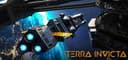
Overview
Terra Invicta, a monumental creation from developer Pavonis Interactive and publisher Hooded Horse, offers a high-fidelity simulation of humanity’s desperate struggle against an existential threat. This isn’t another arcade-style skirmish; it’s a sprawling, deeply layered grand strategy title that thrusts players into the immediate aftermath of an alien arrival. The traditional geopolitical map of Earth shatters into a contested battleground where seven distinct ideological factions vie for dominance, each with a radically different vision for survival. From those who seek to embrace the extraterrestrial presence to those who advocate for total annihilation, the spectrum of human response is modeled in careful detail.
Pavonis Interactive has positioned Terra Invicta not as a casual diversion but as a strategic crucible designed for a niche audience craving profound complexity. It’s a title that eschews instant gratification in favor of a slow burn, a chess match played across continents and solar systems. The market for such games is small but fiercely loyal, and Terra Invicta arrives to meet that demand with an almost intimidating scope. Its critical reception, reflected in a Metacritic score of 83, speaks to its success in captivating this discerning demographic. This is a game for those who appreciate the weight of every decision, where a single misstep on Earth can ripple through the entire Solar System, determining the fate of mankind.
Key features
- Fractured Factions, Divergent Destinies: Players navigate the geopolitical landscape as one of seven ideologically distinct factions. Each presents a unique approach to the alien menace, from xenophobic extermination to submissive collaboration, fundamentally altering diplomatic, research, and military pathways. This dynamic ensures high replayability, as each faction offers a genuinely different narrative and strategic challenge.
- Carefully Simulated Solar System: Beyond Earth, the game unfolds across a sprawling, astronomically accurate Solar System. Over 300 celestial bodies—asteroids, moons, and planets—move dynamically, offering strategic outposts for resource extraction, scientific research, and military staging. This three-dimensional chessboard forces players to contend with orbital mechanics, travel times, and resource scarcity on a truly cosmic scale.
- Player-Designed Fleets and Tactical Combat: Naval engagements are not abstract dice rolls. Terra Invicta provides an intricate ship designer, allowing players to customize vessels from hull to weapon systems, engine types, and armor layouts. These bespoke fleets then clash in tactical, real-time combat scenarios that demand careful positioning, power management, and weapon targeting, adding another layer of strategic depth to the interstellar war.
Analysis
Terra Invicta rewards strategic depth, a digital equivalent of a doctoral thesis in geopolitics and astropolitics. Its core loop begins on Earth, a theater of operations dominated by covert actions and influence peddling. Players must shrewdly leverage political capital, economic power, and military might to seize control of nations, manipulate public opinion, and destabilize rivals. This initial phase, often slow and deliberate, is where the foundational strategy is laid. Building a power base requires an acute understanding of global dynamics, managing councilors with varied skills, and executing subtle operations that can take game-years to bear fruit. The onboarding friction here is significant; the game demands patience and a willingness to learn its intricate systems, often through trial and error. There’s no hand-holding, merely a complex web of interconnected mechanics that slowly reveal their implications.
As the terrestrial game solidifies, the focus inexorably shifts skyward. The Solar System is an active, hostile environment demanding colonization and militarization. Expanding into space is a massive undertaking, requiring substantial investment in research, infrastructure, and resource extraction. Establishing mines on asteroids, building orbital habitats around Mars, or constructing shipyards in the Jovian system involves managing logistics, power grids, and a nascent space economy. The dynamic movement of celestial bodies adds a layer of realism and strategic planning; a well-timed fleet movement can exploit a favorable orbital alignment, while a miscalculation can leave assets vulnerable for extended periods.
Strategic Infrastructure and Economic Management
The economic model, tied to global influence and space resources, is punishingly realistic. Every module built, every councilor maintained, every ship launched incurs a cost. Resource management is about establishing supply chains, protecting trade routes, and balancing the demands of Earth-bound development with off-world expansion. Neglecting any facet—be it terrestrial political control or space-based industrial capacity—will lead to systemic failure.
Research and Ideological Divergence
The research system is another cornerstone of Terra Invicta‘s complexity. It’s not a simple tech tree; it’s a global endeavor where factions compete for scientific breakthroughs. Research choices reflect ideological priorities, meaning that while one faction may be pouring resources into advanced alien weapon integration, another might be researching exoplanetary colonization or novel social engineering techniques to unite humanity. This competition extends to covert operations, where research data can be stolen or sabotaged, fostering a constant state of low-intensity conflict even among nominally allied factions. The impact of these choices is profound, shaping the very capabilities available to a player’s faction in the late game.
Tactical Fleet Engagements
When diplomacy and economic pressure fail, combat is inevitable. The player-designed ships, from agile escorts to ponderous battleships, engage in tactical confrontations that demand spatial awareness and precise command. Unlike many grand strategy titles where combat is often abstracted, Terra Invicta provides a granular, three-dimensional battlefield. Vectors, relative velocities, armor angles, and weapon ranges all factor into the outcome. A well-designed ship can be undone by poor tactical positioning, just as a technically inferior fleet can prevail through superior maneuvering. It’s a gratifying system for those who appreciate detailed combat simulation, but it requires a significant time investment to master the intricacies of its ship designer and battle interface.
Visuals & performance
Visually, Terra Invicta presents a functional, information-dense aesthetic rather than a graphically opulent one. The global map of Earth, while detailed in its political divisions and project overlays, prioritizes data over flash. The true visual spectacle arrives in space, where the carefully rendered Solar System, with its accurately scaled planets and orbital mechanics, offers a sense of vastness and scientific authenticity. Ship models are intricate, reflecting the player’s design choices, and the real-time combat scenes, while not cinematic in the traditional sense, convey the brutal efficiency of space warfare through weapon effects and debris. The UI, while initially overwhelming, is logically structured and ultimately becomes intuitive for dedicated players, though the sheer volume of data it presents demands a high-resolution display and considerable cognitive load. A simulation of this depth, with sprawling late-game empires and constant system-wide calculations, is inherently demanding on hardware, and slower machines should expect the strain to grow as campaigns expand.
Platform nuances
As a PC-exclusive title on Steam, Terra Invicta is unapologetically designed for a mouse and keyboard interface. The intricate nature of its numerous sub-menus, the precise control required for managing councilors, nations, and space fleets, and the detailed tactical combat system would be utterly unmanageable with a gamepad. The keyboard shortcuts are extensive, and the mouse is constantly in use for navigation and micro-management. This is a game built from the ground up for the desktop experience, leveraging the precision and data input capabilities that only a PC environment can offer. Its success lies precisely in not trying to compromise for other platforms, instead focusing on delivering a peak grand strategy experience for its native input scheme.
Final verdict
Terra Invicta is an academic exercise in strategy, an intellectual gauntlet thrown down by Pavonis Interactive. It will alienate casual players with its uncompromising complexity and glacial pace. Yet, for the discerning strategist, for those who crave a universe to conquer with spreadsheets as much as lasers, it represents a major achievement. Its detailed simulation, coupled with the profound narrative choices offered by its faction system, ensures that each campaign is a unique, challenging journey into humanity’s possible futures. This game is a time sink, yes, but one that richly rewards patience, critical thinking, and an unyielding desire to master truly epic scale. It stands among the very best the grand strategy genre has to offer, a title that will be studied and debated for years to come.
Reviewed by the Rankeno Strategy & Sim Desk. Scores are out of 10; the overall score is the desk’s editorial judgement, informed by the four sub-scores above. How we review


