


Bottom Line: The Plucky Squire delivers a breathtakingly imaginative adventure, seamlessly fusing narrative innovation with delightful dimension-hopping mechanics, though its verbose moments occasionally disrupt an otherwise pristine experience.
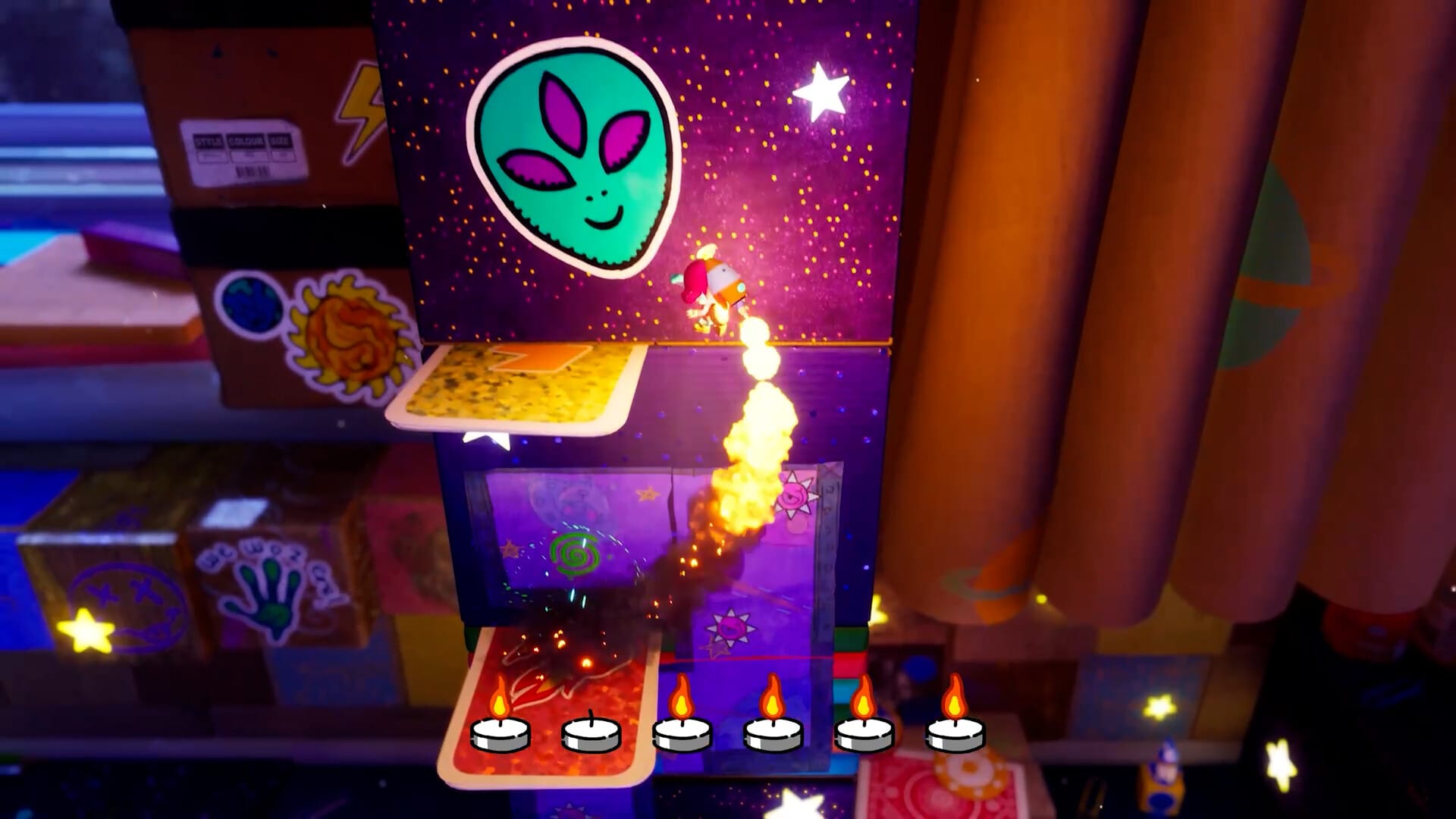
The Plucky Squire stands as a remarkable feat of conceptualization and execution, particularly in its central dimension-hopping mechanic. This isn't a mere gimmick; it's the gravitational core around which the entire game's genius orbits. The transition between Jot's flat, storybook world and the richly detailed 3D bedroom is not just visually striking but fundamentally alters the rules of engagement. What might be an insurmountable obstacle in one dimension becomes a malleable element in another. This constant recalibration of perspective forces players to think outside conventional gaming tropes, leveraging the game's meta-narrative to solve puzzles that feel genuinely fresh.
The word-based puzzles are where All Possible Futures truly flexes its creative muscle. Instead of simply pushing blocks or finding keys, players are often tasked with literally re-contextualizing the narrative. Seeing Jot manipulate text on a page to, say, "jump" across a gap that manifests in the 3D world as a newly formed bridge from a fallen book, is a moment of pure, unadulterated delight. These puzzles are consistently clever, often eliciting genuine "aha!" moments, showcasing a design philosophy that prioritizes intellectual engagement over brute force. They are, without question, the game's shining star, demonstrating a rare blend of charm and cerebral challenge.
However, even brilliance can cast a shadow. The game's often enthusiastic embrace of its own narrative can lead to moments of overly verbose dialogue. While the story is charming, there are instances, particularly in the later stages, where expository sequences or character banter extend beyond their welcome, occasionally disrupting the otherwise fluid pace of exploration and puzzle-solving. Critically, some of these lengthy dialogues inadvertently provide solutions to puzzles that players might have preferred to discover organically, undercutting the very ingenuity the game so brilliantly cultivates. This minor misstep, while not fatal, does occasionally pull back the curtain on the magic a moment too soon.
Combat, while present and functional, plays a distinctly secondary role. Jot’s swordplay, boomerang throws, and jump attacks are straightforward, offering a serviceable means of dispatching boxing badgers and other whimsical foes. The upgrade system adds a layer of progression, but the core combat rarely ascends beyond competent. It serves its purpose, providing brief, engaging interludes, but those seeking deep, challenging melee encounters will find it largely simplistic. This isn't necessarily a flaw, given the game's emphasis on puzzles and exploration, but it's an aspect that remains firmly in the "enjoyable, but not revolutionary" category.
The inclusion of charming mini-games, some clearly nodding to classic arcade genres, is a welcome touch. These serve as delightful palate cleansers, breaking up the primary quest with bursts of focused, often retro-inspired fun. They contribute to the overall whimsical atmosphere, ensuring that the adventure maintains a lighthearted, playful tone even during more challenging sequences. The holistic experience is one of continuous discovery, where every element, from a thrown pebble to a manipulated word, contributes to a cohesive and incredibly imaginative world.