
Overview
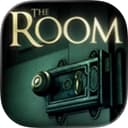
Long before the mobile marketplace became saturated with ephemeral titles, a small British studio named Fireproof Games released a game that felt less like an app and more like a discovery. The Room, released on July 28, 2014, played like an artifact rather than a typical puzzle game. It presented players not with a world to explore, but with an object—a single, ornate, and impossibly complex safe. The task was simple in premise but profound in execution: open the box. What followed was a lesson in focus, a tightly-wound exercise in interactive design that has been imitated endlessly but rarely surpassed.
This is a game built on a single, powerful idea: that the digital world could convincingly simulate the feel of a physical object. While most game developers were chasing photorealism or cartoon physics, Fireproof invested in the sensation of a tumbler clicking into place, the subtle scrape of a hidden drawer, the weight of a mysterious iron key. The game’s structure is aggressively linear, a deliberate choice that stands in stark contrast to the open-world zeitgeist. Players are presented with a series of interlocking mechanisms, each puzzle a self-contained universe of gears, levers, and cryptic symbols. The only tool is an “eyepiece,” a lens that reveals a hidden layer of ethereal clues, hinting at the occult forces underpinning the mechanical genius. This laser-focus on a singular object creates an intimate and engrossing experience. It doesn’t demand hours of time in a single sitting, but it absolutely commands full attention while it lasts.
Key features
- Tactile Puzzle Mechanics: The core of the experience is manipulating intricate 3D objects. It means turning keys, sliding panels, and rotating dials with a tangible sense of feedback that few touch-based games achieve.
- Atmospheric Storytelling: The narrative is delivered not through cutscenes or dialogue, but through the environment itself. Cryptic notes from an unseen “A.S.” and a pervasive, eerie soundscape create a slow-burn mystery that is genuinely unsettling.
- Focused, Layered Progression: The game unfolds as a series of nested puzzles. Solving one challenge reveals the next layer of the box, creating a highly structured and rewarding gameplay loop that feels like a high-end escape room condensed onto a single table.
Analysis
A Study in Tactile Design
The true genius of The Room lies in its friction. In a world of frictionless user interfaces, Fireproof Games made the conscious decision to build an experience around the satisfying friction of physical mechanisms. Every interaction is designed to feel deliberate and consequential. When a heavy bolt slides, the game doesn’t just animate the action; it accompanies it with a deep, resonant clunk. When a key turns, the design suggests the resistance of the lock’s inner workings before the tumblers align with a final, satisfying click.
This isn’t skeuomorphism for its own sake; it’s a fundamental part of the gameplay. The game asks players to examine objects from every angle, to zoom in on the smallest scratches and inscriptions, to think like a watchmaker or a safecracker. The interface is the game. Swiping to pan around the object, pinching to zoom, and tapping to interact create a powerful bond between the player and the puzzle box, making each discovery feel earned. The “eyepiece” mechanic adds another layer to this, transforming the puzzle from purely mechanical to something supernatural. It’s a brilliant piece of design that weaves the game’s occult theme into its core loop, asking players to not only observe the physical world but to perceive the hidden reality beneath it.
The Unfolding Mystery
The game’s narrative is a model of restraint. Players are dropped into the titular room with almost no context, save for a single, ornate puzzle box and a cryptic note. The story, concerning a mysterious element known as “Null,” unfolds through scattered letters left by an alchemist who has been consumed by his own ambition. The writing is sparse but effective, painting a picture of a mind slowly unraveling in the face of cosmic horrors.
This environmental storytelling is amplified by the game’s exceptional sound design. The room is filled with a low, oppressive hum, punctuated by the creaks of aging wood and the whisper of unseen forces. It’s a lonely, almost claustrophobic experience. There are no jump scares, no monsters chasing anyone down a hallway. The horror is atmospheric, born from the unsettling feeling of meddling with forces far beyond comprehension. The box itself feels less like an inanimate object and more like a dormant creature being slowly, foolishly, woken up.
Visuals & performance
Even after a decade, The Room‘s aesthetic direction remains potent. The game embraces its dark, Victorian-gothic look, with intricate wood carvings, polished brass fittings, and a color palette that is muted yet rich. The lighting is moody and dramatic, casting long shadows that both hide and hint at secrets. While the texture resolution may not stand up to modern console standards, the art direction is so strong that it hardly matters. This is a game about mood, not polygon counts. The UI is practically non-existent, letting the puzzle box itself command the entire focus. Its tightly scoped design is also light on hardware, which suits the modest requirements of the platforms it targets.
Platform nuances
The Room was born on a touchscreen, and it is on iOS and Android where its tactile nature feels most at home. The directness of swiping to rotate and pinching to zoom is intuitive and deeply immersive. The transition to PC via Steam works well on paper, with the mouse serving as a capable, if slightly less intimate, stand-in for a fingertip, and a mouse pointer can make spotting small details easier. The Nintendo Switch version offers a compelling hybrid, allowing for both touch controls in handheld mode and traditional button-and-stick controls when docked. The core experience holds up across all platforms, but for the purest distillation of its design, touch is king.
Final verdict
The Room is a piece of interactive art. It demonstrates a profound understanding of how to use a digital interface to create a sense of physical presence and mystery. While its sequels have expanded the scope and complexity, the original remains a standout of elegant, focused design. It proves that the most compelling worlds aren’t always the largest, but are sometimes contained within a single, impossibly intricate box. We rate it a Great, and recommend it wholeheartedly to anyone with a taste for puzzles—just don’t expect it to occupy a weekend twice.
Reviewed by the Rankeno Puzzle & Casual Desk. Scores are out of 10; the overall score is the desk’s editorial judgement, informed by the four sub-scores above. How we review