Overview
In an industry saturated with sprawling open worlds and adrenaline-fueled combat, a game like TOEM feels like a quiet, confident act of rebellion. Developed by the Swedish indie studio Something We Made, TOEM is not a game about winning, but about witnessing. It strips away the complex systems and urgent objectives that define its contemporaries, offering instead a simple, profound task: take pictures. You are a young adventurer leaving home for the first time, armed with a hand-me-down camera, on a pilgrimage to witness a celestial phenomenon known as TOEM. The journey unfolds across a series of small, exquisitely crafted diorama-like islands, each a self-contained world brimming with quirky characters and gentle mysteries.
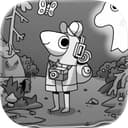
The game’s market position is firmly in the “wholesome” or “cozy” category, a genre that has seen explosive growth as players seek refuge from more demanding titles. But to label it merely as “cozy” would be to undersell its impeccable design. TOEM is a thoughtful exploration of how a single mechanic—photography—can be a vehicle for exploration, puzzle-solving, and narrative. Its hand-drawn, monochrome aesthetic isn’t a stylistic affectation; it’s a core part of the experience, forcing the player to see the world not in terms of color, but in shape, shadow, and composition. It’s a short, meditative experience that respects the player’s time, yet its world feels so inviting that you’ll wish it would last just a little longer. It doesn’t scream for your attention; it politely earns it.
Key features
- Photographic Quests: The core gameplay loop revolves around using your camera. Characters present problems—finding a lost sock, becoming a monster, proving the existence of a ghost—and your solution is always to capture the right image, from the right perspective.
- Stamp-Based Progression: The world opens up not through combat or currency, but through community service. Helping the inhabitants of each region earns you stamps on your community card. Collect enough, and you can flash your card at the bus stop to travel to the next delightful landscape.
- First-Person Camera: The game shifts perspective in a way that feels both natural and meaningful. You explore the diorama worlds from a top-down view, but taking out your camera instantly drops you into a first-person perspective, allowing you to zoom, aim, and compose your shot with a satisfying click.
Analysis
TOEM’s brilliance lies in its commitment to a single, elegant idea. The entire experience is built around the act of looking. The game’s structure is deceptively simple: arrive at an island, identify the characters who need help, and fulfill their photographic requests. These tasks begin as simple “point-and-shoot” objectives but slowly evolve into clever environmental puzzles. A ghost isn’t just floating in a graveyard; you have to first trigger its appearance by interacting with a sequence of objects. A shy monster will only reveal itself if you’re standing in a specific spot. This design encourages a form of observational gameplay that is deeply engaging. You learn to scan the environment not for threats or resources, but for interesting compositions and hidden details.
The Gameplay Loop
The core loop is meditative, not repetitive. The transition from the top-down isometric view to the first-person camera is seamless and functionally critical. It creates a dual-mode experience: one of broad exploration and one of focused observation. The world is your canvas, and the viewfinder is your tool for isolating and capturing its magic. While the majority of quests are a delight, the formula occasionally wears thin. A few objectives boil down to simple scavenger hunts that feel more like chores than discoveries, a minor crack in an otherwise polished facade. The much-lamented lack of an in-game map feels like a deliberate, if sometimes frustrating, design choice. It forces you to build a mental model of each space, relying on landmarks and memory rather than a UI crutch, deepening your connection to the environment at the cost of some convenience.
World and Atmosphere
The game’s Scandinavian-inspired setting is its soul. From the tranquil, woodsy paths of the starting area to a charmingly absurd seaside city, each location is dense with personality. The black-and-white art style, which could have been sterile, is instead rich and textured. It compels you to pay closer attention to form and light. The characters you meet are wonderfully written—absurd, funny, and occasionally touching. Their small problems feel important because the game treats them with a sincere, gentle respect. This is all held together by a chill, lo-fi soundtrack that is so perfectly matched to the experience it feels less like a score and more like the world’s natural ambiance.
Visuals & performance
Aesthetically, TOEM is a triumph of “less is more.” The hand-drawn, monochrome world is not only visually striking but also serves the gameplay. It declutters the visual field, allowing the designers to guide your eye with subtle shifts in light and shadow. The diorama presentation, with its sharp tilt-shift focus, makes each area feel like a meticulously crafted model you could reach out and touch. The UI is minimalist to a fault, tucking itself away to let the world breathe. Performance across all platforms is generally flawless, as the simple graphical style is not demanding. The only technical hiccup is occasional camera clipping on complex geometry, a minor issue that rarely impacts gameplay.
Platform nuances
The game’s simple control scheme translates well across its available platforms, but the experience differs subtly.
- On Nintendo Switch and Steam (PC), using a controller or mouse/keyboard feels like the definitive way to play. The physical feedback of a joystick for movement and another for camera control is precise and satisfying. The transition between top-down and first-person feels instantaneous and tactile.
- On iOS and Android, the touch interface is competent but less immediate. Movement is handled by a virtual stick or tap-to-move, and camera control is managed by dragging your thumb. It works, and for a mobile-first player, it will feel natural. However, it lacks the precision of physical controls, and a stray thumb can occasionally obscure a key part of the screen. The experience remains excellent, but the tactile satisfaction is slightly diminished.
Final verdict
TOEM is a small game with a huge heart. It is a confident, beautifully realized project that achieves exactly what it sets out to do: create a calming, memorable adventure that celebrates the quiet joy of observation. While its short length and occasional repetitive quest might be a minor deterrent for some, they are small smudges on an otherwise pristine photograph. Something We Made has crafted more than a game; they’ve built a digital sanctuary. It’s a reminder that the most powerful experiences are often the most gentle ones.
Reviewed by the Rankeno Puzzle & Casual Desk. Scores are out of 10; the overall score is the desk’s editorial judgement, informed by the four sub-scores above. How we review