

Bottom Line: Tunic is a masterclass in curiosity-driven design, wrapping a brutal and brilliant action-adventure in a linguistic puzzle that trusts the player completely. It’s one of the most intelligent games of the last decade.
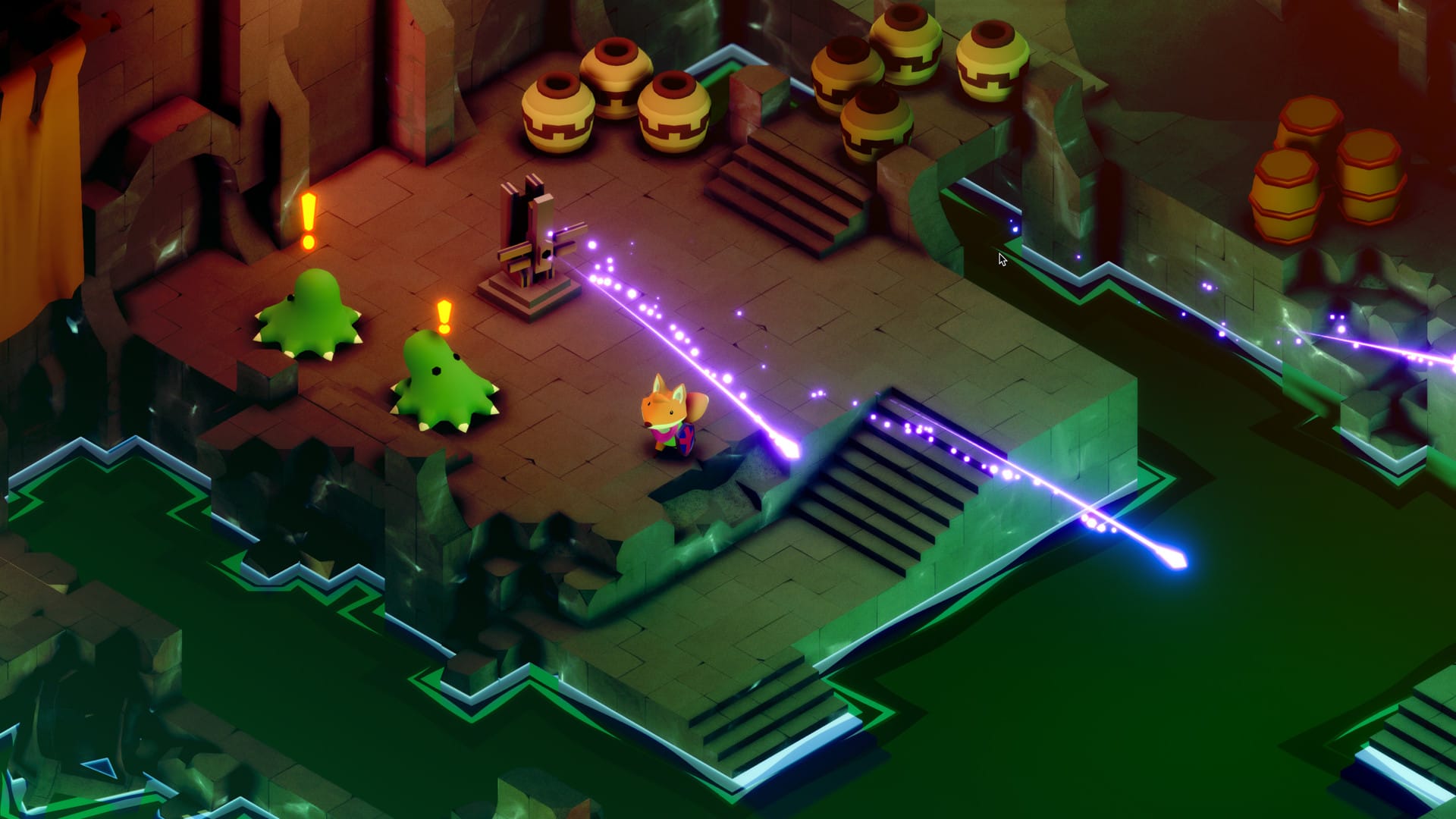
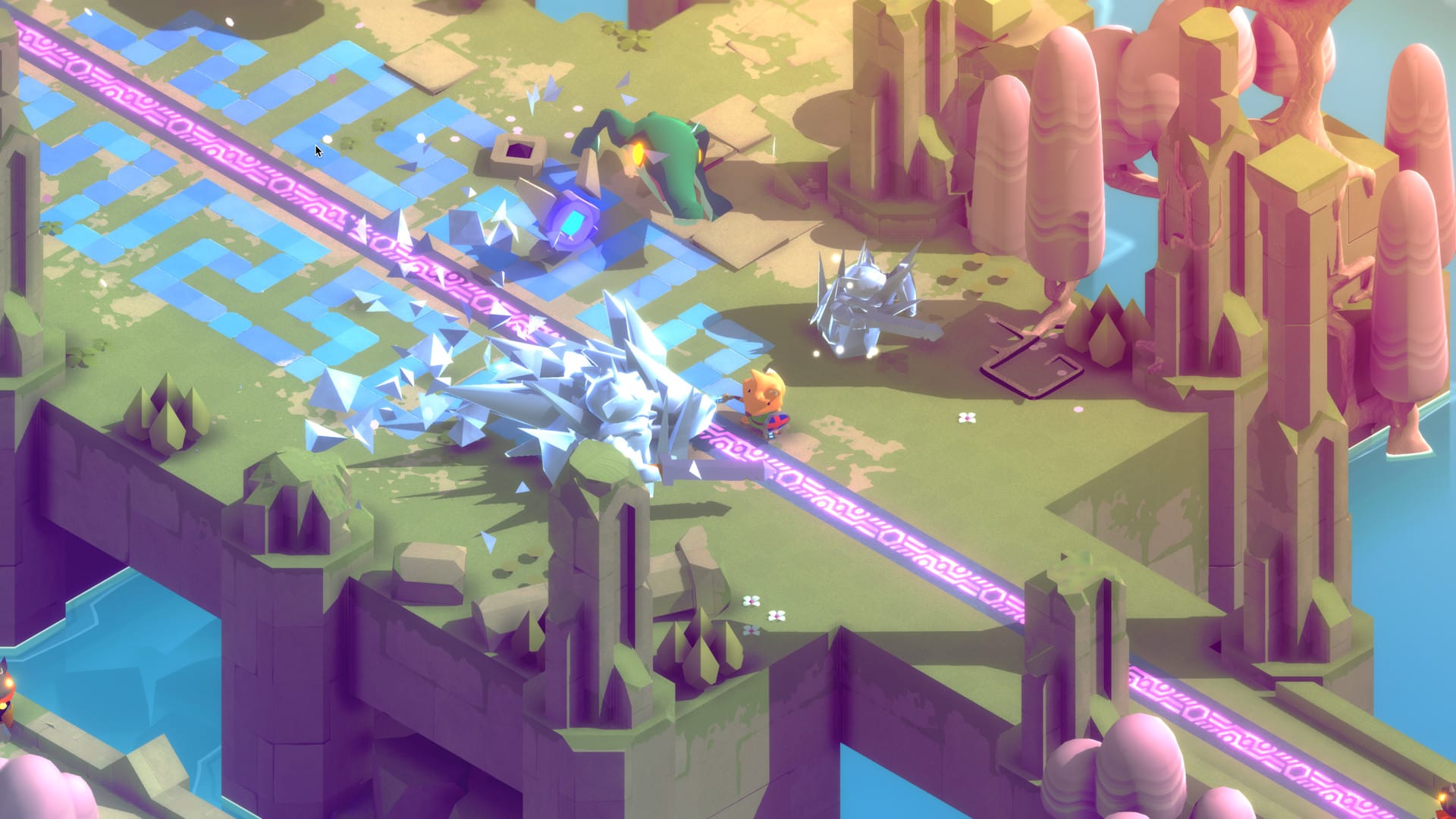
Tunic’s gameplay loop is a revolving door of mystery, combat, and revelation. The initial moments are a masterwork of disorientation. You have a sword, a stamina bar, and a health meter. The first few enemies will likely kill you, immediately recalibrating your expectations. The game’s adorable fox protagonist and its vibrant, toy-like world are a deliberate misdirection. This is a tough, demanding experience that shares more DNA with FromSoftware’s catalog than with its isometric adventure-game peers. Combat is a dance of locked-on targeting, timed dodges, and managing a precious stamina bar. It feels tight, responsive, and, above all, fair. Every death feels like a lesson learned.
But combat is only half the equation. The true genius of Tunic lies in how it intertwines its challenge with its core discovery mechanic—the manual. You will hit walls, both literally and figuratively. An impassable obstacle or an unbeatable boss will halt your progress entirely. The solution is never a glowing waypoint. The solution is to consult your collected pages. You'll stare at a cryptic diagram, a faded map, or a chart of strange symbols, and suddenly, a connection will spark. A drawing of your fox holding a specific item next to a waterfall isn't just art; it’s a direct instruction. The moment of realization—that you can pray at certain monoliths to upgrade your stats, or that a specific button combination activates a secret parry—is more rewarding than any loot drop.
This loop transforms frustration into fuel. Being stuck isn't a failure state; it’s an invitation to look closer, to re-examine the pages you’ve collected, to explore that one corner of the map you ignored. The game trusts you to connect the dots without a single line of explicit text. This is a profound design choice. It revives a feeling of genuine discovery that has been almost entirely sanitized out of modern gaming. You aren’t being told a story; you are unearthing it, one cryptic page at a time. The narrative, the mechanics, and the world-building are one and the same, a puzzle box waiting to be opened not with a key, but with pure comprehension.