


Bottom Line: Twelve Minutes presents a masterclass in interactive narrative and stellar voice acting, yet its ambitious time-loop mechanic often devolves into a frustrating, methodical trial-and-error that tests patience more than intellect.
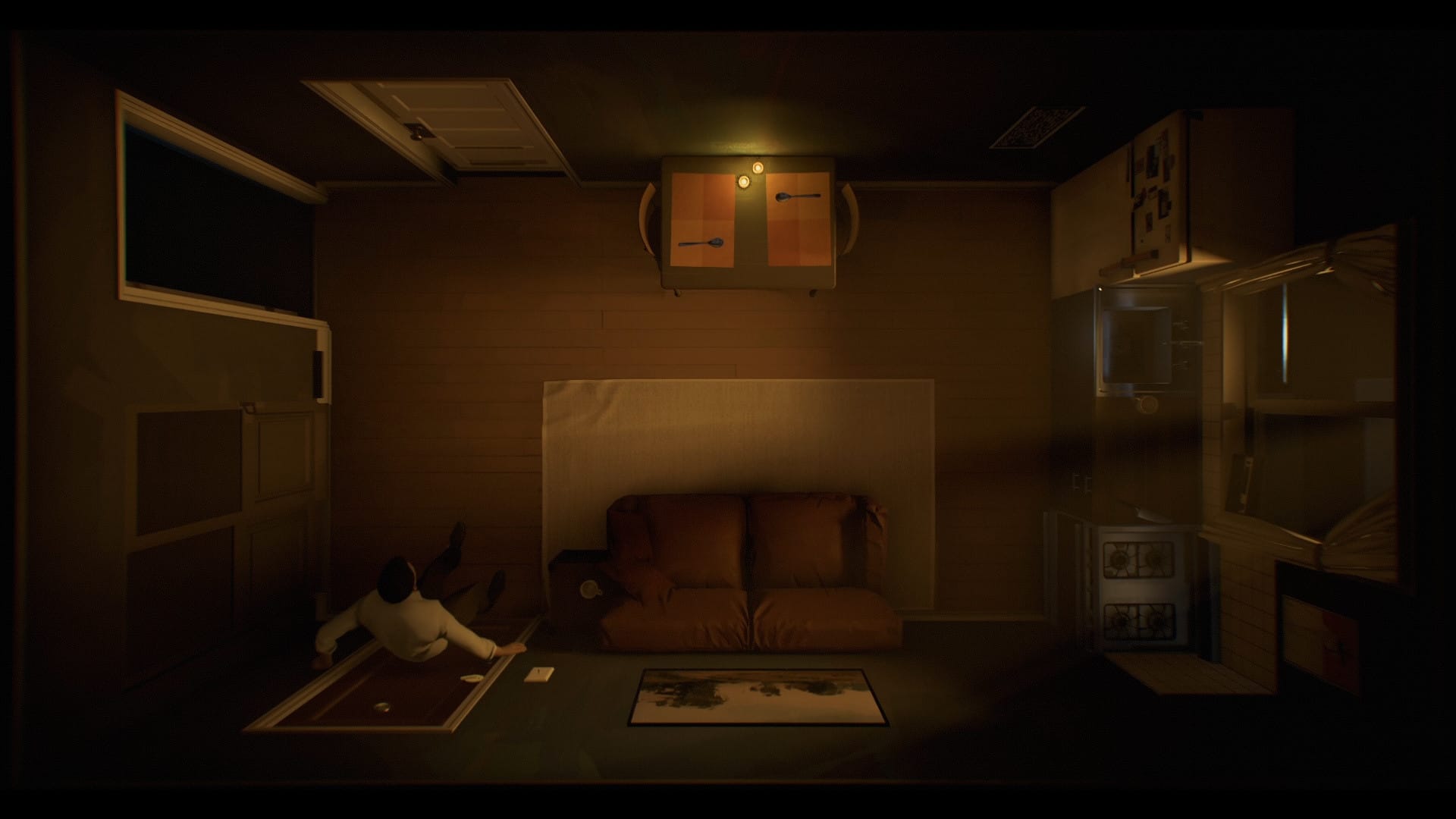
Twelve Minutes opens with an undeniable narrative magnetism. The sheer audacity of its premise—a perpetual loop of terror unfolding within a single, confined space—immediately distinguishes it. The initial loops are exercises in pure discovery, a frantic scramble to understand the mechanics of this temporal prison. Players quickly grasp that merely reacting will lead to the same grim outcome; true progress demands observation, deduction, and carefully planned interventions. The game functions as a psychological pressure cooker, forcing players to methodically dismantle the events of those critical 12 minutes, piece by agonizing piece.
However, the brilliant concept begins to fray under the weight of its own execution. The gameplay loop, while innovative in theory, often becomes a repetitive, almost clinical, process. The organic experimentation of early attempts gives way to a rather strict, often opaque, solution pathway. Players aren't always rewarded for creative thinking; instead, the game frequently demands a very specific sequence of actions and dialogue choices, a rigid lock-and-key puzzle that can quickly exhaust one's patience. The "aha!" moments, while present, are often hard-won, emerging from an exhausting gauntlet of incremental adjustments and repeated failures. This isn't the fluid deduction of a great mystery game; it’s closer to navigating a verbose flowchart, painstakingly eliminating incorrect branches.
The user experience flow is characterized by these stark contrasts. When the player correctly deduces a critical piece of information or uncovers a new dialogue branch, the narrative expands, offering tantalizing glimpses into the deeper mystery. These moments are genuinely thrilling, a powerful testament to the game’s core strength. Yet, the friction inherent in reaching these points—enduring the same conversations, re-performing the same actions, and waiting for predetermined timers to elapse—can be considerable. The top-down, click-and-drag interface, while visually distinct, occasionally exacerbates this frustration. Precision can feel elusive, and the simple act of interacting with objects or characters can be clunky, especially when timing is critical. In a game so reliant on meticulous execution, such minor interface issues become magnified irritants.
The narrative itself, particularly the performances delivered by McAvoy, Ridley, and Dafoe, is a consistent anchor. Their vocal work injects a profound sense of humanity and desperation into characters that might otherwise feel like pawns in a mechanical puzzle. The complexity of the story, with its layers of betrayal, past trauma, and moral ambiguity, remains compelling throughout. The narrative payoff, when it comes, is significant, challenging player assumptions and delivering genuinely unexpected twists. But one must question whether the journey to this payoff justifies the often-arduous path. The game’s insistence on a specific path, rather than allowing for more emergent solutions based on player insight, can lead to moments where the player feels less like a detective and more like a participant in a heavily scripted play, searching for the director's intended cue. The "strict rules" often mean that even correct deductions might fail if executed out of the game's prescribed order, stifling genuine player agency.