
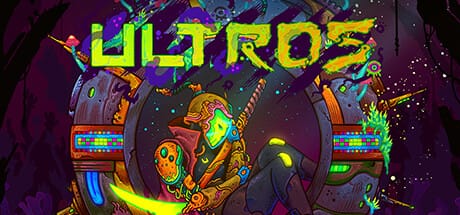



Bottom Line: Ultros, from developer Hadoque, presents an audacious, visually arresting metroidvania that courageously intertwines brutal combat with introspective ecological stewardship, albeit one whose esoteric design and cyclical structure may test the patience of even seasoned explorers.
Ultros operates on a premise of deliberate disorientation, a design choice that profoundly shapes the player experience. The "Sarcophagus" is a puzzle box wrapped in a living, breathing enigma, and understanding its intricacies requires more than brute force; it demands observation, patience, and a willingness to embrace its recursive nature. The game’s core combat, while "brutal" as described, leans into a rhythmic, almost dance-like quality once its nuances are understood. Encounters are often tight, demanding precise dodges, parries, and strategic weapon use. It avoids the button-mashing frenzy of some action titles, instead favoring a more considered, almost tactical approach to engagements. The learning curve is steep, and initial encounters can feel overwhelming, but mastering the intricate combat flow provides a genuine sense of accomplishment.
However, the combat's weight isn't the only pressure point. Hadoque introduces plant cultivation, an ostensibly "peaceful" mechanic, as a critical counterbalance. This isn't just a cosmetic addition; it is the linchpin of progression. Specific plants, once cultivated, unlock new traversal options, reveal hidden pathways, or provide the necessary biomass to upgrade abilities. This intertwining of violence and horticulture creates a fascinating tension, forcing players to oscillate between aggressive engagement and contemplative environmental interaction. It’s a bold design, encouraging players to think beyond immediate confrontation and engage with the world’s ecosystem on a deeper level. The utility of this mechanic, however, can occasionally lead to moments of frustrating backtracking if the necessary flora isn't immediately apparent or if its growth conditions are obscure, a frequent friction point in complex metroidvanias.
The most polarizing, and arguably most innovative, aspect of Ultros is its unique loop-based structure. Players restart at "pivotal story moments," retaining certain knowledge and abilities but resetting the physical state of the Sarcophagus. This is not a roguelike; it’s a narrative and mechanical construct designed to deepen understanding and unlock secrets rather than simply provide randomized challenge. In theory, this allows for the uncovering of previously inaccessible areas, the refinement of strategies, and the mastery of branching ability trees. In practice, the initial loops can feel less like discovery and more like forced repetition. The game expects a high degree of player agency and memory, sometimes at the expense of clear direction. While it ultimately rewards persistence with profound narrative revelations and expanded traversal options, the "mixed" recent reviews on Steam suggest this mechanic isn't universally beloved. Some players may find the constant resetting an impediment to sustained progression, rather than an enhancement of discovery. This critical feedback loop highlights a fundamental truth about experimental design: innovation often comes with a barrier to entry.
Thematic exploration is another area where Ultros excels. The concepts of mental health, karmic cycles, and the duality of creation and destruction aren't merely hinted at; they are integral to the game’s environmental storytelling and narrative progression. The Sarcophagus itself, with its grotesque beauty and cyclical nature, serves as a powerful metaphor for these themes. The game uses its surreal art and abstract lore to provoke thought, inviting players to piece together its fragmented narrative rather than simply observing it. This narrative ambiguity, while rich for those who engage with it, might leave others feeling untethered or lacking a clear objective, further contributing to the game's niche appeal. The deliberate withholding of straightforward answers is a strength for some, a frustration for others.
Interface & Systems
Ultros largely eschews traditional HUD clutter, favoring environmental cues and subtle UI elements. This minimalist approach aligns with its art direction but can occasionally lead to minor clarity issues, particularly when managing inventory or ability upgrades. The ability tree itself is branching and complex, offering meaningful choices that impact both combat and traversal. The symbiotic relationship between cultivating plants and unlocking these abilities ensures that player progression feels earned and integrated into the world, rather than a separate menu-based activity.