



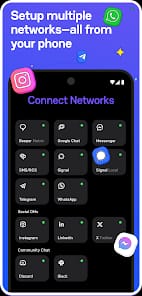
Bottom Line: Beeper is a powerful, highly ambitious attempt to fix the broken state of modern communication, succeeding as a productivity powerhouse while occasionally tripping over the technical fragility of the networks it tries to tame.
The utility of Beeper hinges on a single, transformative shift in workflow: you stop thinking about apps and start thinking about people. In the standard mobile experience, checking your messages is a manual scavenger hunt. You jump from the green icon to the blue icon to the purple icon, each with its own UI quirks and notification styles. Beeper flattens this experience. Once you’ve survived the initial onboarding friction of connecting your various accounts—a process that requires a fair amount of QR-code scanning and two-factor authentication—the result is a startlingly quiet digital environment.
The Power User’s Workflow
For those who live and die by their productivity, the Inbox Zero philosophy applied to chat is a revelation. Beeper allows you to "archive" a conversation once you’ve replied, whisking it out of your primary view. If a message requires action later, you can snooze it. This transforms the messaging experience from a reactive, chaotic mess into something resembling a disciplined email workflow. The Global Search is arguably the app’s most underrated superpower. Trying to find a specific PDF sent by a client three months ago is usually a nightmare if you can't remember if they sent it via Slack, LinkedIn, or WhatsApp. In Beeper, you just type the filename, and the app pulls it from whichever silo it was buried in.
The Privacy Pivot
Beeper’s technical journey has been fraught with controversy, particularly regarding its efforts to bring iMessage to Android. After the "Beeper Mini" saga, where Apple repeatedly shut down their direct connection methods, the team doubled down on their "Local Bridge" architecture. This is a critical distinction for the security-conscious. By running the bridge on your own device (or a dedicated mac/server for iMessage), the sensitive keys never leave your control. It’s a complex dance of latency and security, but it works surprisingly well. However, this complexity is also Beeper’s Achilles' heel. Because these bridges are essentially "hacks" or unofficial wrappers around proprietary APIs, they are inherently fragile. When WhatsApp updates its protocol, there’s a non-zero chance your Beeper bridge will flicker or require a re-authentication.
The Friction of Consolidation
While the text-based experience is excellent, Beeper still struggles with the "rich" features of its host networks. If you want to use Discord's complex role-management or Slack’s huddles, you’ll find Beeper’s interface too sparse. It is a tool for communication, not for community management. Furthermore, the lack of native voice and video call support for many of its bridged services means you’ll still be keeping the original apps installed as "backup" for when you need to do more than just type. This creates a strange middle-ground: Beeper is your primary driver, but the "bloatware" of the original apps remains on your phone, lurking in the background.