

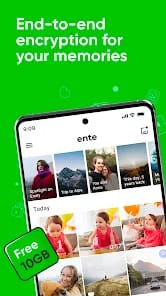

Bottom Line: Ente Photos is the definitive "exit strategy" for the privacy-conscious, offering a zero-knowledge, encrypted sanctuary that proves digital sovereignty doesn't have to be a technical chore.
The brilliance of Ente Photos lies in how it handles the "privacy friction." Historically, the more secure a service is, the more difficult it is to use. Ente manages to bypass this trope by providing a migration workflow that is surprisingly painless. For a utility that lives and dies by its ability to ingest thousands of existing files from Google or iCloud, this is the first and most important hurdle.
The Zero-Knowledge Contract
The core experience is defined by the E2EE contract. When you set up Ente, you are given a recovery key. This is the "point of no return." In the mainstream world, a forgotten password is a minor inconvenience. In Ente's world, losing your key means losing your data. This is the cost of true security, and Ente doesn't shy away from it. The interface emphasizes the weight of this responsibility without being overbearing.
The On-Device AI Challenge
The most impressive technical feat is the on-device AI. We have been conditioned to believe that "smart" features require the cloud. Ente proves otherwise. By utilizing the NPU (Neural Processing Unit) on modern Android devices, the app indexes your faces and objects locally. In my testing, the initial indexing of a 5,000-photo library was a battery-intensive affair, but the results were remarkably accurate. It lacks the aggressive, unsolicited "memory" notifications of Google Photos—those "Look at your ex-partner from five years ago!" prompts—which is a blessing for those who prefer a more intentional relationship with their media. It treats your library as an archive to be queried, not a social feed to be curated by an algorithm.
The Pricing Philosophy
We must discuss the subscription model. Ente is more expensive than the subsidized offerings from Big Tech. However, viewing this as a negative is a failure to understand the product. You are paying for the 3x replication strategy and the lack of data monetization. When you consider the cost of maintaining three encrypted copies of your library in high-security facilities, the price begins to look more like a professional-grade insurance policy.
Interface and Utility Flow
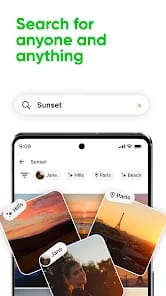
The UI is a study in functional minimalism. It avoids the skeuomorphism and "clutter" that often infects photo apps. Navigating between your local camera roll and the encrypted cloud storage is intuitive. The app handles background synchronization with a level of reliability that is often missing in third-party Android utilities. It doesn't "break" when the OS tries to kill background processes for battery management, provided you give it the necessary permissions. The search functionality is snappy, though it lacks some of the natural language processing (NLP) finesse found in cloud-native alternatives. You can search for "dog" or "beach," but don't expect it to find "that one photo of a dog on a beach at sunset" with the same hit rate as a multi-billion dollar server farm.