


Bottom Line: Merlin Bird ID is a rare triumph of applied AI, turning decades of academic data into a nearly flawless tool for nature identification that feels like a superpower in your pocket.
The Magic of Real-Time Acoustic Identification
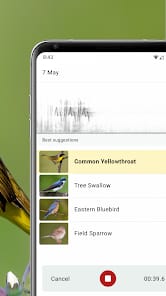
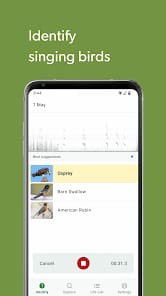
The undisputed crown jewel of Merlin is Sound ID. While many apps claim to "Shazam" the natural world, Merlin’s implementation is a masterclass in reducing onboarding friction. You hit record, and the app begins generating a real-time spectrogram—a visual representation of sound frequencies. As a bird sings, the AI matches the pattern against its local database, highlighting the species name in a scrolling list.
What makes this impressive isn't just the identification; it's the latency. The feedback loop is instantaneous. Even more remarkable is its ability to handle "acoustic clutter." In a forest filled with overlapping calls, Merlin can often isolate and identify four or five different species simultaneously. It effectively solves the "ear birding" problem for novices, though seasoned observers will note that it can occasionally be fooled by mimics like Blue Jays or Northern Mockingbirds. The tech is authoritative, but it still requires a human eye for final verification.
Data as a Filter
Identification in Merlin isn't just about matching pixels or waveforms; it's about contextual probability. When using Photo ID, the app doesn't just look at the feathers. It cross-references the image with your GPS coordinates and the current date. It knows what birds should be in your area during May versus November. This significantly reduces the "noise" in the identification process, preventing the AI from suggesting a tropical parrot when you’re standing in a snowy park in Chicago.
The Friction of High-Fidelity Data
However, this power comes at a cost that users with limited storage will find taxing. To function offline, Merlin requires Bird Packs. A single regional pack can easily exceed 500MB, and a cross-continental traveler could quickly see the app consume several gigabytes of internal storage. The choice to keep these packs offline is a technical necessity for field use, but it creates a hurdle for users on entry-level devices.
Furthermore, the computational overhead of Sound ID is immense. Running real-time spectrogram analysis and AI matching is a heavy lift for the processor. During extended sessions, I noticed significant battery drain and noticeable heat on the back of the device. This is a tool meant for bursts of discovery, not for leaving the microphone open all afternoon.
Interface and UX Flow
The UI design is utilitarian to a fault. It favors clarity and scientific accuracy over aesthetic flourish. Navigation is straightforward, but the "Life List" features can feel buried under several layers of menus. Integrating with eBird is a logical step for the serious enthusiast, but for the casual user, it introduces a separate account management system that feels slightly disjointed from the core identification loop.