
Bottom Line: Hevy is the antithesis of bloated fitness apps, offering a surgical focus on strength metrics paired with a surprisingly un-toxic social layer. It is the digital equivalent of a well-worn training log, modernized for the lifter who values data over distractions.
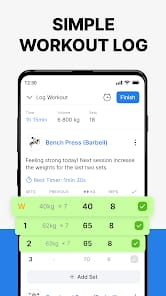
The core of Hevy isn't just that it logs workouts; it's how it manages the onboarding friction of data entry. In the middle of a heavy squat session, the last thing you want is to fight with a dropdown menu. Hevy understands this. The interface is built around speed. Entering reps and weight is a tactile, rapid-fire process that stays out of the way of the actual training.
The Social Loop
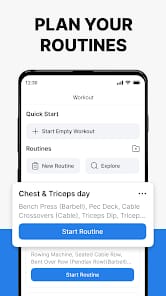
The "social" tag in the fitness world usually implies a watered-down version of Instagram, filled with filtered selfies and vague motivational quotes. Hevy takes a more utilitarian approach. The social feed is essentially a public library of effort. When you see a friend’s deadlift session, you aren't just looking at a photo; you’re looking at their volume, their rest times, and their exercise selection. The ability to "Copy Workout" is the app's killer feature. It bypasses the tedious process of manual routine creation by letting you adopt proven programs from the community. It’s social engineering that actually improves the core product rather than just acting as a marketing layer.
Data Over Dogma
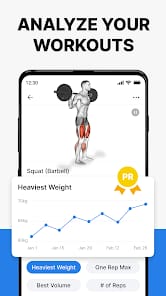
While many apps are moving toward AI-driven coaching—which often feels like a series of generic, automated guesses—Hevy remains committed to manual logging. This is a deliberate choice that honors the intentionality of serious lifting. The app provides the tools—the volume metrics, the progressive overload tracking, and the 3D exercise animations—but it leaves the driving to the user. The 3D animations are particularly noteworthy; they aren't just flashy graphics but functional guides that clarify form without the bandwidth cost of high-res video.
Interface Philosophy
The design language is sparse. Some might call it clinical, but in the context of a gym, clinical is a compliment. There is a distinct lack of "fluff." Every screen serves a purpose, whether it’s calculating your muscle distribution for the week or showing you the latency between your sets. However, this minimalism occasionally tips into being sparse to a fault. Hiding certain advanced volume metrics behind several taps can feel like a minor betrayal of its data-first ethos. That said, the lack of intrusive advertising is a breath of fresh air. It allows the user to stay in the "zone," a psychological state that is easily shattered by a poorly timed pop-up.