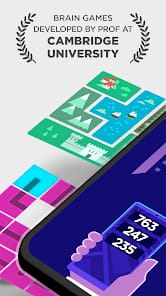
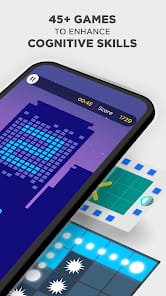
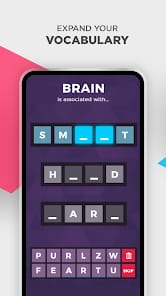
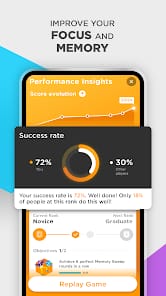
Bottom Line: Peak is a high-gloss cognitive playground that successfully bridges the gap between rigorous neuroscience and addictive mobile gaming, even if its steep subscription price feels like a tax on self-improvement.
The Gameplay Loop and Cognitive Friction
At its core, Peak succeeds because it understands variable ratio reinforcement. The "workout" isn't a slog; it’s a series of micro-challenges that rarely exceed two minutes. This brevity is its greatest strength. By the time you feel the mental strain of a coordination task, the round is over, and you're presented with a satisfying progress bar. This loop creates a sense of incremental mastery that is deeply satisfying to the human brain's reward centers.
However, we must address the "transfer of learning" problem. Critics of brain training often point out that getting better at a "memory game" only makes you better at that specific game, not necessarily better at remembering where you left your keys. Peak combats this skepticism through real-time difficulty adjustment. The app doesn't just let you plateau; it actively pushes back. When the "Coach" identifies that your problem-solving speed has increased, the next module introduces higher levels of cognitive friction. This is where the app moves beyond simple entertainment and into the territory of genuine mental conditioning.
Interface and The Psychology of Data
The Brain Map is perhaps the most addictive element for the data-driven user. In an era of quantified self, seeing your "Language" score dip after a week of inactivity provides a powerful incentive to return. It’s a clever use of loss aversion—the feeling that you are losing your edge if you don't engage. The interface facilitates this by hiding complex data behind elegant, readable charts. Navigation is crisp, avoiding the cluttered "menu-within-a-menu" nightmare found in many educational suites.
The Elephant in the Paywall
We cannot ignore the friction created by the Peak Pro subscription. The free version is, quite frankly, a tease. Restricting users to a handful of games per day creates a ceiling that prevents the very "long-term maintenance" the app claims to provide. While Synaptic Labs needs to monetize, the gap between the free tier and Pro feels like a chasm. The advanced training modules—those designed specifically for deep focus or advanced memory—are the meat of the experience, and locking them away makes the free app feel like an extended demo rather than a functional tool.
Furthermore, while the academic partnerships provide a veneer of scientific legitimacy, the app occasionally leans too hard on "Brain Scores" that lack real-world context. Is a score of 650 good? The app says it is, but without a clearer connection to everyday functional improvements, it risks becoming a closed-loop ecosystem of self-validation.