
Bottom Line: A breathtaking bridge between geography and sound that reminds us that despite our borders, the airwaves remain a shared, chaotic, and beautiful human commons.
The Cartography of Sound
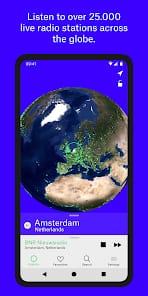
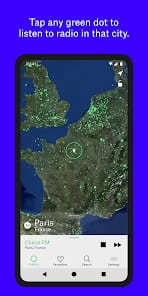
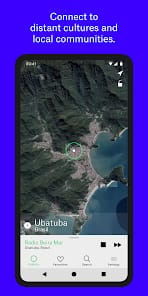
The brilliance of Radio Garden lies in its interface design, specifically its rejection of the standard list-based navigation that plagues almost every other audio app. When you open the app, you aren't greeted by a "Recommended for You" section; you are greeted by the Earth. This skeuomorphic approach to geography makes the act of discovery feel earned. There is a specific, visceral thrill in spinning the globe, landing on a remote dot in the middle of the Australian Outback, and hearing a local DJ talk about a community barbecue.
The UX flow is remarkably low-friction. You tap, you listen. There is no "onboarding" because the interface is its own tutorial. However, this simplicity masks a complex technical backend that manages thousands of disparate streams. The latency is generally impressive, though users must understand that the app is a conduit; if a station in rural Peru has a shaky uplink, Radio Garden can’t fix that. It is an honest reflection of the world's digital infrastructure.
The Friction of Commercialization
As the project transitioned from a subsidized research effort to a commercial entity, the inevitable intrusion of monetization has begun to chafe. Early adopters will remember a pristine, ad-free experience. Today, the free version on iOS and Android is frequently interrupted by video advertisements. While we understand the "bills must be paid" reality of hosting a global streaming directory, the placement of these ads often breaks the immersion that the 3D globe works so hard to create.
There is a psychological jarring that occurs when you transition from a meditative soundscape in Tokyo to a loud, local ad for a mobile game. It’s a reminder that even in a global garden, there are fences. Furthermore, the reliance on third-party stream URLs means that "dead dots" are a recurring issue. The app’s curators do an admirable job, but the volatility of small-town radio means you will occasionally hit a silent green dot—a ghost in the machine.
Serendipity vs. Algorithm
In a world governed by the "Next Track" button, Radio Garden forces a different kind of listening. Because you are listening to live radio, you lose the ability to skip. This forced patience is the app’s secret weapon. It forces you to engage with the "Balloon Ride" mode—a shuffle feature that is actually meaningful. Unlike a Spotify "Daily Mix" which plays it safe, Radio Garden’s randomness is truly random. You might move from high-energy K-Pop in Seoul to a religious sermon in rural Mississippi. This is the utility of the app: it breaks the filter bubble. It reminds the user that the world is vast, loud, and doesn't care about your personal taste profile.