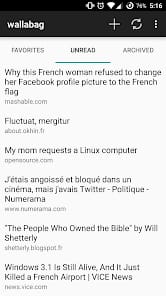


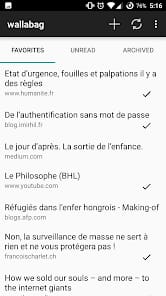
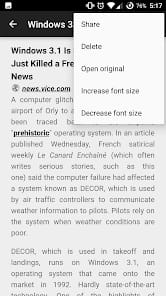
Bottom Line: Wallabag is a robust, privacy-first sanctuary for long-form reading that traded "it just works" convenience for total user autonomy. It’s the definitive read-it-later tool for those who refuse to let Silicon Valley dictate their information diet.
The "Read-it-later" category is often judged by the friction of its onboarding, and this is where Wallabag draws its first line in the sand. Unlike commercial apps that offer a one-tap Google login, Wallabag demands effort. If you’re self-hosting, you’re dealing with PHP environments and database configurations. Even if you use the hosted service, connecting the Android app requires generating API keys—a process that will immediately alienate the casual user. This onboarding friction is the tax you pay for freedom.
The Parsing Engine
Once you hurdle the technical setup, the core utility of Wallabag is impressive. The parsing engine is the heart of any read-it-later service, and Wallabag handles the majority of the web with surgical precision. It excels at standard blog posts and long-form journalism, stripping away the clutter to leave a clean, readable canvas.
However, it isn't flawless. Complex layouts, particularly those with interactive charts or non-standard CSS, can occasionally confuse the extractor, leading to weird spacing or missing images. While commercial competitors have the resources to manually tune their parsers for the top 1,000 websites, Wallabag relies on community-driven site config files. It’s a democratic approach that usually works, but expect the occasional formatting hiccup that requires a "View Original" tap.
User Experience & The Reading Loop
The reading loop is focused. There are no social features, no "trending" tabs, and no distracting notifications. You clip an article from your browser, it syncs to your device, and you read it. The inclusion of tagging and starring allows for a sophisticated archival system, turning a transient reading list into a permanent digital library.
The text-to-speech integration is a surprising highlight. While it doesn't quite match the natural cadence of a high-end AI narrator, it is perfectly serviceable for non-fiction articles. It transforms Wallabag from a passive storage bin into an active productivity tool, allowing you to "read" while driving or cooking.
The Ethics of Ownership
The most compelling argument for Wallabag isn't its feature list; it's the latency of its philosophy. In the commercial world, your "saved" list is often just a collection of links that the service provider has permission to show you. In Wallabag, you are downloading the content. This distinction matters when articles are deleted from the source or hidden behind moving paywalls. Wallabag creates a snapshot in time. For the researcher, the academic, or the paranoid archivist, this is the only way to build a library that lasts.