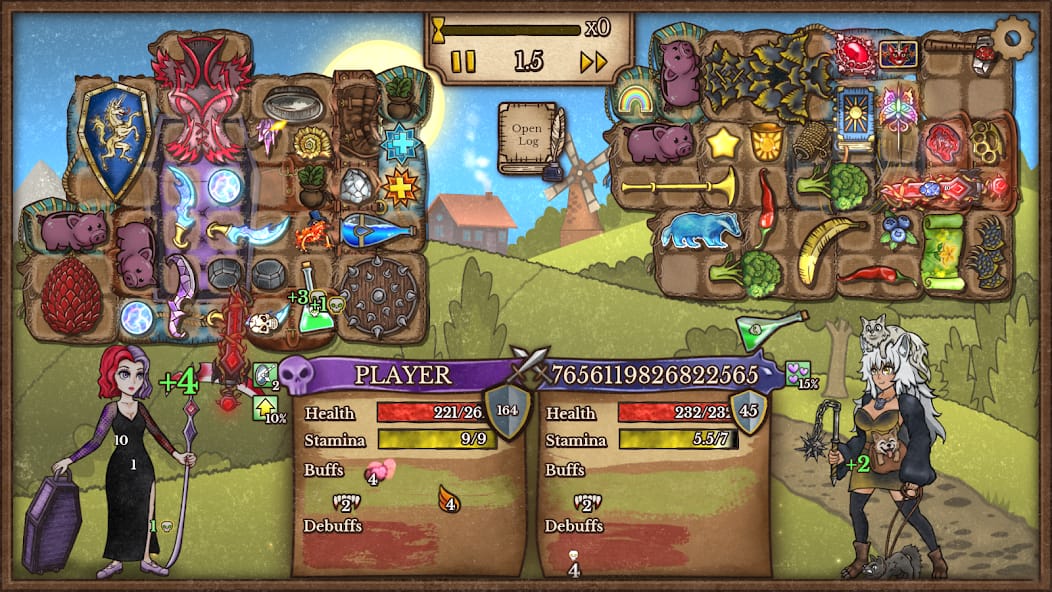
Bottom Line: A masterclass in spatial reasoning disguised as a fantasy battler, Backpack Battles transforms the mundane act of tidying a bag into a high-stakes tactical chess match. It is the most addictive use of a grid since the Game Boy era.
The Emotional Core: The Shop Phase
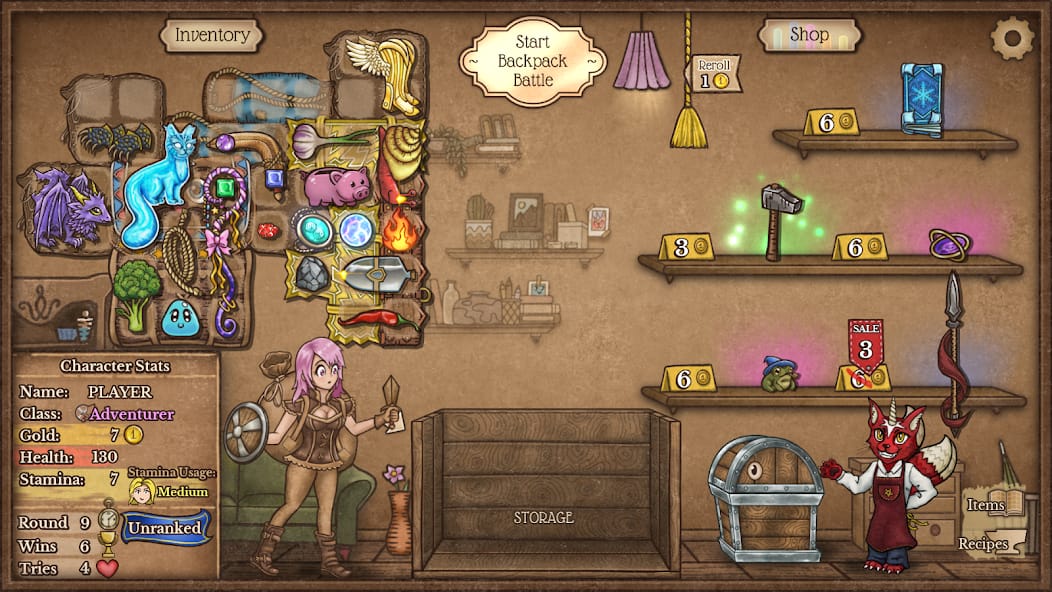
In most games, the inventory is a menu you visit to fix a problem. In Backpack Battles, the inventory is the problem. The brilliance of the design lies in the tension between power and space. You might find a legendary hammer that could win you the next three rounds, but it takes up a 3x3 L-shape in your bag, forcing you to sell off three smaller, highly efficient synergies. It is a constant exercise in "kill your darlings."
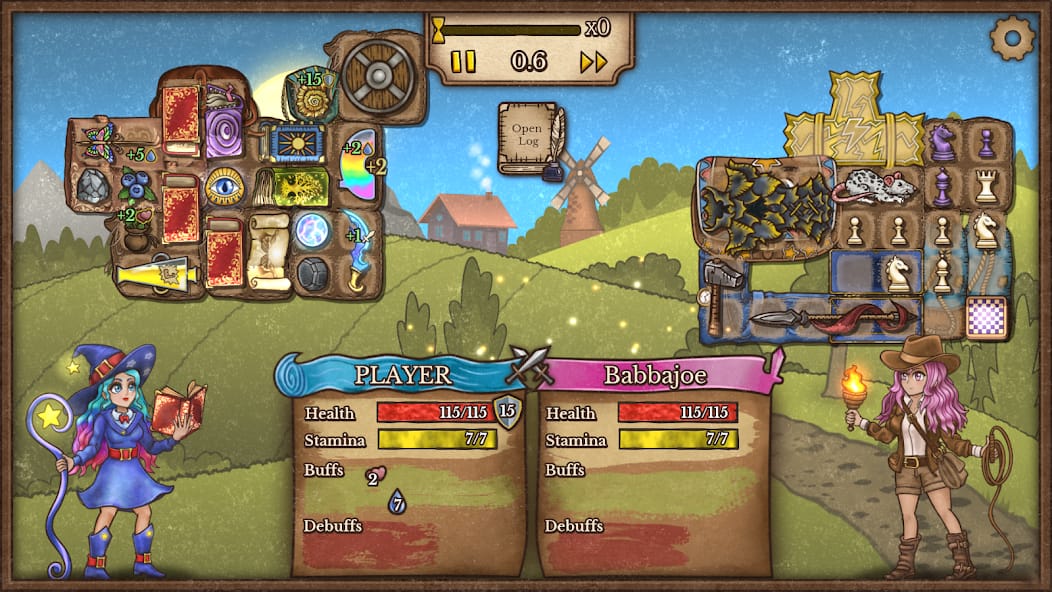
The Shop Phase isn't just about buying; it's about spatial reasoning. You’ll spend five minutes rotating a single whetstone, trying to find the one pixel where it touches both your daggers and your falcon. When you finally lock it in, the satisfaction is akin to clearing a four-line Tetris block. This is where the game is won or lost. The combat itself is automated, a hands-off validation of your organizational skills. Watching your bag "activate"—with icons flashing and bars filling as items trigger in sequence—is a strangely hypnotic reward for your earlier pedantry.
Synergy, Fusions, and the Meta
Beyond simple adjacency, the game introduces a "fusion" mechanic that is the primary driver of its long-term depth. Placing two specific items next to each other over several rounds will eventually cause them to merge into a single, more powerful artifact. This adds a layer of tactical foresight. Do you hold onto two mediocre items for three rounds, potentially losing health, just to get that "Grim Reaper" scythe later?
However, this depth comes with a caveat. As you climb the ranks, the "meta-build dominance" common in the genre begins to creep in. High-level play can occasionally feel like a race to see who can assemble the same optimized poison or crit build first. While the developer has been proactive with balancing, the RNG of the shop can sometimes feel like a brick wall when the one item you need to complete a fusion refuses to appear.
Interface and Onboarding Friction
The UI is dense, there's no denying it. For a newcomer, the screen is a cacophony of tooltips and icons. However, the onboarding is surprisingly smooth thanks to a "recipe book" that tracks your fusions and a clear visual language for synergies (indicated by glowing lines between items). Once you learn to "read" the bag, the complexity becomes an asset. The game respects the player's intelligence, offering deep tooltips that explain exactly why a weapon is dealing 12 damage instead of 10.