Bottom Line: BallisticNG is a surgical reconstruction of the anti-gravity racing genre’s golden age, delivering a high-fidelity mechanical experience that transcends mere nostalgia to become the definitive standard for the niche.
To understand BallisticNG, one must first understand the mechanics of the airbrake. In most contemporary racers, braking is a suggestion—a way to scrub off speed before a hairpin. In the Anti-Gravity League, the airbrakes are your primary steering input. Mastering the dual-trigger setup to "bite" into a corner while maintaining forward momentum is the core of the gameplay loop. The learning curve is steep, bordering on vertical during the mid-to-late campaign stages, but the mechanical payoff is unparalleled. When you finally nail a perfect line through a series of S-curves at 1,000 kilometers per hour, the sense of achievement is visceral.
The Physics of Attrition
Unlike its modern peers, BallisticNG treats combat not as a gimmick, but as a tactical layer of resource management. Ships possess shield integrity that depletes with every wall-scrape or incoming rocket strike. This forces a constant, split-second evaluation: do you stay in the lead with a failing hull, or do you take the tactical pit lane stop and sacrifice position for survival? The weapon meta is lean and effective. Mines, shields, and rockets aren't just there for chaos; they are tools to disrupt the "flow state" of your opponents. The AI is notably aggressive, especially in the higher speed tiers, rarely making mistakes and punishing your own errors with ruthless efficiency.
Interface and Onboarding
If there is a flaw in this chrome-plated armor, it is the onboarding friction. The game assumes a level of prior knowledge that may alienate those who didn't grow up with a gray console under their television. The difficulty spikes in the campaign are sharp, particularly when the game introduces tracks with significant verticality and "jump" sections that require precise mid-air pitch control. However, for the veteran, this lack of hand-holding is refreshing. The UI is sparse, functional, and devoid of the "live-service" clutter that plagues contemporary titles. It is a toolset for racing, nothing more, nothing less.
The Community Engine
The inclusion of full Steam Workshop support is perhaps the game's most significant achievement in terms of value. The community has already populated the game with high-quality recreations of classic tracks and experimental ships that push the physics engine to its limits. This isn't just "extra content"; it is a living ecosystem that ensures the game will remain relevant as long as there is an audience for anti-gravity racing. Neognosis has provided the foundation, and the community has built a skyscraper on top of it. This level of openness is rare in the modern industry and speaks to a developer that trusts its audience.
The Rhythm of the Track
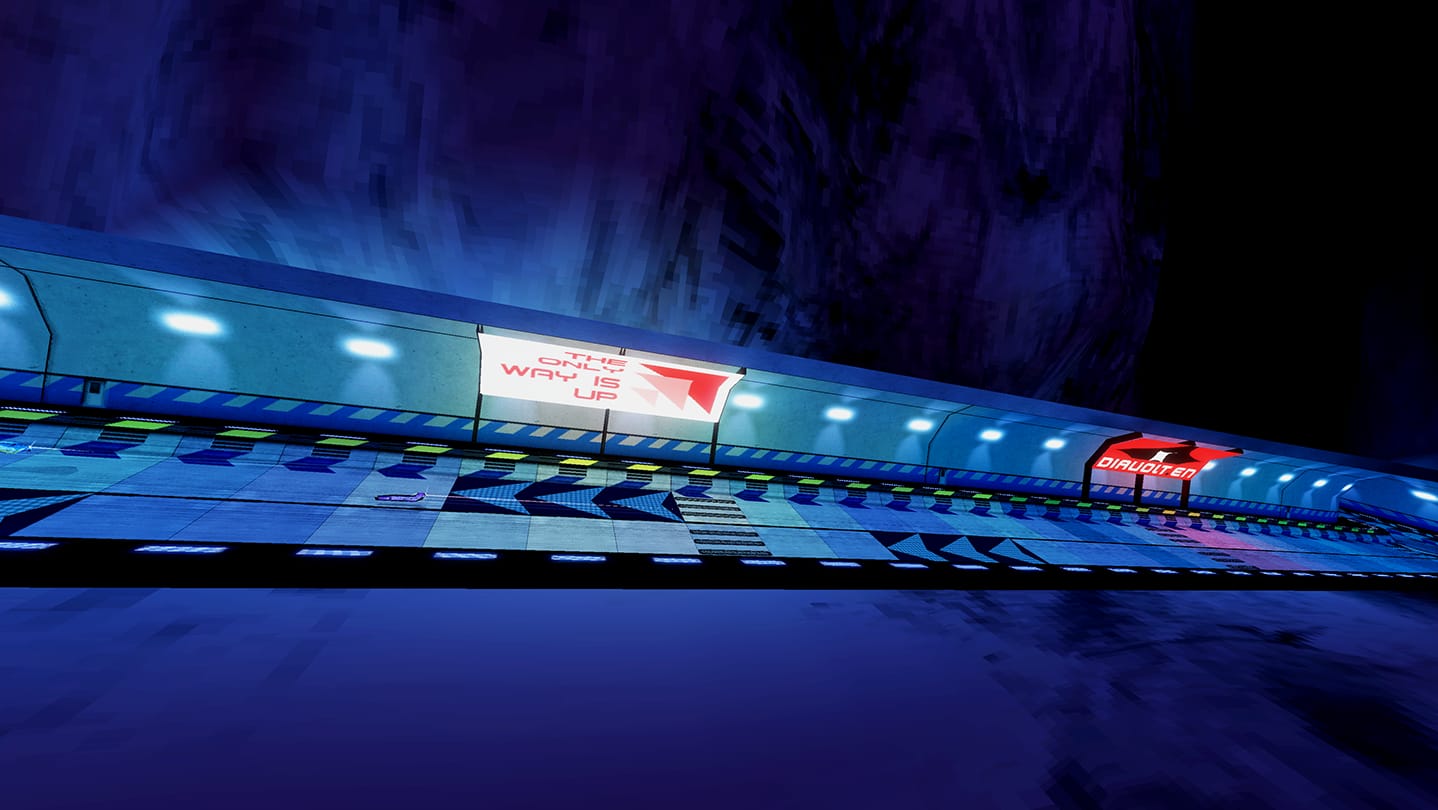
Every track in BallisticNG feels like a rhythmic composition. The layout of weapon pads and speed strips is designed to sync with the pumping 90s-inspired soundtrack. There is a specific cadence to the racing—the buildup of speed, the tension of a tight turn, and the release of a straightaway. It is a sensory experience that feels remarkably cohesive. The developer’s decision to include a five-hour soundtrack isn't just a "nice to have"; it is a fundamental component of the game’s identity, anchoring the high-speed visuals in a specific cultural moment.